Shocking documentary centering on victims of violent crime who seek to get revenge on their assailants.
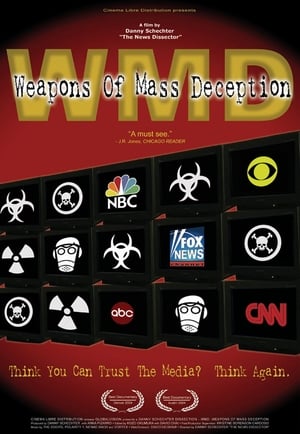
There were two wars in Iraq--a military assault and a media war. The former was well-covered; the latter was not. Until now... Independent filmmaker, Emmy-award winningTV journalist, author and media critic, Danny Schechter turns the cameras on the role of the media. His new film, WMD, is an outspoken assessment of how Pentagon propaganda and media complicity misled the American people...
A love affair with collectivist ideologies has lead to ever bigger government and the welfare-warfare state. Lead by a Marxist splinter group called the "Frankfurt School" -- "the long march through the institutions" has infiltrated every corner of Western culture to corrupt traditional Christian values with "political correctness," another name for "cultural Marxism." The ultimate goal of cultural Marxism is to first destroy American free-enterprise capitalism by undermining its economic engine, the Middle Class and this will lead -- they hope -- to the destruction of the basic building block of society: the Family Unit.
A one minute short film showcasing the sights, sounds, and people that characterizes Singapore's nightlife.
A documentary about a person who cleans his room with a vacuum cleaner, filled with disasters and mishaps.
In a quiet Rajasthani village, young Ali clings to his cricket bat as his friends chase it. What starts as playful mischief reveals a film crew struggling to finish their shoot, blurring childhood and the fragile magic of cinema.
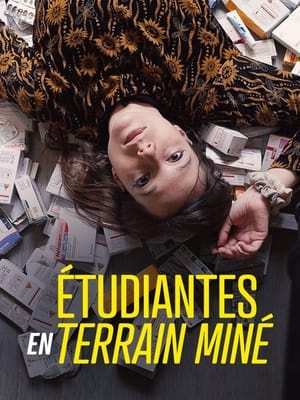
Documentary about sexual harassment and rape cases in French Universities and Superior Education. Many women come forward about their personal cases and how, despite the many reports, barely no action is taken.
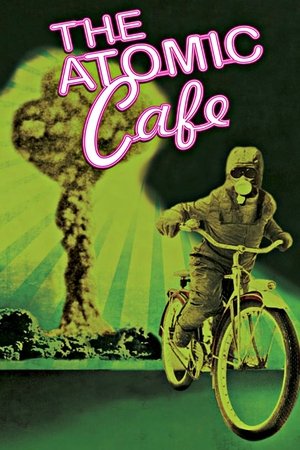
A disturbing collection of 1940s and 1950s United States government-issued propaganda films designed to reassure Americans that the atomic bomb was not a threat to their safety.
A unique visual interpretation of Tyler, the Creator's latest album, Chromakopia.
The refracted gaze on Mianhua Islet, Taiwan's eastern de facto border, turns the concrete landscape of physical territory into a mirage of topography and politics. The fragmented image of the frontier reflects the ambivalent state of Taiwanese subjectivity. The camera slowly sweeps over the contour of the islet as if touching the country's body to ensure its existence. The ever-imaginary border that eludes, obscures, and fictionalizes the construction of a nation confronts us with its external mirrored image, as a subject and as a site, where the process and paradox of forming national subjectivity are materialized, embodied, and caught in a liminal space.
Here is an actor, one who has been asked to dwell in the perilous gap between text and image. In the voids where traces of the past have been erased by an unknown error, she begins to assemble her own script.
A retrospective documentary about the groundbreaking horror series, Friday the 13th, featuring interviews with cast and crew from the twelve films spanning 3 decades.
a sensorial journey on a scottish island reminding us of the connection between the living questioning our relationship to the sea and to the land
Experimental documentary about what it means to be at peace.
Socialist industry manufactures only those products absolutely required by workers, citizens purchase only those items essential for their everyday lives – claims the film, thereby differentiating the operational principles of domestic industry and trade from those of capitalist countries.
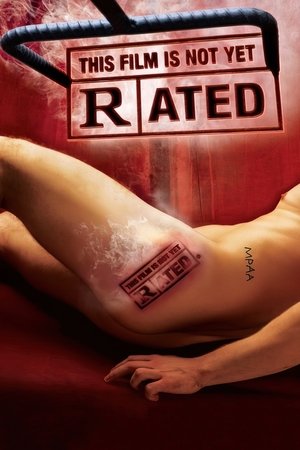
Kirby Dick's provocative documentary investigates the secretive and inconsistent process by which the Motion Picture Association of America (MPAA) rates films, revealing the organization's underhanded efforts to control culture. Dick questions whether certain studios get preferential treatment and exposes the discrepancies in how the MPAA views sex and violence.
A direct-to-video compilation of the highlights of the earlier films in the Faces of Death series.
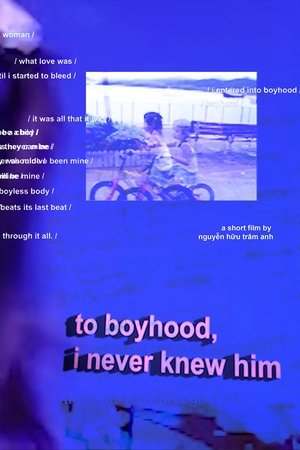
Archive footage from 2006 - 2010 of a young girl growing up during the ages of four to eight. Only fragments of what is remembered exists. Words from a transgender man float to the surface as fleeting memories go on.
No one knows why for certain, but from 1968 to 1973 communist Albania enjoyed a brief liberalisation in the arts. Banned books and Beatles records changed hands. Albania’s Nobel-nominated novelist Ismail Kadare wrote two of his most famed masterpieces, Kështjella (The Castle) (1970) and Kronikë në gur (Chronicle in Stone) (1971) during this period. The rock'n'roll and jazz arrangements featured in this concert documentary were the pretext that brought about the end to the artistic thaw. Several performers seen in the festival were sent to prison or internal exile. The portly, smiling music conductor, Gasper Çurçia, was later accused of forging bus tickets and executed.