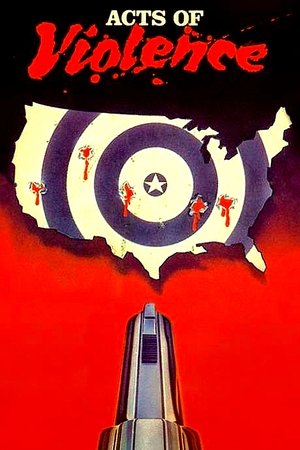
A riveting expose about the personalities of murderers and their motives. This 72 minute film covers the McDonalds' restaurant massacre, President Reagan's assassination attempt, serial murderer Henry Lee Lucas and others.
The sinking of the RMS Titanic remains one of the most enduring and mysterious tragedies of the 20th century. For decades, investigators and amateurs alike have floated theories for why it occurred and who was to blame for the extraordinary loss of life, but no one answer could fully explain what happened. Until now. To mark the 100th anniversary of the infamous disaster, Smithsonian Channel will premiere Titanic's Final Mystery. The two-hour special investigates a century of theories and uncovers astonishing new forensic evidence that proves the most likely theory for the case.
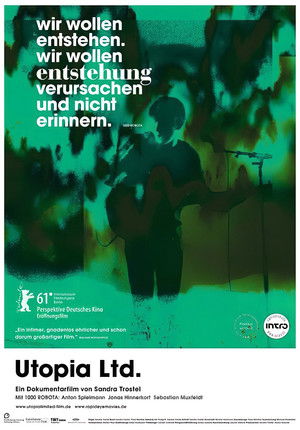
Anton Spielmann (18) and his two younger friends Basti Muxfeldt and Jonas Hinnerkort are living in their family homes with their parents in an idyllic village close to Hamburg. The three of them founded the band 1000 Robota. The band has an ambitious aim: „We want to cause creation not to remind of it”, and they want to live up to their ideals. In a society affected by economic pressure 1000 Robota are questioning themselves and others and they don‘t want to meet other people‘s expectations. In a world of excessive supply they are looking for significance and want to unite with others to create a new way of youth culture. But soon they have to face some serious difficulties.
On September 15th 2008, the day of the the collapse of Lehmans, the worst financial news since 1929, Damien Hirst sold over £60 million of his art, in an auction at Sotheby’s that would total £111 million over two days. It was the peak of the contemporary art bubble, the greatest rise in the financial value of art in the history of the world. One art critic and film-maker was banned by Sotheby’s and Hirst from attending this historic auction: Ben Lewis.
Sylvia Kristel – Paris is a portrait of Sylvia Kristel , best known for her role in the 1970’s erotic cult classic Emmanuelle, as well as a film about the impossibility of memory in relation to biography. Between November 2000 and June 2002 Manon de Boer recorded the stories and memories of Kristel. At each recording session she asked her to speak about a city where Kristel has lived: Paris, Los Angeles, Brussels or Amsterdam; over the two years she spoke on several occasions about the same city. At first glance the collection of stories appears to make up a sort of biography, but over time it shows the impossibility of biography: the impossibility of ‘plotting’ somebody’s life as a coherent narrative.
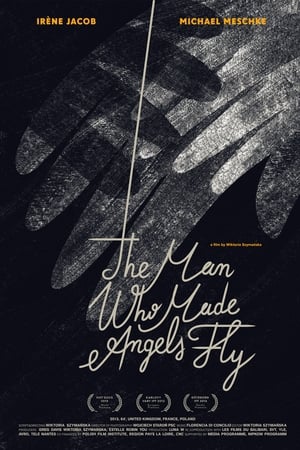
When the lights dim and the stage is revealed, Meschke channels life through the strings of his puppets, triggering the spiritual connection between the creator and his alter-egos: the charismatic Don Quixote, the loving Penelope, the inquisitive Baptiste, or the mysterious Antigone. THE MAN WHO MADE ANGELS FLY is a poetic story about a master of his craft that has inspired audiences to reflect upon common issues of suffering and the mortal coil. Visionary and un-biographic, imaginary tribute to the puppeteer.
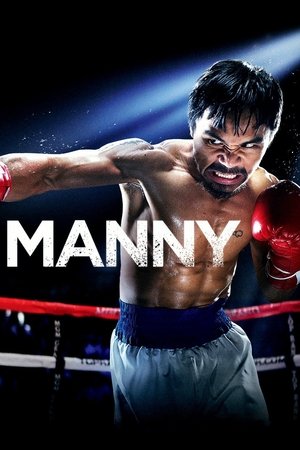
From abject poverty to becoming a ten-time boxing world champion, congressman, and international icon, Manny Pacquiao is the true definition of a Cinderella story. In the Philippines, he first entered the ring as a sixteen-year-old weighing ninety-eight pounds with the goal of earning money to feed his family. Now, almost twenty years later, when he fights, the country of 100 million people comes to a complete standstill to watch. Regarded for his ability to bring people together, Pacquiao entered the political arena in 2010. As history’s first boxing congressman, Pacquiao now fights for his people both inside and outside of the ring. Now at the height of his career, he is faced with maneuvering an unscrupulous sport while maintaining his political duties. The question now is, what bridge is too far for Manny Pacquiao to cross?
This is the legendary meeting between a young filmmaker and one of the masters of surrealism: the spanish painter Óscar Domínguez, born in La Laguna, Tenerife, in 1906, died in Paris in 1957. In the "Visite," the artist -admirer of Picasso, rebellious disciple of Breton- is presented in solitude, far from the tumult of the exhibitions and parisian circles. An austere approach, almost “povera”, with no audio, nor flashy camera movements, but rarely attractive. Why Resnais could not finish his movie? Hope one of our experts help us to solve the mystery.
Portrait of Augustinas Baltrušaitis, film and theatre director, as well as actor, who fell into obscurity and has now been relegated to the margins of society, as a result of specific political circumstances. Countdown is a film about the limits of memory, the effects of the implacable passage of time, and a hope that surpasses time.
An experimental self-portrait, MMXIII explores phenomenological subtlety, intersections of construct and verité, and the ways in which technology, landscape, and beauty coalesce.
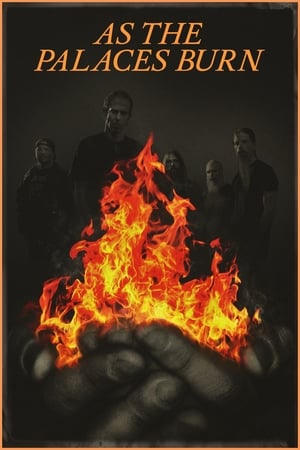
As the Palaces Burn is a feature-length documentary that originally sought to follow Lamb of God and their fans throughout the world, to demonstrate how music ties us together when we can’t find any other common bond. However, during the filming process in 2012, the story abruptly took a dramatic turn when lead singer Randy Blythe was arrested on charges of manslaughter and blamed for the death of one of their young fans in the Czech Republic. What followed was a heart-wrenching courtroom drama that left fans, friends, and curious onlookers around the world on the edge of their seats.
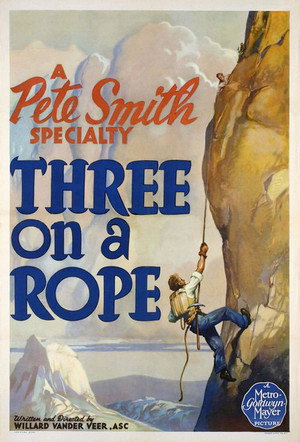
This short looks at the sport of rock climbing. A team of three men ascend a rock wall on Southern California's Tahquitz Rock (also known as Lily Rock) above Idyllwild. The various climbing techniques are explained, as well as the dangers one encounters in this sport. We also see the team rappel from the summit. A second team, used for comic relief, has nothing but problems.
Chez Schwartz takes us inside a year in the life of Schwartz's Deli - the unique 75-year-old landmark on Montreal's historic Main. Filmed through changing seasons, from the quiet of early morning preparation to the frenetic bustle of packed lunch times and never ending line-ups, to the more relaxed ambiance late at night - Chez Schwartz is an evocative, cinematic portrait of a small spunky deli known worldwide equally for its atmosphere and smoked meat.
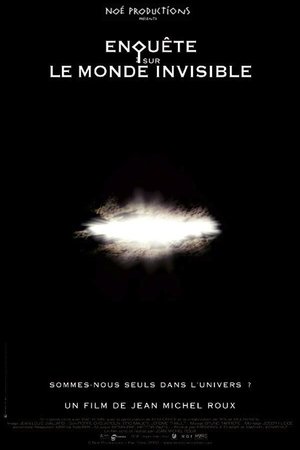
A feature length documentary shot in Iceland on mediums and the relationship between humans and invisible beings such as elves ghosts, angels, water monsters and extra-terrestrials. The film is a journey to the frontiers of life questioning the scope of our existence. Are we alone in the universe? If life exists in other dimensions, it's worth knowing more.
The film explores the role of photography, since its rudimentary beginnings in the 1840s, in shaping the identity, aspirations, and social emergence of African Americans from slavery to the present. The dramatic arch is developed as a visual narrative that flows through the past 160 years to reveal black photography as an instrument for social change, an African American point-of-view on American history, and a particularized aesthetic vision.
Shot in 1941, this black-and-white instructional film (featuring actor Alan Ladd) serves as a veritable time capsule on the history of the sport, with advice on ski design, schussing, lacquer, wax and toe plates.
featuring interviews with director Ardak Amirkulov, actor Tungyshbai Dzhamankulov, production designer Umirzak Shmanov, and film journalist Gulnara Abikeyeva
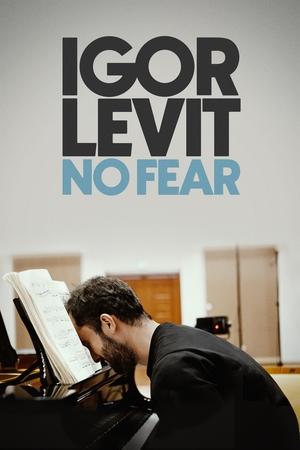
Follows the artist over two years as he explores his „life after Beethoven“, as he searches for his next challenge, his identity as an artist.
A look at the recently discovered fascinating behind the scenes footage shot by the legendary Hollywood director John Ford at Pearl Harbor in 1942 while filming his popular World War II documentaries December 7th and The Battle of Midway.
This is a 1991 documentary film about the legendary artist and filmmaker, Joseph Cornell, who made those magnificent and strange collage boxes. He was also one of our great experimental filmmakers and once apparently made Salvador Dali extremely jealous at a screening of his masterpiece, Rose Hobart. In this film we get to hear people like Susan Sontag, Stan Brakhage, and Tony Curtis talk about their friendships with the artist. It turns out that Curtis was quite a collector and he seemed to have a very deep understanding of what Cornell was doing in his work.