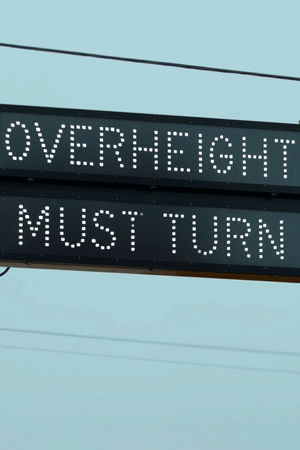
For the past ten years, Jürgen Henn has filmed over-height trucks crashing into the 11foot8 train bridge affectionately nicknamed the "Can Opener." In that time, millions have viewed the crashes online. Regional, national, and international news organizations have dined out on the story and the goofy crash reels. But why do motorists continue to crash despite the many warnings, sensors, and signs? And what is it about these crashes that holds our attention? In this piece, we look for the humanity in human error.
Action 37
Max Gimblett: Original Mind documents the life and process of eccentric, creative genius Max Gimblett. One of New Zealand’s most successful and internationally prominent living painters, Gimblett has been working in America since 1962. The filmmakers spent a week in Gimblett’s Soho loft where he and his devoted studio assistants generously revealed the techniques and philosophy behind his beautiful art.
Documentary about the emergence of the strike movement in the iron ore mines of Rudňa in Slovakia. The miner Michal Ogurčák introduced a new way of mining iron ore here, overcame initial misunderstandings, and eventually inspired 160 followers to perform striking feats by his example.
Take a breathtaking train a ride through Nothern Quebec and Labrador on Canada’s first First Nations-owned railway. Come for the celebration of the power of independence, the crucial importance of aboriginal owned businesses and stay for the beauty of the northern landscape.
Documentary marking the 30th anniversary of the 1984 miners' strike, one of the bitterest industrial disputes in British history, with stories from both sides of the conflict.
Warwick company newsreel material of the Universal Colliery at Senghenydd on fire after an explosion on 14th October 1913, and footage of a funeral procession for some of the 439 mine workers who were killed, is followed by a collage of images of the town and its people as they are 50 years later. Wynford Vaughan Thomas, narrating his own commentary, wonders if "colour"- superficial re-decoration – can really make any difference to "the inner heart of Senghenydd". Shot on spare, blank pieces of film by James Clark. Assisted by local amateur photographer and former miner Bill Probert. Script written and narrated by Wynford Vaughan Thomas. 1964.
In the years since New Zealand politicians began to grapple with climate change our greenhouse gas emissions have burgeoned. Alister Barry’s doco draws on TV archives and interviews with key participants to find out why.
On 28 November 1979, an Air New Zealand jet with 257 passengers went missing during a sightseeing tour over Antarctica. Within hours 11 ordinary police officers were called to duty to face the formidable Mount Erebus. As the police recovered the victims, an investigation team tried to uncover the mystery of how a jet could fly into a mountain in broad daylight. Did the airline have a secret it wanted to bury? This film tells the story of four New Zealand police officers who went to Antarctica as part of the police operation to recover the victims of the crash. Set in the beautiful yet hostile environment of Antarctica, this is the emotional and compelling true story of an extraordinary police operation.
In this feature documentary, filmmaker Paul Cowan offers an innovative, moving account of the Westray coal mine disaster that killed 26 men in Nova Scotia on May 9, 1992. The film focuses on the lives of three widows and three miners lucky enough not to be underground that day when the methane and coal dust ignited. But their lives were torn apart by the events. Meet some of the working men, who felt they had no option but to stay on at Westray. And wives, who heard the rumours, saw their men sometimes bloodied from accidents and stood by them, hoping it would all turn out all right. This is a film about working people everywhere whose lives are often entrusted to companies that violate the most fundamental rules of safety and decency in the name of profit.
Uhelný lom
In 1966 a group of determined young men defied the New Zealand government and launched a pirate radio station aboard a ship in the Hauraki Gulf.
Mladí nastupují směnu
A short documentary about the work of railwaymen and life on the railway.
A black-and-white visual meditation of wilderness and the elements. Wildlife filmmaker Richard Sidey returns to the triptych format for a cinematic experience like no other.
The mining industry, which always had been “sponsor” and “financier” of the soccer clubs in the Ruhr valley during the post-war period, doesn’t exist anymore nowadays in that form. Many of the once glorious clubs which dominated German soccer until the 1970s faded into obscurity without financial backers. The documentary “Im Westen ging die Sonne auf" ("The sun had risen in the west“) shows the history of the “Revierfußball” from after the second World War until the decline of the mining industry and recalls legendary players and forgotten clubs. The film shows especially how deeply rooted the sport was back then in the entire lifestyle of the Ruhr area - in private life as well as in society - and how structural change also left clearly visible marks in sports. With pictures from back then, interviews with contemporary witnesses, and footage of original locations nowadays, a contemporary document of German post-war history, by taking the example of soccer, has been created.
A travelogue, this film provides a guided tour of pre-World War II Utah and of course does not pretend to cinematic greatness. Recommended viewing for those in search of introductory Utah history. Also valuable for persons seeking insight into the state as it would have looked during this time period. Especially informative for those desiring a window into the past for a view of how Utah was in the days of their pre-World War II progenitors living in the state. Those whose Utah ancestors were involved in mining, railroading, sugar beets, and other featured industries; featured towns, sights, recreational attractions, and industries may find this otherwise banal travelogue a quite valuable addition to their family history.
Production for the Seaboard Railroad company outlining their railroad activities in the 1940s and heading into the 1950s
A production of the association of American Railroads outlining the wonders of America's rail system.
A documentary on the railroads of America produced by the Association of American Railroads