Director Scheffer registered a performance of the Tea Opera by Chinese composer Tan Dun (who won an Oscar in 2001 with his score for Crouching Tiger, Hidden Dragon). Scheffer interlaces the images with interviews with Dun, stage director Pierre Audi and librettist Xu Ying, about the opera and the role tea and oriental philosophy play in this work. Using monochrome, sometimes abstract images (in yellow, blue, red and green), close-ups of plants and flowers and images of the Chinese nature and people (sometimes accelerated or decelerated, sometimes in black-and-white), he mirrors the stylised opera performance and Dun's reflective music.
Although Domingo was younger and Banackova looked more like the sweet and innocent young Madalena than the one played by Tomowa-Sintow in the ROH production, this production was not as good. It was not as tight and neat. The tempo set was far too slow for the time-period of the story. The stage setting was distracting. The lighting was too dark. Except Domingo, a natural actor who was always into his role and sings and acts with passion, none of the other performers came up with a convincing portrayal of the role he/she played.
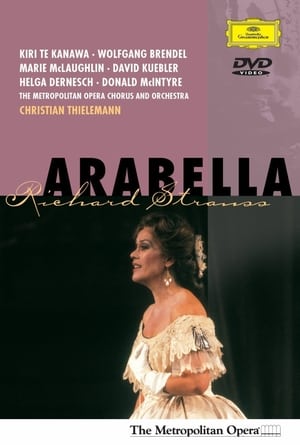
Arabella, Op. 79, is a lyric comedy or opera in three acts by Richard Strauss to a German libretto by Hugo von Hofmannsthal, their sixth and last operatic collaboration.
David Attenborough tells the revealing story of this Caribbean island's exotic but vulnerable wildlife. A team of conservation champions are making it their mission to save the most precious species. We see how Puerto Rican parrots, manatees and turtles are now making a comeback.
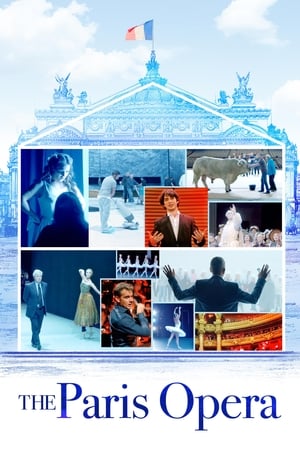
A behind-the-scenes look at the of how the Paris Opera is run under the direction of Stephane Lissner.
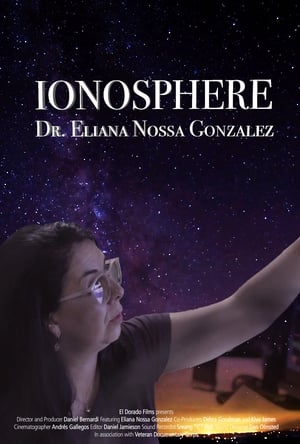
At Arecibo Observatory in Puerto Rico, Eliana Nossa studies the ionosphere. This short films tells the story of Columbian researcher Eliana Nossa as she explains her study of the ever-changing universe, Arecibo's technology and data, and her role as a woman among her male colleagues. She studies the ionospheric irregularities that impact terrestrial communication.
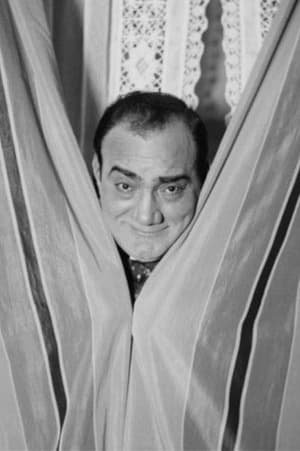
Born in 1873 in a poor neighbourhood in Naples, Enrico Caruso conquered the world with his singing voice. At the age of 27 he got a contract at the Scala in Milan, and his already considerable popularity skyrocketed thanks to the invention of the gramophone. He sold millions of records, and garnered international acclaim. In 1903 he moved to New York to perform at the prestigious Metropolitan Opera, in the role of Radames. But his riches and fame attracted the attention of the Mafia, who started blackmailing him. He felt trapped by his fame and died at just 48 years old. Biographer Francesco Canessa, the music critic Jürgen Kesting and the composer Micha Hamel explain the ups and downs of the man behind the timeless Italian voice.
BBC television program exploring Visconti’s mastery of cinema, theater, and opera direction.
This revealing documentary from director Philippe Kohly examines the storied life of renowned soprano Maria Callas, from her troubled childhood in New York City to her scandal-laden but triumphant international career in opera. Featuring archival interviews with Callas herself and footage of contemporaries such as her lover Aristotle Onassis, this celebration of "La Divina" pays tribute to her enduring legacy some three decades after her death.
With its four operas, seventeen-hour running time and months of rehearsal, Wagner's "Ring Cycle" is a daunting undertaking for any opera company. Jon Else goes backstage to show this rare event entirely from the point of view of union stagehands at the San Francisco Opera.
A short film by Walerian Borowczyk in two parts. The first 'panel' follows the morning routine of Leon Boyer who, despite being almost 100 years old, still farms the land, drives a vintage car, and plays with his two dogs. The second panel shows shots of beautiful flowers and a cat, to a recording of Tino Rossi singing 'La romance de Nadir / Je crois encore entendre' from Bizet's opera 'Les pêcheurs de perles'.
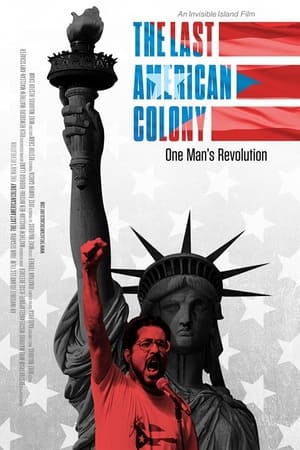
Puerto Rico, the last relic of colonization in the western hemisphere, has been a dependent territory of the USA since 1917. Los Macheteros and one of its leaders Juan Segarra have been fighting for its full independence for many decades.
A look at the entire process of creating and developing Patrice Chéreau’s third staging of "In the Solitude of Cotton Fields" by Bernard Marie Koltès with Pascal Greggory and Chéreau himself. From the first reading around the table through the first contact with the performance space, rehearsals and lighting to opening night, the entire creative process unfurls in front of our eyes. The film shows us the evolving and ongoing dialogue between Greggory and Chéreau, a dialogue full of crises and magical moments of harmony and insight via which the truth, intensity, complexity, mystery and depth of Koltès’ text gradually emerge to form an implicit bond between these two men. The film also shows Chéreau directing rehearsals for Mozart’s "Don Giovanni" in Salzburg, revealing both the unity of and profound differences between his opera and theater work.
A Night in Tuscany is the first DVD released by Italian singer Andrea Bocelli of a concert held in his native Tuscany, in 1997, highlighting the unique blend of Classical, Pop, and traditional Italian songs that made him a crossover success as an internationally acclaimed tenor. The concert takes place at the Piazza dei Cavalieri in Pisa. Bocelli performs two opera duets with soprano Nuccia Focile during the concert, before singing Miserere with Italian rock star Zucchero, who discovered him, and Time To Say Goodbye with English soprano Sarah Brightman
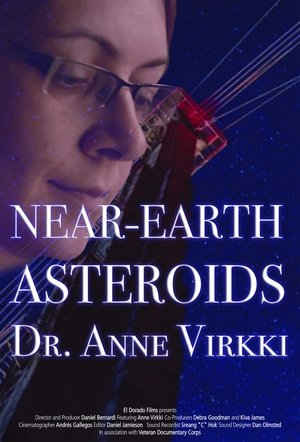
At Arecibo Observatory in Puerto Rico, “Near Earth Asteroids: Dr. Anne Virkki” tells the story of Research Scientist Anne Virkki and her ongoing studies on asteroids and their threat to humanity. Originally from Finland, Anne Virkki shares her experience in education as well as her studies on asteroids, including her work hunting and tracking asteroids headed for Earth.
The documentary dives intimately behind the scenes of the Finnish National Opera and sucks the viewer in like the best of thrillers. The three hours fly by, even for those who aren’t necessarily interested in opera as an art form.
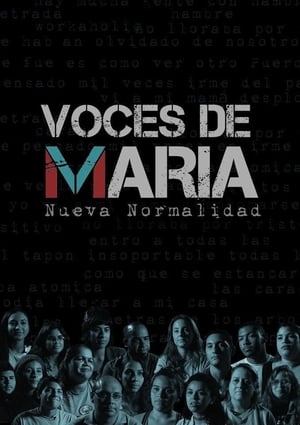
A documentary that reflects on the vision of 'progress' that governments cling to in times of climate change, focusing on the personal and collective experience lived in Puerto Rico after Hurricane Maria struck the island in 2017.
After 2000 years of history, the Arena of Verona is celebrating the Centenary of its Opera Festival with Verdi's AIDA by La Fura dels Baus. From rehearsals to the opening night, we follow the workers and artists who created the most famous operatic festival in the world.
The career of Maria Callas was just a bit too early and too brief to receive full and satisfying video documentation like that now being accorded to such singers as Renée Fleming and Luciano Pavarotti. This black-and-white televised recital (Callas's Paris debut) took place at the Paris Opera on December 19, 1958 when television was still in its infancy. We might wish that it had happened earlier, when her voice was in better condition, or later, when video recording technology was more advanced--so that, for example, we would not have to take the narrator's word that Callas is wearing a red dress. But this is probably the best available Callas video recording, and her fans will welcome it warmly. Visual elements were as important as the vocal dimensions in her art.
Including world-class artists such as Bryn Terfel, Cecilia Bartoli, Anne Sofie von Otter, Jose Cura, Simon Keenlyside and Agnes Letestu, this 50-minute sampler will give you a taste of many beloved classics in opera and ballet.