Montage of water related subjects.
Experimental short film about car wreckage and automobile safety.
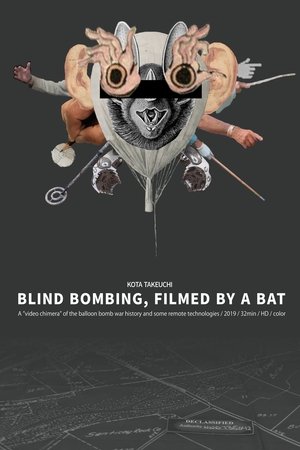
During WWII, the Japanese army developed experimental balloons able to cross the Pacific Ocean and reach the West Coast of North America in 3-6 days. Armed with explosives, they were given the code name fu-go, or fusen bakudan (“fire balloons,” or balloon bombs) in an attempt to instill a culture of fear like that caused by the far more deadly American firebombing of Japanese cities. The U.S. responded by enacting a censorship campaign, requesting newspapers avoid reports of fu-go landings or sightings. Living near the remains of a fu-go launch site in Fukushima Prefecture, Takeuchi mimics their flight take-off using a drone camera, and, traveling to North America, follows their arrival across the shoreline and rural landscapes, using a bat’s echolocation as narrative device to place fu-go and Fukushima as echos across history.
In a series of juxtaposed images and sounds, Jaromil Jireš comments on the tragic premature death of thousands as well as their posterity due to the atomic bomb.
John H. Whitney Sr. explains the graphic art potential of the computer and the methods and philosophy involved in his computer filmmaking. Preserved by the Academy Film Archive in 2012.
Life in a rural industrial town: a teenage boy, his family, friends and failed attempt at love are investigated through stark black-and-white photography and static long takes. Filmed in a fusion of authentic and staged documentation, with robotic performances by actors and non-actors, the piece meditates on the mundane existence of human and animal life.
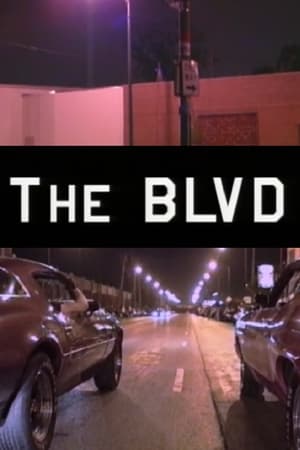
An experimental documentary about the street drag racing scene on Chicago’s Near West Side. This is a rambling, textured film about obsession. It is about the mythos of speed for its own sake, and it is about waiting. While waiting, The BLVD exposes community, inner-city landscapes and nomadic experiences of place. The film treats storytelling as a living medium for determining history. And it commands respect for those who transform cars, or anything else, through passion.
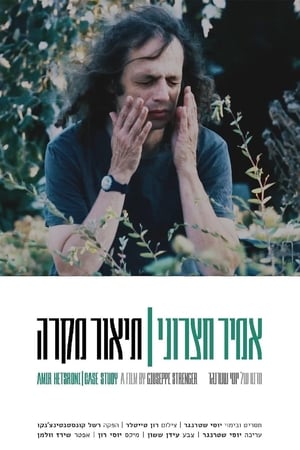
A fascinating journey with Israel’s notorious provocateur, Prof. Amir Hetsroni, into the depth of his romantic and interpersonal relationships, alienated childhood, and public persona versus his self-identity.
A short film attributed to Jean-Luc Godard concerning the ZAD surrounding the proposed Aéroport du Grand Ouest, decrying our capitalist society.
Vaghe stelle is a seven-chaptered film, conceived as a musical album and composed of seven movements, which can be watched singly (like songs), or in the established order (like a record) or also mixing the films creating new combinations or possible narrations.
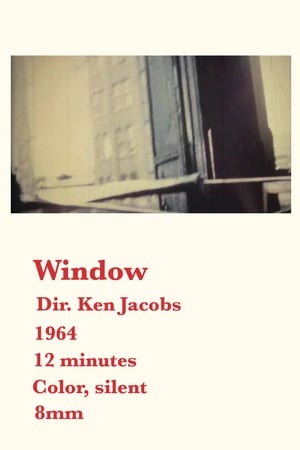
The moving camera shapes the screen image with great purposefulness, using the frame of a window as fulcrum upon which to wheel about the exterior scene. The zoom lens rips, pulling depth planes apart and slapping them together, contracting and expanding in concurrence with camera movements to impart a terrific apparent-motion to the complex of the object-forms pictured on the horizontal-vertical screen, its axis steadied by the audience's sense of gravity. The camera's movements in being transferred to objects tend also to be greatly magnified (instead of the camera the adjacent building turns). About four years of studying the window-complex preceded the afternoon of actual shooting (a true instance of cinematic action-painting). The film exists as it came out of the camera barring one mechanically necessary mid-reel splice
This film uses the image of fireworks (as points of light) superimposed in the camera and in the optical printer until the surface of the film begins to bleach out.
Chris Gallagher’s feature-length film essay Time Being is an elegant and thought-provoking investigation of the nature and experience of time, and its filmic representation. 88 one-minute shots or shot-sequences counterpoint a spoken commentary that probes and questions the subject from many different angles – psychological, philosophical, mechanical, cosmological, artistic. Equally, Gallagher combines aspects of different cinemas – documentary, structural, poetic, narrative, and personal – skillfully interweaving all the elements into a complex yet coherent and surprisingly moving statement on the human condition. The most brilliant film on its subject I’ve ever seen, Time Being is cool and non-academic yet deeply engaged, and beautifully shot. An educational film in the best sense. —Tony Reif
An experimental journey into nostalgia, media, and ownership.
Concerned with processes of assembly, CHOIR brings together disparate bodies of material and archival technologies into dissonant concert. It is a work of several parts. Part one constructs an auditorium in which an action will be staged. Part two assembles the chorus to narrate the action. Part three supplies the action.
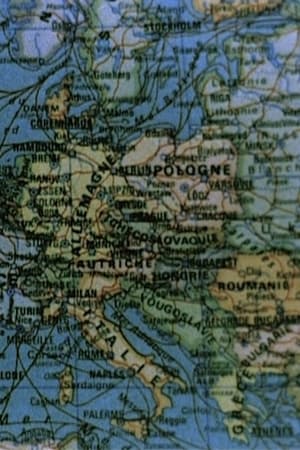
The film purports to be the second version of a (fictional) film made by Baudelaire in 1850 in memory of his (actual) voyage across the Pacific. It was shot using a world map mounted on black board, filmed in its entirety and in extreme close-up.
Mick Glasheen, an architect and pioneer of early cinema and experimental film, created work that was heavily influenced by media theorists. His video Teleologic Telecast from Spaceship Earth: On Board with Buckminster Fuller, 1970, is a re-mixed recording of a Buckminster Fuller’s lecture given at UNSW, presenting Fuller’s ideas on science, metaphysics and the universe, merged with just as radical techniques of moving image production, creating a multi-layered expression of image, voice, and sound.
A video collage centering around flying drops, in space and on earth, along with coloured rivers, a sense of curiosity, joy and hommage. Watching extreme summer weather, outside the filmmaker's window under construction in Berlin inspired the impromptu video. Her scenery and sound recordings are intertwined with memories of selected film-, video and photo materials from colleagues and agreeable archives. Nature sound combined with Paul Hubweber's Trombone Variations and the vocal music piece Neptune's Bellows by trio Sverdrup Balance tie all elements together.
A workshop film made with a group of students of the Pietro Zorutti School in Palmanova, Esercizi di Cinema is an experimental adaptation of Raymond Queneau's book Exercises in Style.
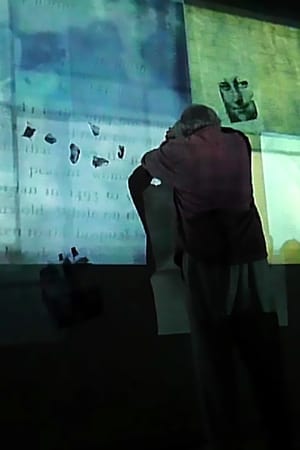
"This installation or performance work puts my own earlier film of the Mona Lisa (1973) through another stage of transformation – my own irretrievable self of some 34 years ago is now also part of the subject I first saw the ‘actual’ ‘Mona Lisa’ when I was about thirteen. Of course I had seen dozens of reproductions in books and postcards by then and the popular mythology of the enigmatic smile was already well engrained in my mind. My strongest impression, as I recall, was how small and unsurprising it was – a heavily protected cultural icon – no longer really a picture – and I was much more excited by the painting of the distant landscape than by the face. My own ‘version’ of ‘la Giaconda’ was never an homage, nor like Marcel Duchamp’s ‘L.H.O.O.Q’, an attack on its cultural power. Instead it came from a fascination with change and transformation – maybe also with arbitrary appropriation." Malcolm Le Grice