This cacophony runs over me, over everything I see, everything I want to see: it's me.
Centrist revelations abound among repetitions & revisitings.
Still it's really tall. Still it's really floundering/falling/fading.
A concert at the Golden Circle with Don Cherry and his quintet was filmed and then processed to an art movie using various optical effects.
Rather pointless, rather stilted, fetid; not what we want us going after.
It's time the times met each other over & over.
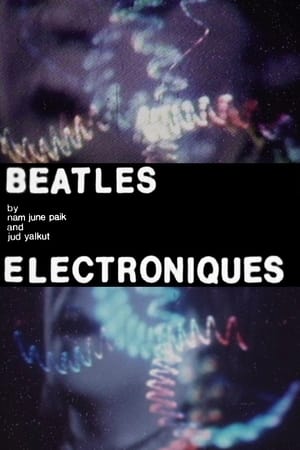
Part of a collection of restored early works by Nam June Paik, the haunting Beatles Electronique reveals Paik's engagement with manipulation of pop icons and electronic images. Snippets of footage from the feature film A Hard Day's Night and the "Rain" promotional film are countered with Paik's early electronic processing.
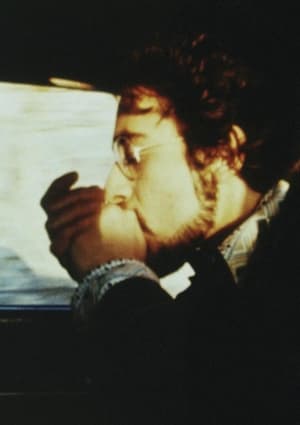
Arguably Larry Gottheim’s most exuberant experiment in the single-shot, single-roll format (and his first with a soundtrack), HARMONICA trains the camera on a friend improvising a tune in the backseat of a moving car. Held out the window, the harmonica becomes a musical conduit for the wind, while Gottheim's film transforms before our eyes into a playful meditation on wrangling the natural elements into art. - Max Goldberg
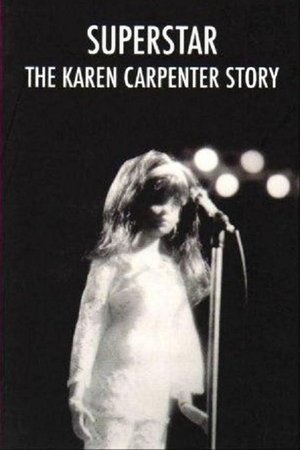
The final 17 years of American singer and musician Karen Carpenter, performed almost entirely by modified Barbie dolls.
Global Groove was a collaborative piece by Nam June Paik and John Godfrey. Paik, amongst other artists who shared the same vision in the 1960s, saw the potential in the television beyond it being a one-sided medium to present programs and commercials. Instead, he saw it more as a place to facilitate a free flow of information exchange. He wanted to strip away the limitations from copyright system and network restrictions and bring in a new TV culture where information could be accessed inexpensively and conveniently. The full length of the piece ran 28 minutes and was first broadcasted in January 30, 1974 on WNET.
Roda Viva Roda Brasil
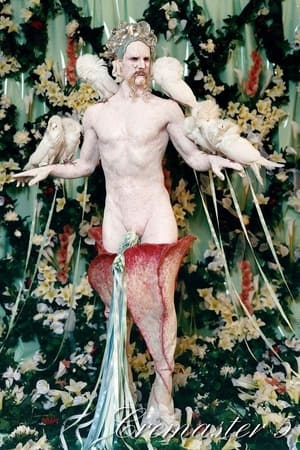
CREMASTER 5 is a five-act opera (sung in Hungarian) set in late-ninteenth century Budapest. The last film in the series, it represents the moment when the testicles are finally released and sexual differentiation is fully attained. The lamenting tone of the opera suggests that Barney invisions this as a moment of tragedy and loss. The primary character is the Queen of Chain (played by Ursula Andress). Barney, himself, plays three characters who appear in the mind of the Queen: her Diva, Magician, and Giant. The Magician is a stand-in for Harry Houdini, who was born in Budapest in 1874 and appears as a recurring character in the Cremaster cycle.
An ambient representation of depression with a slowly fading score building towards an uncertain climax.
Playful and rythmic self-portrait shot on Super 8mm and 16mm. Colored directly on the super 8mm.
Adopting mainly hand contact printing with photographic enlarger, «Metaphysics of sound» started from September of 2006 and completed in July of 2007. With a 35mm soundtrack image, I made a hand-drawn soundtrack on the 16mm film strip. The sounds were made either by directly contact printing the 35mm sound tracks or collaging the scratch images. According to pattern of sound on the 20% blank of 16mm film strip (normally used as space for optical recording), I edited whole image and made structure of film. Hence the margin is a where image is sound, and vice versa. Later, I studied the sound patterns which varied according to the kinds of images used or the concentration of the image, and made various attempts at rearranging the structure of the sound with the image.
"A Motion Selfie" is one-of-a-kind DIY filmmaking: a darkly comic chronicle following a year in the life of a washed-up viral video star and the sexually depraved stalker who becomes obsessed with his work.
With 8 Switches, Tim Wright presents six black-and-white microcinematic vignettes of retina-searing, hard-edged, epilepsy-inducing sound and vision; digital hallucinations drained of colour, synchronized to a soundtrack that is relentless and unsentimental. Each new section presents a variation on the same sleek, kinetic minimalism. As each section progresses, the razor-sharp line between a host of binary oppositions—black/white, figure/ground, silence/sound, here/there, on/off — dissolves through sheer velocity. The rapid-fire alternation between these binary oppositions acts like the flicker of film frames, accelerating until sound and sight are wed into a synchronous whole in which neither the visual nor the sonic takes primacy. Instead, each acts as mutually constitutive literalisation of the other. — Joseph Clayton Mills
A huge, run-down apartment in Berlin Mitte. Two women and a man, rehearsals for a movie about love and sex, that will never be shot. Acting and reality mingle into a dangerous mélange.
The film is an allegory in which the attempt is made to show the inner process of movement of the composer's soul at the time of the birth of music.
An unnamed passer-by is forced to trace a circular route inside an abandoned tram station, facing loss and time. The broken walls act as a channel, transmitting fragmentary, blurred and analogical memories.