A day in the city of Berlin, which experienced an industrial boom in the 1920s, and still provides an insight into the living and working conditions at that time. Germany had just recovered a little from the worst consequences of the First World War, the great economic crisis was still a few years away and Hitler was not yet an issue at the time.
Kolem republiky
TGV, la réussite française
The British Railways modernisation programme of the 1960s radically changed the rail network, and the British Transport Films unit and the TV news were there to capture it. Compiled here is never before released colour footage of Southern steam at Waterloo (with Nine Elms depot), all the major London stations, The Blue Pullman and early diesels, The Golden Arrow and Night Ferry service, goods and mail, steam on the Metropolitan Railway and building the Victoria Line.
Été 44, un train pour l'enfer
A family embarks on an annual tormenting journey along with 130 million other peasant workers to reunite with their distant family, and to revive their love and dignity as China soars as the world's next super power.
The story of how newspapers were distributed during the Blitz, stressing the importance of an accurate and objective press on the home front.
Osudová Strela
"Tetsudou" version of the series full of popular vehicles for children. Fifty kinds of trains selected from the railway active in Japan such as Shinkansen, SL (steam locomotive), limited express, etc. are recorded with powerful images. Introducing a nostalgic train that is not running now as a bonus picture.
A Union Pacific production outlining the Big Boy locomotive and the history of the last great steam engine to rule the rails
Documentary on the evolution and introduction of modern coal burning locomotives on the Norfolk and Western Railway line.
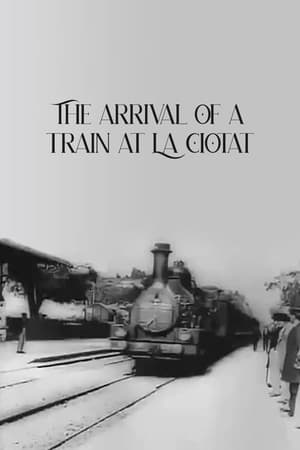
A group of people are standing along the platform of a railway station in La Ciotat, waiting for a train. One is seen coming, at some distance, and eventually stops at the platform. Doors of the railway-cars open and attendants help passengers off and on. Popular legend has it that, when this film was shown, the first-night audience fled the café in terror, fearing being run over by the "approaching" train. This legend has since been identified as promotional embellishment, though there is evidence to suggest that people were astounded at the capabilities of the Lumières' cinématographe.
La saga du rail
TGV, 30 ans de vitesse
"The End of the Line - Rochester's Subway" tells the little-known story of the rail line that operated in a former section of the Erie Canal from 1927 until its abandonment in 1956. Produced in 1994 by filmmakers Fredrick Armstrong and James P. Harte, the forty-five minute documentary recounts the tale of an American city's bumpy ride through the Twentieth Century, from the perspective of a little engine that could, but didn't. The film has since been rereleased (2005) and now contains the main feature with special portions that were added as part of the rereleased version. These include a look at the only surviving subway car from the lines and a Phantom tun through the tunnels in their abandoned state, among others, for a total of 90 minutes of unique and well preserved historical information.
This documentary short examines the special train on which mail is sorted, dropped and collected on the run, and delivered in Scotland on the overnight run from Euston, London to Glasgow.
After shooting more short films and documentaries, Deschanel wrote, directed and shot Trains, a short film that won the Silver Bear at the 1976 Berlin Film Festival. Trains is an exquisitely filmed short format documentary on passenger trains throughout the course of one day.
THE STRAIT GUYS follows Czech-born mining engineer, George, and his fast-talking protégé, Scott, along the proposed route of the InterContinental Railway through Alaska, to the Bering Strait and onward to Russia. The “Strait Guys” endeavor to convince international governments, corporations, and indigenous tribes to green-light their $100 billion railway project, which would provide ground-based infrastructure across the continents, relieve overcrowded Pacific ports, improve global supply chains, and ease tensions between the superpowers. The US and Russia have been successfully collaborating in space for decades. Now the Strait Guys are out to prove it is also possible down here on earth.
Bypass - Quale futuro?
Could our mounting modern problems have ancient solutions? Travel to the depths of China to find out.