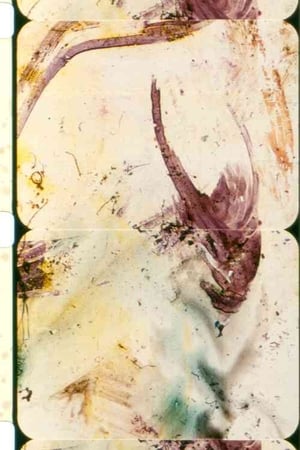
striations is a two-channel video made by Steve Roden with artist Mary Simpson. It was originally part of a larger exhibition that included painting, drawing, and sculpture related to an unfinished stone sculpture made by Roden’s grandmother. The film attempts to use fragments of “stilled” information whose meanings are unknown or unresolved, to become active again through engagement and use. The imagery includes Roden’s grandmother’s half carved stones, as well as images related to Henry Moore and artifacts of his grandmother’s objects left behind, such as the crayons used in the rubbings, and the photographs of birds she used as inspiration/study for sculpture never realized. striations is accompanied by distance piece, a soundwork that intertwines with the silent film.
A tale of two brothers from babies to adulthood told without words. One brother is upstaged by the other from the crib onward. Eventually the tables are turned.
First fully-realized video work from Sean McCann, circa late 2008. A sensory overload of aquatic and galactic collages, a surreal journey. Featuring an original soundtrack, recorded following the Midnight Orchard sessions - quite mesmerizing and peaceful.
Super 8mm film.
From the Maroon village of Malobi in Suriname, South America, this single-take film offers a strikingly contemporary take on a Jean Rouch classic. It’s Halloween at the Equator, Andrei Tarkovsky for the jungle set.
This documentary aims to register this unknown side of James Joyce: His Greek Notebooks. Trieste. Bloomsday, 2013. Dance in slow motion, accompanied by text. By deconstructing the body, we turn it into a memory: of the body, of life, of texts. The biographical references to Joyce and Mando Aravantinou, combined with the diagonal slicing of the image, cancel the realism of the landscape, including that of the Narrator’s space/study. As a culmination, Joyce’s letter “A request for a loan in Greek” functions as a timely denunciation. Various routes through cities, such as Trieste, London, New York, and Athens; languages such as Greek and English. In addition to the primal myth of Ulysses, there is another issue: Greek is “the language of the subject of Ulysses”
Memória Presença
Fifteen images of a camera running in a park and in obscurity searching the space of light through distorsion and the sensory of rapid motion.
This cine-portrait of New York City uses digital effects to turn the countless riders of the subway system into living, breathing paintings.
In the Mojave Desert, fields of solar panels follow the sun’s daily journey in perfect synchronicity.
Colossal explores the complexities of grief and the process of grieving as understood through the myth of a Man as he ventures through shifting landscapes ruminating.
ISLANDS explores a cinematic journey of two astronauts. As they enter Earth’s atmosphere the structure transforms. The spacecraft becomes the meteor from a myth of a tribesman; it triggers an old lady’s memory of a lover from her past. As these diverse characters converge in a plane of reality, we confront a particular form of gravity we covertly feel—falling in love.
Rapidly changing images of natural objects, scenery, animals, plants, and people flicker, flash, tumble, and cascade across the screen.
At first, there was Tagalog, Gym Lumbera’s short and, to his mind, unfinished narrative about the infidelity that comes between a husband and wife in their twilight years, shot on film and reflecting his own real-life infidelity.. And then there was a storm, a real storm and not a metaphorical one, that flooded his house and submerged, and subsequently damaged, the only copy of Tagalog. This damaged version, entitled English, became the missing piece that completed the film. The new work is named after Taglish, the bastard hybrid, some say corruption, of Tagalog and English, and has become a meditation on love and language and the ways in which we betray and destroy them.
A day in the city of Berlin, which experienced an industrial boom in the 1920s, and still provides an insight into the living and working conditions at that time. Germany had just recovered a little from the worst consequences of the First World War, the great economic crisis was still a few years away and Hitler was not yet an issue at the time.
Avant-garde composer John Cage is famous for his experimental pieces and "chance music" but temporarily branched into video in 1992 with this art film about meaningless activity. The work is composed of two segments that are supposed to be played simultaneously: "One 11" contains the artistic statement, and "103" is a 17-part orchestral piece. Also included is a revealing documentary about Cage and director Henning Lohner.
Basically an artist is also a terrorist, the protagonist thinks in an unguarded moment. And if he is a terrorist after all, then he might just as well be one. Not an instant product, but an experimental feature in which diary material is brought together to form an intriguing puzzle.
Sarah is a debt collector who lives among the inhabitants of the village of Guimbal on the island of Panay. She wants to find the young man who appeared to her in a dream and goes to the island of Negros. Here, as she interacts with the inhabitants, Sarah continues her search, gathering memories of life and war, dreams, myths, legends, songs and stories that she takes part in and at times revolve around her. She is the daughter of an ancient mermaid, a revolutionary, a primordial element, a virgin who was kidnapped and hidden away from the sunlight. “The film is a retelling of fragments of the American occupation. Dialogue, shot in the Hiligaynon language, is not translated but used as a tonal guide and a tool for narration. Using unscripted scenes shot where the main character was asked to merely interact with the villagers, I discard dialogue and draw meaning from peoples’ faces, voices, and actions, weaving an entirely different story through the use of subtitles and inter-titles.”
"Mapang-akit" is an offshoot of a documentary project made with an Icelandic filmmaker and uses the outtakes from the Hudas Hudas festival in Antique, where a community bonds over a large effigy of Judas Iscariot during Holy Week. Amidst it is a found story of a man who returns home to his death after pursuing a woman in a neighboring village.
The film consists of two identical prints shown simultaneously, one projected inside the image of the other. The inner image is out of sync one second in advance of the larger image creating a dynamic inter-play between the overlapping frames.