Spains Worst Rail Disaster
1917, The Train from Hell is an historical documentary about a train accident during WW1.
The pilgrimage to Mecca is one of the most important religious journeys for millions of people around the world. But how to get there? This documentary shows us how 12 companies met the immense challenge of running a high-speed train through Saudi Arabia's sandy rocky desert in temperatures of up to 50 degrees Celsius. A true marvel of engineering and cooperation, and together, overcoming obstacles.
Neil Oliver describes the worst ever railway accident in the UK, which happened a hundred years ago on 22 May 1915, in which three trains collided at Quintinshill near Gretna Green. One of the trains was a troop train taking soldiers to fight in World War I at the Battle of Gallipoli: many of the dead were in this train which caught fire due to escaped gas from the archaic gas lighting in the carriages. The cause of the crash was attributed to a catastrophic signalman's error, but Neil examines whether there were other contributory factors and whether there was a cover-up to prevent investigation of them, making convenient scapegoats of the signalmen.
An intimate insight into the servant culture and lifestyle of the Viceroy of India and family, as they visit Simla (Shimla) and Lahore.
Trace the history of Hitler's armored private train, a 15-car mobile headquarters boasting state-of-the-art communications and anti-aircraft cannons.
A light and somewhat satirical look at the problems and pleasures of Continental holiday travel. A passenger on the Hook Continental Express from Liverpool St. imagines the possible destinations of his fellow passengers.
In volume two, we take a look at the Grafton & Upton railroad's Caboose Extra ("Santa Train") on December 18th, 2010. Then during the Spring of 2011 we spend a day with G&U's newest locomotive, GP9R #1751 for a trip from North Grafton yard to West Upton yard and return. We see the crew of 3 put the day's train together in North Grafton and then chase it to West Upton yard. In West Upton we capture the crew switching out the Trans-loading facility and making the train up for the return trip to North Grafton. We then chase the train back to North Grafton yard! Non stop action on the G&U with #1751 & GP9R #1750!
In this 2 DVD set, we take a unique perspective look at the Grafton & Upton Railroad! We mounted a Pro 180° HDV camera to the hood of G&U GP9-R #1751 and travel from Hopedale yard to the yard in North Grafton. We travel over the recently reopened section from the newly rebuilt Hopedale yard through the scenic woodlands to West Upton yard. From the West Upton yard we travel through more scenic woodlands and scenic fields as we traverse the grades to Grafton Center and descend to the yard in North Grafton and CSX interchange.
Discover the "character" of one of Missouri's oldest tie and lumber operations through this archival black-and-white film that documents one of the last railroad tie drives on the Black River made by the T.J. Moss Tie Company of St. Louis in the 1920s. Thanks to release of the film by the Kerr-McGee Chemical Corporation, the rare footage in "Stamp of Character" takes us through the entire process of making railroad ties, at a time when forests covered almost two-thirds of the state. The original silent motion picture was shown in movie theaters as an advertisement by the T.J. Moss Tie Company. Using digitally edited narration and realistic sound effects, this video makes the past live again.
This documentary short examines the special train on which mail is sorted, dropped and collected on the run, and delivered in Scotland on the overnight run from Euston, London to Glasgow.
TGV, génie français du rail
The sory of the railroad's roll in getting beef to your local market
Climb aboard the illustrious Bernina Express for a festive ride through spectacular Alpine landscapes, taking in snow-covered peaks, architectural wonders, and majestic glaciers.
Tåget mellan liv och död
After the last train at night and before the first in the morning, 800 people are hard at work behind the scenes making London's Underground fit to travel on. Including brushing dust from ventilation ducts, ‘fluffers’ cleaning up rubbish, routine rail replacement and fixing a broken rail discovered at 3.30am.
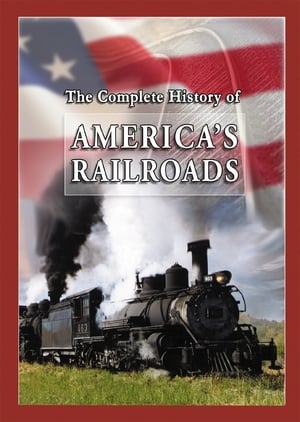
Documentary filmmakers offer a fascinating look at one of the most spectacular engineering feats of the 19th Century as the story of the Transcontinental Railroad comes to life in a film that's sure to appeal to historians and railroad enthusiasts alike. As legions of tireless workers toiled for six years to realize the vision of shady entrepreneurs and imaginative engineers, the remarkable railway dream slowly became a reality. But not everyone was so pleased with the remarkable achievement. Despite the devastating effect that the tremendous transportation breakthrough would have on the Native American population, the lasting impact of the Transcontinental Railroad on the politics and culture of a rapidly expanding country would forever mark it as an invaluable component of the American success story.
Dr Beeching, Chairman of the British Transport Commission, sits at a desk addressing workers. Intended to be shown before a programme of other British Transport films.
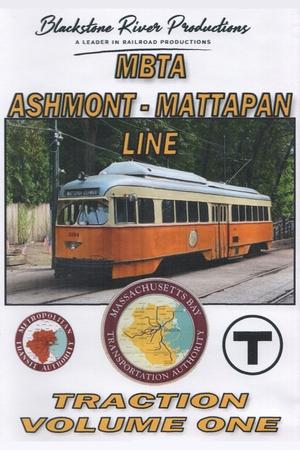
The Ashmont-Mattapan High Speed Line operates 2.6 miles of track from Ashmont Station to Mattapan Station just south of Boston. We capture this neat little commuter operation in the state of Massachusetts. They operate with all PCC trolley cars! This operation offers a vital link to commuters to get to Boston easily from the suburbs of Boston! It is a landlocked line that connects with the Red Line at Ashmont Station! Filmed in 2022 & 2023 at 7 of the 8 stations.
The Channel Tunnel linking Britain with France is one of the seven wonders of the modern world but what did it take to build the longest undersea tunnel ever constructed? We hear from the men and women, who built this engineering marvel. Massive tunnel boring machines gnawed their way through rock and chalk, digging not one tunnel but three; two rail tunnels and a service tunnel. This was a project that would be privately financed; not a penny of public money would be spent on the tunnel. Business would have to put up all the money and take all the risks. This was also a project that was blighted by flood, fire, tragic loss of life and financial bust ups. Today, it stands as an engineering triumph and a testament to what can be achieved when two nations, Britain and France put aside their historic differences and work together.