Siblings Aru, age 3, and Kino, age 1, have 3 parents: father Fumino, who is transgender; mother Honoyo, Fumino's partner who gave birth to the children; and father Gon, a close gay friend who donated his sperm. The 3 are now raising their children together, struggling repeatedly to find their own way of being a family. This program covers their first 3 years of parenting. And it asks an important question: What does it take to be a family?
In this tape, Ko Nakajima and Video Earth Tokyo interview a homeless man. The subject is initially angry and frustrated, but gradually opens up and shares stories about his life. Under A Bridge was later broadcast on cable television.
Kazuo Hara follows Ayumi Yasutomi, a transgender candidate, who is also a Tokyo University professor, as she embarks on a national campaign for a seat in Japan's Upper House.
How the Japanese process American pop culture and make it their own -- a mind-bending odyssey through cultural mixing.
The short history of a room and the fiction born in it.
Using never-before-seen footage, Japan's War In Colour tells a previously untold story. It recounts the history of the Second World War from a Japanese perspective, combining original colour film with letters and diaries written by Japanese people. It tells the story of a nation at war from the diverse perspectives of those who lived through it: the leaders and the ordinary people, the oppressors and the victims, the guilty and the innocent. Until recently, it was believed that no colour film of Japan existed prior to 1945. But specialist research has now unearthed a remarkable colour record from as early as the 1930s. For eight years the Japanese fought what they believed was a Holy War that became a fight to the death. Japan's War In Colour shows how militarism took hold of the Japanese people; describes why Japan felt compelled to attack the West; explains what drove the Japanese to resist the Allies for so long; and, finally, reveals how they dealt with the shame of defeat.
A journey into the unique, often bizarre, world of Japanese cat culture. Cat themed cafes, bars, temples, cat islands, cats with human jobs, cat friendly businesses, and the origins of the iconic beckoning cat statue.
This one-off TV special follows the exploits of camp comic Graham Norton on a visit to Tokyo. Staying with a Japanese family, he explores the city's seedy side, visits the home of a famous Japanese make-up artist, and has an embarrassing experience with an electronic toilet/bidet.
ONE OK ROCK with Orchestra Japan Tour 2018 features the final performance of the special concert held at Osaka-jo Hall in October 2018, where the band performed with a 53-member orchestra, alongside footage from the Saitama Super Arena show. The release also includes a 100-page booklet packed with newly shot member photos, commentary, live reports, and interviews with the production team, offering a deeply engaging read.
The documentary shows the types of the four seasons, when the story returns to the capital of Kyoto in 1200, where the traditions breathe beauty. Many historical sites and temples, various festivals taking place here, in an environment of good music walk in the most beautiful places of Kyoto.
Revealing the flaws of Japanese society, the 1995 sarin gas attack in the Tokyo subway prompted Murakami to return to his homeland, whose conformism he rejected, to examine it closely. This led to the creation of two works: Underground and 1Q84.
The Cove tells the amazing true story of how an elite team of individuals, films makers and free divers embarked on a covert mission to penetrate the hidden cove in Japan, shining light on a dark and deadly secret. The shocking discoveries were only the tip of the iceberg.
Documentary detailing Kiss' 1977 tour of Japan, including the recording of their ill-fated Japanese live album.
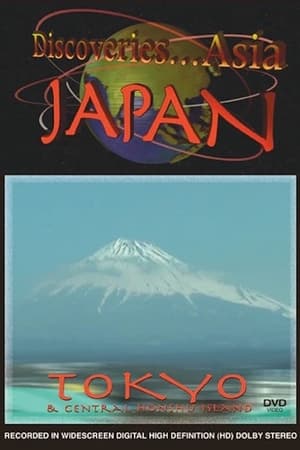
This is the story of colorful Japanese customs and manners of the past, and their contrast with present-day Japan. We see ancient farming customs, agricultural ceremonies, ancestor worship, schoolteaching, marriage customs, sports, all against the background of beautiful Japan.
This documentary started as part of a photography project about the indigenous Ainu population in northern Japan, portraying people from tightly knit communities. They feel deeply connected by their culture and tradition. With gorgeous pictures, the directors explore how different generations of Ainu reflect on their identity after centuries of oppression.
Documentary about two boys and a girl who travel to surfing spots around the world.
A history of baseball in Japan told by three Journalists from different parts of the world .
Documentary about a stay in Japan.
A documentary exploring what it means to be Japanese.
A visual documentary of Einstürzende Neubauten, the German underground band, by Japanese cult director Sogo Ishii, made during their 1985 tour of Japan. The band makes an elaborate and remarkably choreographed appearance in the ruins of an old ironworks which was scheduled for demolition; footage of same was incorporated into the movie and a brief appearance on stage.