O tecido da memoria (My room number is cucumber)
“Our memories are marked by smells. Bound together by their olfactory sensitivity, a daughter leads her father to question his family heritage: together they go through their double mourning, that of a grandmother and a childhood in Algeria. How do you face up to the fear of vanishing ghosts?”
The city and its parking lots.
On November 13, 2015, the attacks in Paris and Saint-Denis, carried out by three Islamist commandos and claimed by ISIS, were the deadliest in France since the end of World War II. In the months that followed, the November 13 Program was launched by the CNRS and Inserm to study the construction of individual and collective memory around an event that profoundly marked French society. Today, the testimonies of 27 volunteers—among some 1,000 people—who participated in the study form a mosaic of experiences that shows how trauma extends beyond the immediate circle to permeate the national collective memory.
This poetic film follows director Marialuisa's journey with Anita and Leticia, Central American women traveling with the Caravan of Mothers of Missing Migrants.
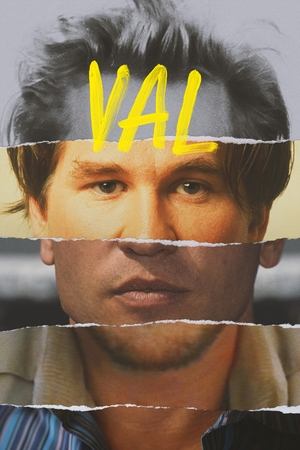
For over 40 years Val Kilmer, one of Hollywood’s most mercurial and/or misunderstood actors has been documenting his own life and craft through film and video. He has amassed thousands of hours of footage, from 16mm home movies made with his brothers, to time spent in iconic roles for blockbuster movies like Top Gun, The Doors, Tombstone, and Batman Forever. This raw, wildly original and unflinching documentary reveals a life lived to extremes and a heart-filled, sometimes hilarious look at what it means to be an artist and a complex man.
A New Yorker journeys to the jungle in the Darien Gap of Panama to reconnect with an indigenous tribe he met and photographed 20 years ago. Their reunion highlights the profound power of photos and the human connection that transcends cultural barriers.
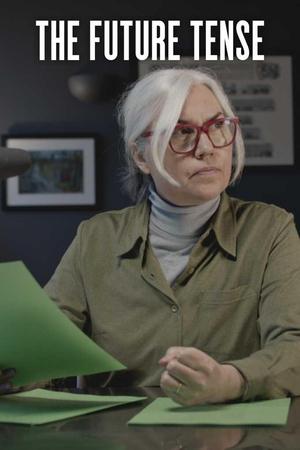
Staged as a series of voiceover sessions, written with gloriously off-balanced precision and dipped in the color green, THE FUTURE TENSE unfolds as a poignant tale of tales, exploring the filmmakers’ own experiences in aging, parenting, mental illness, along with the brutal history that lies submerged beneath Ireland’s heavy, moist earth.
Engaging themes of love and betrayal, hope, belonging and place, Glad You’re Here documents my nineteen--year journey through building a family life, seeing it suffer the damage of mental illness, grief and separation, and then rebuilding with empathy. A story about an extreme moment of crisis has turned into a documentary that deals not just with the subjective but with the important issue of spousal abuse.
January 2011 : the revolution bursts in Tunisia, my father’s country. The Tunisian people scream in a rage and I, here in Paris, can feel their revolt vibrating in my heart.
The lastest neuroscience discoveries show surprising results: false memories, distortion, modification, déjà vus. Our memory is affected in many ways, and deceives us every day. The very fact of recalling souvenirs modifies them. The everyday consequences are manyfold. To what extent can we rely on our souvenirs? How much credit can we give them during trials? Even more shocking, scientists have proved to be able to manipulate our memory: creating artificial souvenirs, deleting, emphasizing or restoring them on demand.
This film is a poetic composition of recorded history and non-recorded memory. Filmmaker Rea Tajiri’s family was among the 120,000 Japanese and Japanese Americans who were imprisoned in internment camps after the attack on Pearl Harbor. And like so many who were in the camps, Tajiri’s family wrapped their memories of that experience in a shroud of silence and forgetting. This film raises questions about collective history – questions that prompt Tajiri to daringly re-imagine and re-create what has been stolen and what has been lost.
This short documentary sifts through the pages of a woman's diary who has recently begun to write her memoir. As she looks back at her life and some of her memories, the film explores the ordinary act of writing and the value and meaning it may hold in mundane everyday life.
Structured as a labyrinth-like game and inspired by Jorge Luis Borges, Aleph is a travelogue of experience, a dreamer's journey through the lives, experiences, stories and musings of protagonists spanning ten countries and five continents.
After 50 years in theatre, film and television, Carme Elias is diagnosed with Alzheimer's Disease. Together with Claudia Pinto, a director and friend, they decide to record her last conscious voyage. The characters played by Carme accompany this difficult period, while the borders between fiction and reality disappear. While You're Still You is a constant game of mirrors, a pact of love and friendship.
A live telecast of the public memorial service for the king of pop, Michael Jackson.
Sirkka-Liisa died alone with no one left to miss her. Elina happened to buy her home after her death and ended up with all Sirkka-Liisa's possessions from books to photos. What would happen If Elina threw all her things away?
The film explores the turbulent lives of homeless persons in Cologne, Germany. Through their personal belongings the homeless share with the viewer their memories and emotions, and provide insight into the secrets of survival on the street.
What if we changed viewpoints? "Bullying, our lives after" highlights the suffering of adults who were once bullied pupils. Ten, twenty or thirty years later, trauma is still present. Following Nathalie, Laurine and Samuel, this movie shows the long-term implications of bullying, pointing out a real failure of the educational institution and a major public health issue.
Jonathan Stavleu explores, in a stream-of-consciousness video essay, the relationship people have with water and what happens when access to it is taken away. For this work, he examines anecdotal histories he has heard from Estonians, as well as stories from his own family history in the Netherlands, weaving them together into a journal-like narrative.