Village Diary
Follow the lives of the elderly survivors who were forced into sex slavery as “Comfort Women” by the Japanese during World War II. At the time of filming, only 22 of these women were still alive to tell their story. Through their own personal histories and perspectives, they tell a tale that should never be forgotten to generations unaware of the brutalization that occurred.
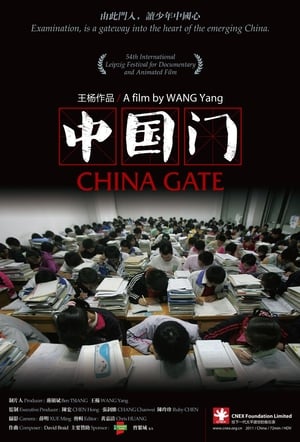
"China Gate" tells the story of young Chinese fight to change their fate through studying. Right before dawn, students in Huining have already started their self-studying session; hard working youngsters have filled up the space of school ground. This is one of the most poverty-stricken Counties in Western China; here people's only hope is in education, as the way to change their social status. Therefore all their effort point towards the College Entrance Examination, the process is like going through a gate, those who pass can study at urban Universities, and have the chance to build a better life. During the same winter season in Beijing, a graduate student faces a big decision. Should he keep trying to survive in the big city or get back to his countryside home? The exhausted faces at the Beijing underground seem to be revealing the truth about their distance in between. The student comes to see the flag ceremony at Tiananmen Square, where the pulsing symbol of the nation lies.
Zhang Ming went back to hometown to visit his aunt.
A soon-to-be first-time voter, the filmmaker’s thought-provoking journey into the Rust Belt and South captures four Asian American voters’ ardent first time grassroots political participation ignited by the 2016 rise of “Chinese Americans for Trump.” FIRST VOTE is a character driven cinema verité style film chronicling the democratic participation of four Asian American voters from 2016 through the 2018 midterm elections.
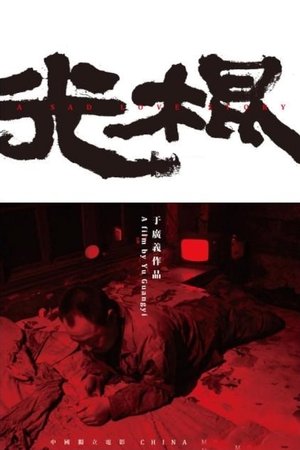
In his third film on life and work in the (once) heavily wooded north of China, Yu Guangyi (Survival Song) follows the lonely San Liangzi (46), who for the past ten years has been in love with a woman who doesn’t like men much. Intimate and revealing, but never rude. A moving and human portrait of a group of unemployed and above all lonely men who stayed behind when their wives moved to the city looking for work. They worked in the timber industry in the province of Heilongjiang, but deforestation has taken its toll. For instance, we see 46-year-old San Liangzi. Twelve years ago, he divorced his wife and became unemployed. For 10 years, he has had an eye on Wang Meizi, the only unmarried woman in the area. But the love is not mutual.
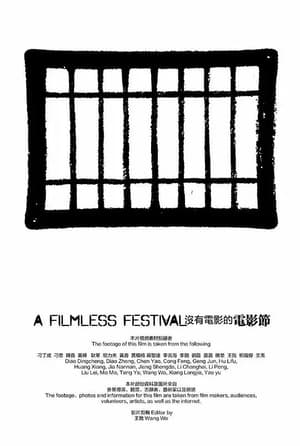
This film documents the 11th Beijing Independent Film Festival in 2014, from the preparations before the opening ceremony to the process of its forced cancellation, the event which spurred the Cinema on the Edge series. The footage used for the film was captured by audience members, local artists, invited directors and special guests, festival volunteers and workers, as well as journalists and members of the media. It is a film produced by the collective.
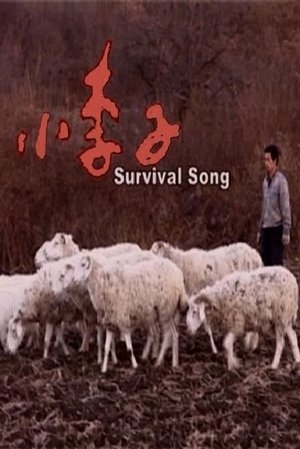
Documentary about a man called Xiaolizi.
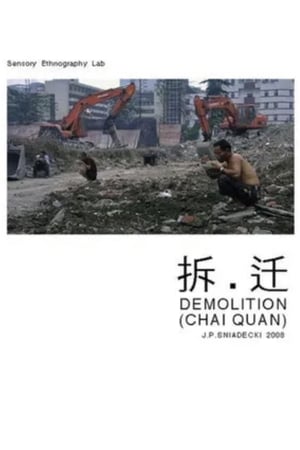
"If the old doesn't go, the new never comes" recites a teenager hanging out near a demolition site in the center of Chengdu, the Sichuan capital in western China. In Demolition, filmmaker J.P. Sniadecki deconstructs the transforming cityscape by befriending the migrant laborers on the site and documenting the honest, often unobserved, human interactions, yielding a wonderfully patient and revealing portrait of work and life in the shadow of progress and economic development.
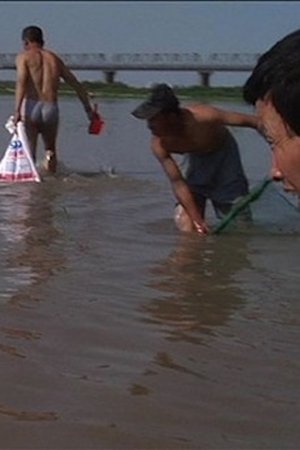
In northeastern China the Songhua River flows west from the border of Russia to the city of Harbin, where four million people depend on it as a source of water. Songhua is a portrait of the varying people that gather where the river meets the city, and an ethnographic study of the intimate ways in which they play and work.
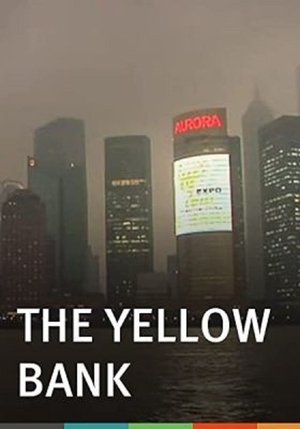
A short documentary that captures the longest total solar eclipse of the 21st century, The Yellow Bank takes you on a contemplative boat ride across the Huangpu River in Shanghai, China. Filmmaker J.P. Sniadecki, who lived and worked in Shanghai nine years earlier, uses the eclipse as a catalyst to explore the way weather, light, and sound affect the urban architectural environment during this extremely rare phenomenon.
A large majority of LGBT people in mainland China remain in the closet. Most of these closet doors are kept tightly shut by pressure from friends, family, and society itself. This documentary hopes to explore the experience of coming out in China through a series of interviews with out homosexuals. The interviews touch upon the discrimination, suppression, and even violence they have endured as well as the touching moments where they experienced compassion and understanding. The documentary also covers gay rights activist and proud mother of a homosexual, Wu Youjian, who stands strongly by her son and other gay men in full support.
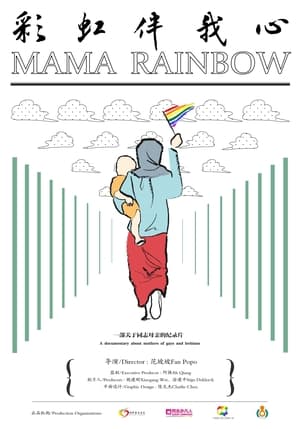
For Chinese parents, finding out that their kid is gay usually presents a major tragedy, with the big majority utterly unable to accept the homosexuality of their son or daughter. However, during recent years a fresh rainbow wind has been blowing over the Chinese mainland: a pioneer generation of Chinese parents has been stepping up and speaking out on their love for their gay kids. This documentary features 6 mothers from all over China, who talk openly and freely about their experiences with their homosexual children. With their love, they are giving a whole new definition to Chinese-style family bonds.
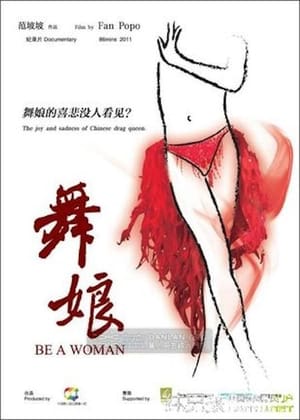
Over the course of 3 years, Fan Popo visited a bar called “Only-Love” in Nanning, China, getting to know the dancers and drag queens there and discovering who they really were behind their exuberant costumes and personas.
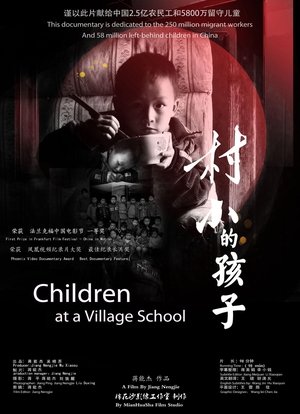
Children at a Village School
As a special generation born in the New China, the hundreds of thousands of educated youth from Shanghai went through enormous hardship during their work in Xinjiang from 1963 to 1966. Because of the specific historical conditions and context, they have been strikingly stamped with the mark of the times and have had to struggle to understand the relationship between themselves and the nation.
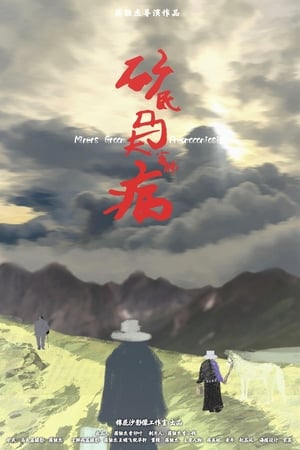
The location of Hunan's southwestern Hunan, the local economy is not active, the people either go out to work or go up the mountain to mine. Due to the constant mining disasters, despite the government's efforts to rectify and regulate, many people still illegally mine. Miners often do not pay attention to the protection of mines. Many years later, many miners have pneumoconiosis. The film started shooting in 2010 until 2018, with a filming period of nearly ten years, until the death of Zhao Pingfeng, the protagonist of pneumoconiosis, leaving young children and mentally handicapped wife.
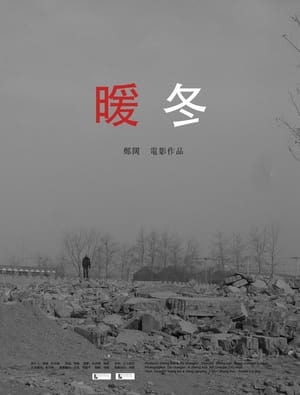
The Cold Winter was shot from the end of 2009 to early 2010, and focuses on the struggle of artists near Beijing’s famous Chaoyang District 798 Art Zone to protect their land and studios from demolition by developers. During the exceptionally cold winter of the title, the artists formed the “Warm Winter Plan” movement as a means of defending their rights and raising public awareness, being subjected to threats and brutal violence in the process.
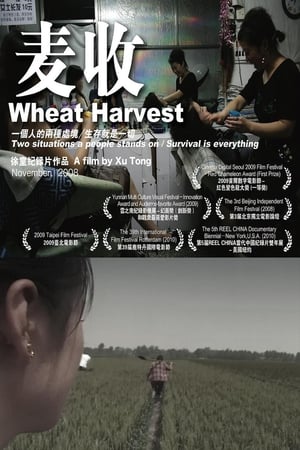
A documentary film showing the life of Niu Hongmiao, a 20-year-old country girl who is now a prostitute in Beijing. Around the time of wheat harvesting, she goes back home to Dingxing County, Hebei Province to visit her parents.
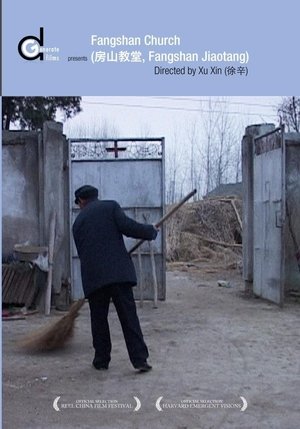
A lively community of Christians inhabit Fangshan, a remote rural town in Jiangsu Province. At the start of the millennium, a church was built there with support of local inhabitants' relatives from Taiwan. On Sundays, up to 900 people gather to worship, while spending most of their days maintaining a modest living as farmers. Their faith governs how they handle family conflicts, illnesses and other difficulties. Still, they must contend with constraining forces in their community, from ancient folk religious practices to laws forbidding evangelism.