An acting ensemble rehearses for an upcoming theater festival. They rig up stage scenery and practice dialogue and set pieces in the middle of a residential area. But this is no ordinary theater setting, as evidenced by the armed guards at the entrance. Festival 4 Chemins is taking place in Port-au-Prince, the capital of Haiti. Gangs are active in the city; you can hear machine-gun fire in the distance.
Janet Haufler
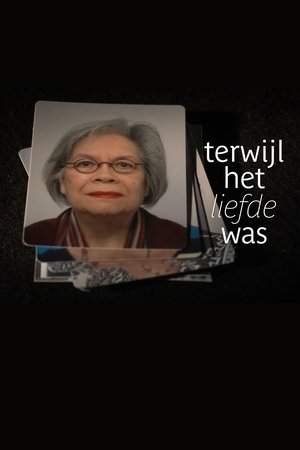
Artistic director of the National Theater Eric de Vroedt writes and directs a performance about his own mother Winnie, who passed away in 2020. This piece, titled The Century of My Mother, is a family story about the migration from the Dutch East Indies to the Netherlands. It is De Vroedt's way of examining the relationship with his mother and not having to say goodbye to her yet: 'I can let her live on stage, but when the curtain falls, when the play is completely finished, then she is really dead'.
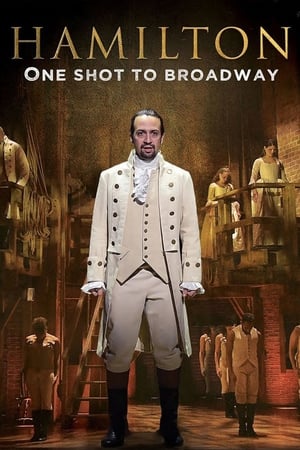
It’s the hit musical that changed Broadway forever and brought the genius of Lin Manuel Miranda to the attention of legions of fans across the world. A story of how a group of mavericks made an unlikely marriage of hip-hop and history to create the biggest show in America…and are getting ready to conquer the world. Featuring interviews with Miranda, as well as the cast and crew of Hamilton.
A documentary about the Staatsoper Stuttgart (Stuttgart State Opera) in Germany.
Triggered by congressman Jair Bolsonaro’s homage to the torturer Carlos Alberto Brilhante Ustra, during president Dilma Rousseff’s impeachment hearing in 2016, Inês, a 70 year-old actress, starts a fragmented narrative of her own history, transforming the memories of her youth as an artist and guerrilla fighter during the military dictatorship into performances. Using as a starting point her participation in Teatro Oficina's 1967 production of the play "King of The Candle", by Oswald de Andrade, Inês creates a manifesto in defense of art's political strength, intertwined with memories of lost love and resistance.
In the dressing room of the French cinema, minutes before attending a lecture, François Truffaut recalls his trajectory
The story behind the translation and performance of Shakespeare's "Hamlet" in Klingon.
On 18th of December 2017, the Filarmonica Teatro Regio Torino, directed by Timothy Brock, presented "The Gold Rush" by Charles Chaplin, with live performance of the soundtrack. But let's go back a few days: this short film takes us in the backstage of the concert!
"A documentary anatomy of mass murder for one monitor and 34 talking heads." These are the words the filmmakers use in the credits to describe their project, which thematises the execution of more than 260 Carpathian Germans, Hungarians and Slovaks by Czechoslovak army soldiers near Přerov in June 1945. The “massacre at Přerov” is made present through a minimalist dramatisation of the interrogation footage of direct participants, eyewitnesses, and others. It is as if the characters of ancient theatre were entering the Zoom “stage” and delivering a tragic message of fear, hatred and disinterest across the chasm of time.
The internal journey of eight men, who, through a theater workshop, go through the different prisons they inhabit. Practicing the art of seeing themselves, in Boal's words, this group of men reflects on their masculinity as a representation to hide their true strength: their vulnerability.
Theatre 1 (Observational Film Series #3) is a feature length documentary, which closely depicts the world of Oriza Hirata, Japan's leading playwright and director, and his theatrical company, Seinendan. By depicting them, the film leads the audience to revisit fundamental but timely questions: What is theatre? Why do human beings act?
Oriza Hirata is Japan's leading playwright and director, who runs his own theatrical company, Seinendan. Theatre 2 (Observational Film Series #4) examines the dynamic relationship between theatre and the society through depicting Hirata's activities. In order for his art and his not-so-commercial company to survive this highly capitalistic modern society, what kind of strategy does Hirata have and practice?
The parallel lives of writer Truman Capote (1924-84) and playwright Tennessee Williams (1911-83): two friends, two geniuses who, while creating sublime works, were haunted by the ghosts of the past, the shadow of constant doubt, the demon of addictions and the blinding, deceptive glare of success.
Mei Lanfang's Stagecraft Part I
At the Old Theater in Krakow Wajda staged a play in 1971, based on Dostoevsky's novel "Demons". In this documentary Wajda tells the story of the unique play that went on uninterrupted for 10 years despite opposition from the authorities.
Zadržitelný vzestup Artura Uie
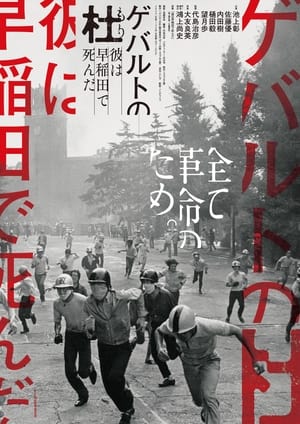
A documentary about the end of the student movement in 1972 and the lynching of Daizaburo Kawaguchi, a student at Waseda University. The documentary interweaves testimonies from japanese intellectuals and a short play, written and directed by Shôji Kôkami, about the murder.
Before Prop 8, Milk or Will & Grace, before the AIDS epidemic, gay pride parades or the Stonewall uprising, "The Boys in the Band" changed everything. "Making the Boys" explores the drama, struggle and enduring legacy of the first-ever gay play and subsequent Hollywood movie to successfully reach a mainstream audience. Featuring anecdotes from the surviving cast and filmmakers, as well as perspectives by legendary figures from stage and screen, it traces the behind-the-scenes drama and lasting legacy of this cultural milestone.
Fajar Suharno was a theater maestro from the 80's to the 90's. He was imprisoned because his theater activities were considered against the New Order government. At its peak, he made a show entitled "Geger Uwong Ngoyak Macan" about the events of crushing people who were considered thugs/criminals (Petrus). The show was held exactly the day before the massacre took place