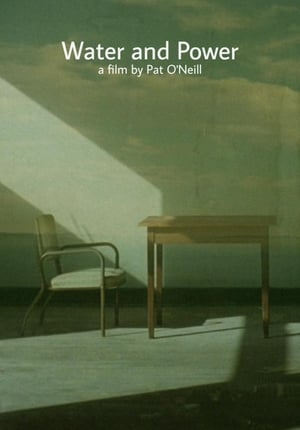
The water is a metaphorical view of life in the drought of the people living in Pustec by Prespa Lake.
A vivid journey into the mysterious subterranean world of mycelium and its fruit— the mushroom. A story that begins 3.5 billion years ago, fungi makes the soil that supports life, connecting vast systems of roots from plants and trees all over the planet, like an underground Internet. Through the eyes of renowned mycologist Paul Stamets, professor of forest ecology Suzanne Simard, best selling author Michael Pollan, food naturalist Eugenia Bone and others, we experience the power, beauty and complexity of the fungi kingdom.
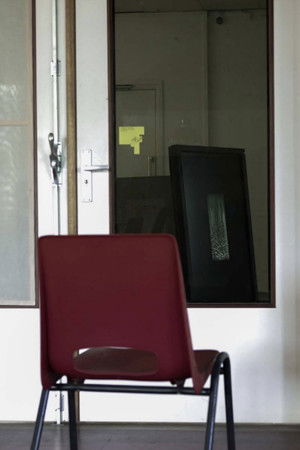
A memorial mourns as time passes
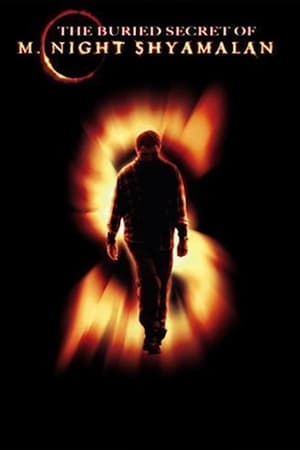
Everyone has a skeleton or two in his or her closet, but what about the director behind some of the most successful thrillers ever to hit the silver screen? Could M. Night Shyamalan be hiding a deep, dark secret that drives his macabre cinematic vision? Now viewers will be able to find out firsthand what fuels The Sixth Sense director's seemingly supernatural creativity as filmmakers interview Shyamalan as well as the cast and crew members who have worked most closely with him over the years. Discover the early events that shaped the mind of a future master of suspense in a documentary that is as fascinating as it is revealing.
Back to the Titanic documents the first manned dives to Titanic in nearly 15 years. New footage reveals fresh decay and sheds light on the ship’s future.
Jonathan Stavleu explores, in a stream-of-consciousness video essay, the relationship people have with water and what happens when access to it is taken away. For this work, he examines anecdotal histories he has heard from Estonians, as well as stories from his own family history in the Netherlands, weaving them together into a journal-like narrative.
A portrait of free diver Kathryn Nevatt, former World Champion and current New Zealand record holder in all three disciplines.
Through encounters with a hydrologist, a farmer, and citizens mobilized around the Marais Poitevin, the director helps us understand the effects—on biodiversity and the state of rivers—of substitution reservoirs, also known as megabassins. For several years, Anne-Morwenn, David, Patrick, Yann, and others have been fighting for fair water sharing and devising ways to convince as many people as possible that it is time to change the agricultural model.
The ocean contains the history of all humanity. The sea holds all the voices of the earth and those that come from outer space. Water receives impetus from the stars and transmits it to living creatures. Water, the longest border in Chile, also holds the secret of two mysterious buttons which were found on its ocean floor. Chile, with its 2,670 miles of coastline and the largest archipelago in the world, presents a supernatural landscape. In it are volcanoes, mountains and glaciers. In it are the voices of the Patagonian Indigenous people, the first English sailors and also those of its political prisoners. Some say that water has memory. This film shows that it also has a voice.
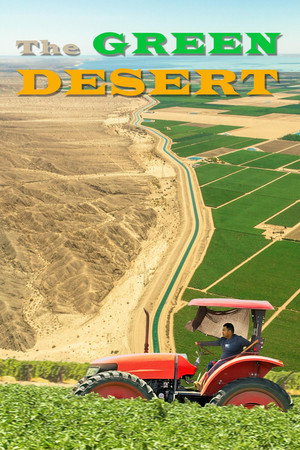
Documentary on water usage, money, politics, the transformation of nature, and the growth of the American west, shown on PBS as a four-part miniseries.
Landskap is a focused and tightly-constructed series of panorama, whose masterly projection of natural sound and cyclical construction are manifested in seasonal color-and-light variations, glistening sunlight and flowing streams.
At the heart of the Moroccan High Atlas mountains, water is a resource in short supply. The village of Tizi N'Oucheg has undergone a transformation thanks to Rachid Mandili, who is well-aware that the development of his village depends on access to clean water and on his strong leadership of this project. Mandili rallies all the villagers together and calls upon the knowledge of French and Moroccan scientists to tap water sources, to purify, and reuse waste water for irrigation. The documentary highlights the Berbers' community ties and ingenuity in their dream of independently managing their village water resources. It equally paints a portrait of a man whose initiative and resourcefulness has opened Tizi N'Oucheg up to modernity while still conserving its cultural heritage. Tizi's example presents some of the problems of water access in semi-arid regions and puts forward concrete solutions to these problems.
An exploration of a new paradigm of health, science, and medicine, based on the interconnections between us and nature.
Swimming, Dancing examines audiovisual representations of the Yangtze (1934–present), from silent film to video art to the contemporary vlog. Inspired by the city symphonies of the 1920s, Swimming, Dancing pieces together a “river symphony”, evoking the images, sounds and contradictions that make up the river’s turbulent history.
The film takes on a walk alongside parasites, symbionts and decomposers offering ideas of both interconnectedness and collaboration. Driven by a vision of resistance, the encounters seek possibilities of renewal and question what connects us when the world seems to be falling apart. With mushrooms and their allies the film invites to imagine a myco-cultural (r)evolution. What if the fungus could help us address and radically change our relationship to this world?
Explains that there are approximately 100,000 species of fungi known to science, and that these simple plants are both harmful and beneficial to humans. Uses photomicrography to show the parts of the fungus and time-lapse photography to illustrate growth and reproduction.
Scientists dive deep on the mysterious and unusual predatory behavior of orcas attacking great white sharks, and the disappearance of the other sharks after these attacks.
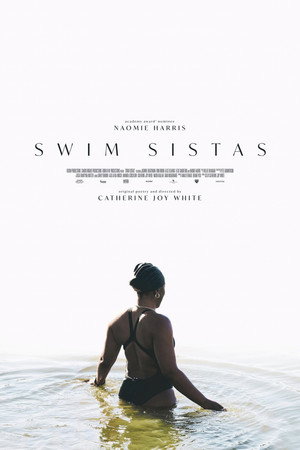
Swim Sistas is a poetic, visually stunning love letter to water, sisterhood, and the enduring strength of Black women across generations. Featuring the voice of Academy Award nominee Naomie Harris (Moonlight) as Mami Wata, part deity and part ancestral memory, the film flows across generations: from a young girl diving into joy, to Great Britain’s first and only Black female Olympic swimmer breaking historic barriers, to a woman learning to swim at 54, defying a legacy of inherited fear. It is a celebration of connection, resilience and hope, told through the lens of the rising tide of Black women reclaiming their place in the water, and in history.
This instructional film reveals the decisive role that water has played and is still playing in the emergence and survival of life on earth.
Draped in an electric blue fabric, the artist acts as a conduit between the tangile and the spiritual, blurring the boundaries between human form and natural elements.