Within photographs that are not their own, a body discovers it has always been part of another.
Short documentary consisting of archival footage and movies that depict the birth of the United States of America, from the Boston tea party to the Spanish American war
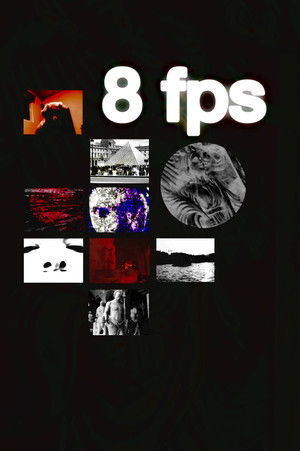
Pictures taken between France and Mexico running at 8 frames per second.
An experimental film about the relation of Time and Space.
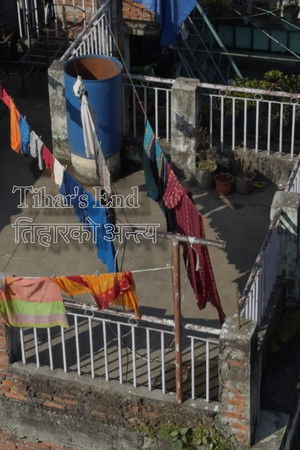
Filmed from the last night of Tihar, festival of light, in Kathmandu 2025, exploring colour, light and stillness.
In 1965, on the Eastern Shore of the Chesapeake Bay, there was the last operating fleet of sailing work boats in the United States. Forty-odd "Skipjacks" were still used by Maryland watermen to dredge up oysters from the Bay. At that time, the fleet had survived because of a Maryland conservation law which prohibits the use of motor power for oyster dredging. The watermen traditionally marked the opening of each oystering season with a skipjack race which the Maryland State Tourist Board incorporated into its annual "Chesapeake Bay Appreciation Day."
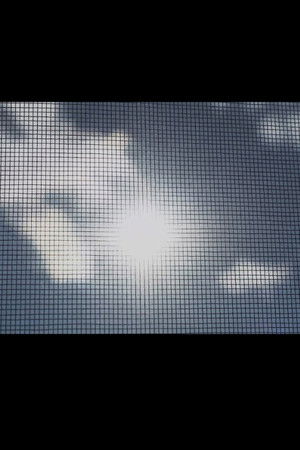
Two layers of mesh overlap on the left. One rotates over the course of a day, its speed shifting gradually. On the right, a single mesh remains still. Digital interference is continuously superimposed onto the physical rotation. Where no rotation occurs, motion persists through digital interference alone. Under different conditions, the two images arrive at similar shimmering forms. The sound drifts with the sky. Tremolo. Pulse.
Over 32 years of archives, patterns emerge and stare back. Will they shape the films I'm trying to make – or haunt their edges?
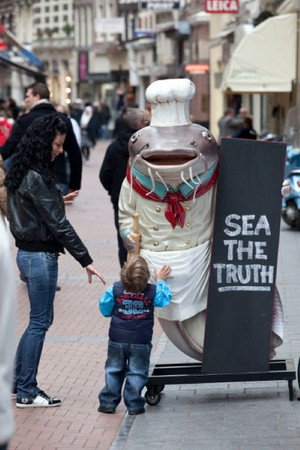
This is the planet we still know so little. We call it Earth but less than 1/3 is land, over 2/3 is water and we use that water as a dumping site for our waste and as if it's an inexhaustible "horn of plenty" for humans. Our most important ecosystem is on the verge of collapse unless we act now. At this very moment the main problem with the oceans is that they're getting emptier and emptier. If we don't do anything then we face one of the biggest disasters in history of mankind.
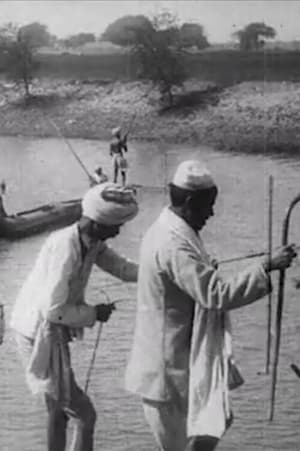
The Maharajah of Kapurthala and guests travel on elephants and men catch fish on the River Bias.
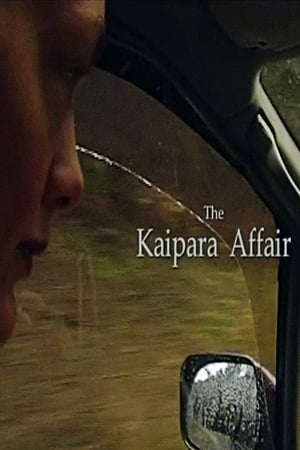
A documentary about the threat posed to New Zealand's Kaipara Harbour by rapacious commercial fishing and development.
ROTA
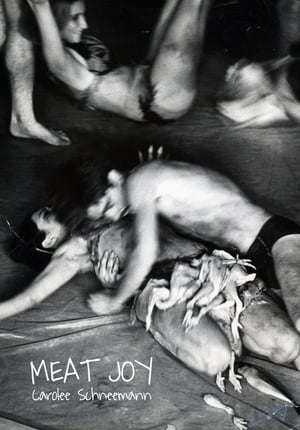
"Meat Joy is an erotic rite — excessive, indulgent, a celebration of flesh as material: raw fish, chicken, sausages, wet paint, transparent plastic, ropes, brushes, paper scrap. Its propulsion is towards the ecstatic — shifting and turning among tenderness, wildness, precision, abandon; qualities that could at any moment be sensual, comic, joyous, repellent. Physical equivalences are enacted as a psychic imagistic stream, in which the layered elements mesh and gain intensity by the energy complement of the audience. The original performances became notorious and introduced a vision of the 'sacred erotic.' This video was converted from original film footage of three 1964 performances of Meat Joy at its first staged performance at the Festival de la Libre Expression, Paris, Dennison Hall, London, and Judson Church, New York City."
A very short film on the exploration of textural nuances through the city of Dublin. Shot on iPhone. Accompanied by a score.
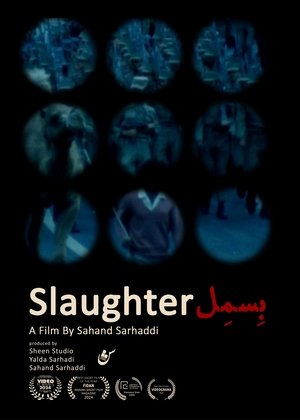
"Slaughter" is an experimental short film that delves into the archival and historical footage of the Iranian Revolution in 1979, depicting a symbolic narrative surrounding the ritualistic act of animal sacrifice, known as "Besmel." It serves as an allegorical representation of a nation's sacrifice amidst the backdrop of political transformations.
In the summer of 1900, the first film camera was purchased by Mozaffar ad-Din Shah Qajar for Iran, and immediately the first Iranian moving images were captured by this camera. These images, in an obsessive manner, have embodied the mesmerized gaze of people. In the span of 79 years since the purchase of this camera, Iran has undergone two revolutions and two coups, and throughout all these moments, the camera has been present as the recorder of people's mesmerized gazes. These mesmerized gazes are in a way as if they are the ones looking at us, not the other way around. It seems like these gazes are trying to convey something, but what? No one knows. Now, we gaze at those who have gazed at us from a distant time.
Bolivian artist and filmmaker Luciana Decker Orozco delves into ancient and essential acts: eating, masticating and digesting. Her suggestive celluloid slips through mouths, intestines and entrails, as well as experiments in the catacombs of the human being and the Earth. Inspired by the avant-gardist and indigenist Peruvian writer Gamaliel Chumata, the surface and the underground, the real and the extraordinary, mysteriously merge together.
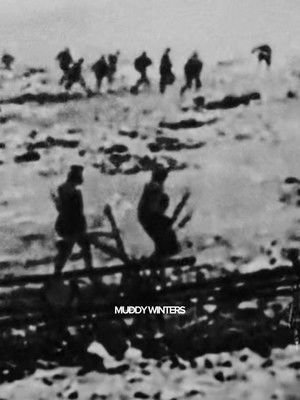
Cold pearly winters and the brutality of war running simultaneously.
Louisiana filmmaker, Pat Mire, teams up with veteran filmmaker and cinematographer, Charles Bush, to capture the natural drama of handfishing in this award-winning documentary. Highly visual, the film examines the thrilling regional phenomenon of Cajuns who wade in murky bayou waters to catch huge catfish and turtles by reaching into hollow logs and stumps with their bare hands. Friends and family accompany the handfisherman to the bayou banks for Cajun music, festive cooking, and storytelling, and to witness this increasingly rare tradition. Told from the inside with multiple voices, Mire and Bush explore the chain of events set off by man's attempt to "improve" his environment by dredging bayous in this remarkable study of the relationship between cultural and natural resources.
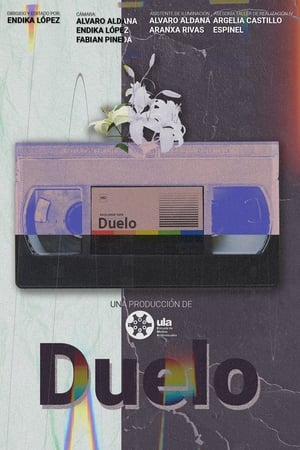
The short film follows Endika, a director who, in the midst of a clash with his reality, transforms a documentary about paternal absence into a personal quest for reconciliation with his own father.