Global Groove was a collaborative piece by Nam June Paik and John Godfrey. Paik, amongst other artists who shared the same vision in the 1960s, saw the potential in the television beyond it being a one-sided medium to present programs and commercials. Instead, he saw it more as a place to facilitate a free flow of information exchange. He wanted to strip away the limitations from copyright system and network restrictions and bring in a new TV culture where information could be accessed inexpensively and conveniently. The full length of the piece ran 28 minutes and was first broadcasted in January 30, 1974 on WNET.
A guitarist wrestles with his inner turmoil, seeking elusive fulfillment in the ethereal echoes of his music.
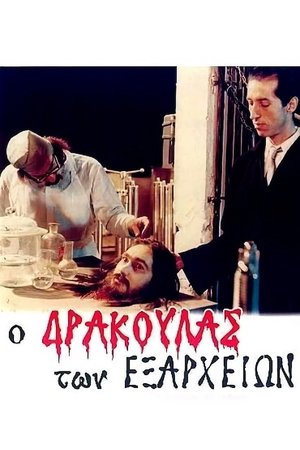
A mad scientist creates the band Music Brigades from body parts of dead musicians.
An intimate look into the life of composer Mikis Theodorakis from 1987 until 2017: comprising three decades, four continents, 100 locations and 600 hours of film material. The film interweaves personal moments with archive footage, documentary recordings and fictional pieces, all accompanied by Theodorakis’ music in jazz, classic, electro and rap versions.
A short visual experiment resembling the inside of an opal.
O Filme
One of Lawrence Jordan's earliest animated films, PINK SWINE is an energetic and playful mix of various animation styles. Described as "an anti-art dada collage film," this free-form short presents cut-out images animated across old photos (a style picked up by Terry Gilliam a few years later) and found objects that dance to the beat of the rock-and-roll soundtrack. He produced this short during a summer spent with Joseph Cornell and Jordan edited the film entirely in camera, making the upbeat visual rhythm of this delightful lark even more impressive. –Sean Axmaker
Milky Chance - "Two High School Friends Making Music"
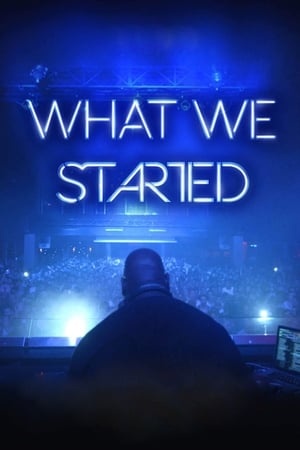
Bert Marcus and Cyrus Saidi present an informed and absorbing exploration of the history of EDM, boosted by an energetic soundtrack and anchored by the personal stories of legendary DJ Carl Cox and superstar newcomer Martin Garrix. Insights from numerous other DJs and musical talents like Moby, David Guetta, Paul Oakenfold and Usher help tell the often oppositional tales of old school vs. new school and mainstream vs. underground.
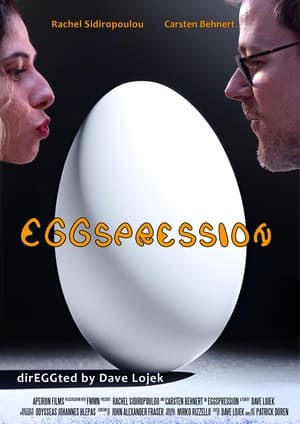
Egglantine loves salt on her eggs. Eggbert prefers pepper. Who blinks first in this playful Easter ritual?
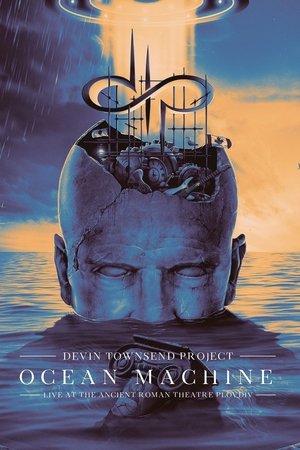
On the 22nd September 2017, Devin Townsend Project played a special show at the Ancient Roman Theatre in Plovdiv, Bulgaria, celebrating the 20th anniversary of the landmark Ocean Machine album in full, as well as a set of fan-requested tracks alongside the Orchestra and Choir of Plovdiv State Opera. This concert was filmed and released as 'Ocean Machine - Live at the Ancient Roman Theatre Plovdiv'.
In a deconstruction of classic Hollywood codes, using repetitive single frame images, the re-editing of teenager movies produces an intense Oedipal drama.
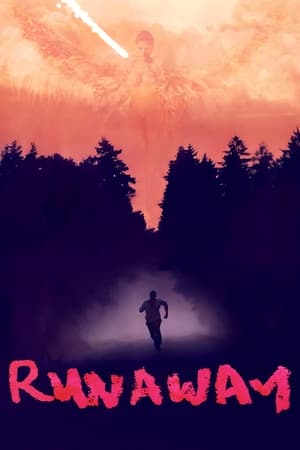
A man falls in love with a half-woman/half-phoenix who fell to Earth from the sky.
The quick response of a body in social isolation. The dancer moves alone in the living room of her apartment and expresses her feelings in the face of quarantine. A solo choreography of the automatic desires of a body that needs movement.
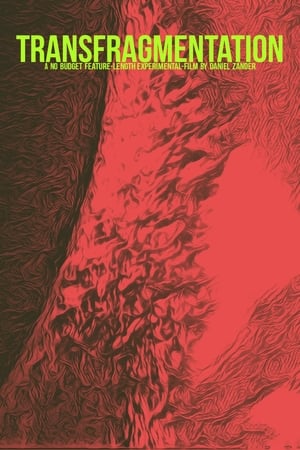
After I had already begun to conduct my first cinematographic experiments in 2015, I shot between 2016 and 2019 (during my time as a student in Rostock) exclusively for this "No Budget Feature-Length Experimental Film", now titled "Transfragmentation", which was originally conceived to last three hours, based on Werner Fritsch's "Faust Sonnengesang" (2011), but now has a running time of approximately two hours. In 2015, I also began my correspondence with the Brussels-based Sound-Artist Unenthüllte, who eventually composed four twenty-minute pieces for this work and has to be regarded as my sole artistic collaborator in this sense. My cinematographic concept was clearly outlined from the beginning: The duration of each shot is exactly 1 minute. Only two elements diverge from this primary premise: The Seventeen Minute Prelude, Created In Post-Production (2020-2022), And The Slow Motion Sequences Involving My Voice-Over, Which Linger In The Heart And At The End Of The Work.
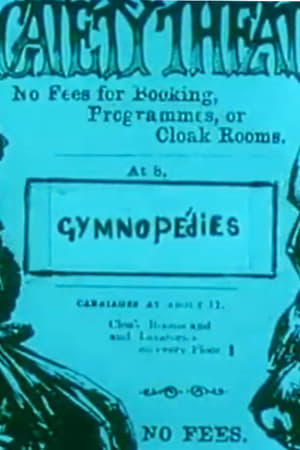
Animation. The theme is Weightlessness. Objects and characters are cut loose from habitual meanings, also from tensions and gravitational limitations. A lyric Eric Satie track accompanies the film. Such a portrait seems necessary from time to time to remind us that equilibrium and harmony are possible, and that we will not dissolve into a jelly if we allow ourselves to relax into them: A horseman rides through the landscape, through the town, but never arrives anywhere in particular. An acrobat swings on a rope above a canal in Venice, and is content just to swing there. Nothing threatens to disturb them. This film is a total contrast to the Kafka-like oddities of Eastern European animation. —Canyon Cinema
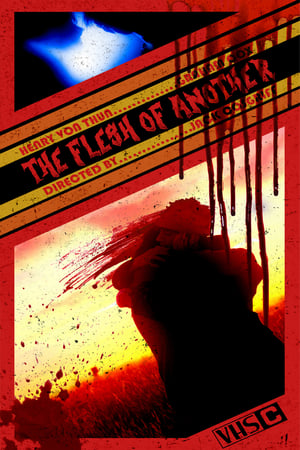
Two forever intertwined lovers, Edwin and Rosko, recollect on their long spanning relationship. What seems like a normal healthy relationship is revealed to have a dark brewing secret underneath. They explore their sexuality together but everything changes once they begin to taste the flesh of another...
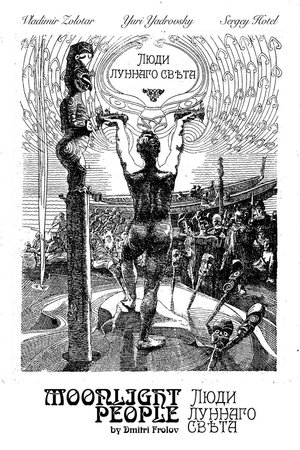
Two young men and two girls on a moonlit night confess to each other in their strange fantasies and loves that go beyond the usual standards.. The impetus to making the film was the book of the same name by the Russian religious philosopher Vasily Rozanov, who died 100 years ago. His treatise was devoted to the study of sexuality and its denial in Christianity. The film was made in the style of experimental films of the 1920s with a non-linear narration full of strange surrealistic images. He is black and white and devoid of dialogue. Filmed on film 16 mm of firm "Svema", released in the USSR. This added to his exoticism. The image was put to the music of Alexander Scriabin “The Poem of Ecstasy” (1907).
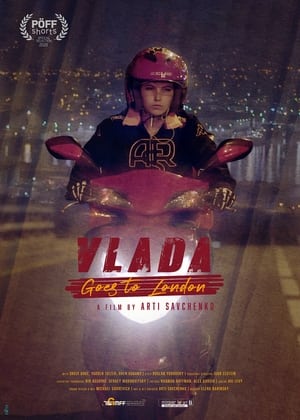
"Vlada Goes to London" is a short student film exploring the strong-willed Vlada on her night shift as a pizza delivery girl in her desperate attempt to book tickets to London and fulfill her dream of being a DJ. The end of the night brings more challenges than she expects.
Three percussionists each have a small table as their only instrument. The variety of tones is ensured by the different striking modes. The positions of the fingers and hands and the rhythmic figures are codified in a repertoire of original symbols used in the score.