Departing from peripheral details of some paintings of the Bilbao Fine Arts Museum, a female narrator unravels several stories related to the economic, social and psychological conditions of past and current artists.
Three women share their experience of navigating the app-world in the metro city. The sharings reveal gendered battles as platform workers and the tiresome reality of gig-workers' identities against the absent bosses, masked behind their apps. Filmed in the streets of New Delhi, the protagonists share about their door-to-door gigs, the surveillance at their workplaces and the absence of accountability in the urban landscape.
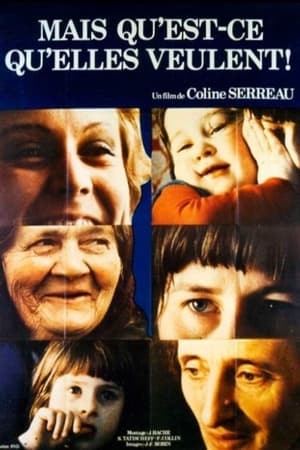
In this documentary by Coline Serreau, known for her feature film Why Not?, a selection of Frenchwomen in characteristically no-win situations discuss what they are experiencing and answer, if only by implication, the question: "What do women want?"
A candid portrait of the women working at the Lőrinc spinning mill. As with so many of Mészáros’ shorts, this work has foundations in autobiography, and she would later return to this particular world in one of her fiction features.
Nightshift
The Ministry of Labour exhorts women to return to industry – the post-war production drive depends on them.
From growing potatoes in Green Park, London, to transforming rabbit crates into seed boxes – just a couple of the many ingenious ways of supporting the war effort which are covered in this film from the Ministry of Information.
Dominique, Suzanne, and Annette: three women who participated in the adventure of the Medvedkine groups (Besançon, Sochaux, 1967-1974). In those same years, the lives of our grandmothers and mothers experienced decisive changes: they worked outside the home and revolutionized customs. A group of Besançon students are investigating those events and questioning their own family memory.
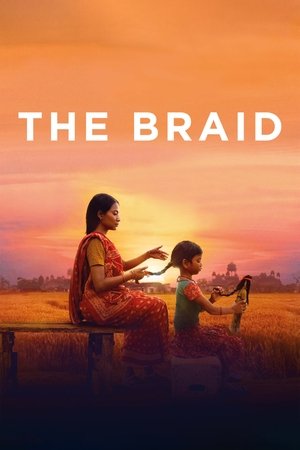
India. Smita is an untouchable. She dreams of seeing her daughter escape her miserable condition and enter school. Italy. Giulia works in her father’s workshop. When he has an accident, she discovers that the family business is ruined. Canada. Sarah, a successful lawyer, is about to be promoted to the head of her firm when she learns that she is ill. Three lives, three women, three continents. Three battles to fight. Although they don’t know each other, Smita, Giulia and Sarah are unknowingly linked by their most intimate and singular bond.
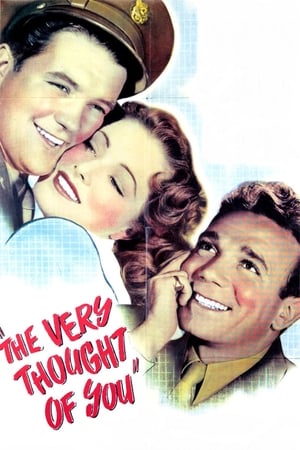
Army sergeants Dave and "Fixit" spend a three-day pass in Pasadena, where they meet Janet and Cora, two young women who work in a parachute factory.
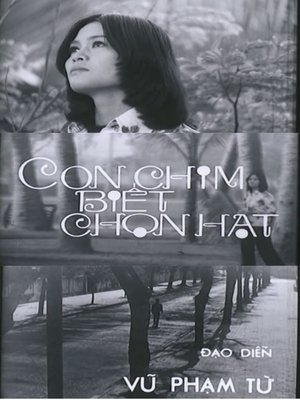
Hoa is a young engineer and computer specialist who arranges the database of an institution. She is hardworking, yet her dedication goes unnoticed, and her boss dismisses her work and expertise as “redundant”.
This pioneering documentary film depicts the lives of the indigenous Inuit people of Canada's northern Quebec region. Although the production contains some fictional elements, it vividly shows how its resourceful subjects survive in such a harsh climate, revealing how they construct their igloo homes and find food by hunting and fishing. The film also captures the beautiful, if unforgiving, frozen landscape of the Great White North, far removed from conventional civilization.
Abondance
Le monde en face - Chine - États-Unis, la nouvelle guerre froide
Starting with a long and lyrical overture, evoking the origins of the Olympic Games in ancient Greece, Riefenstahl covers twenty-one athletic events in the first half of this two-part love letter to the human body and spirit, culminating with the marathon, where Jesse Owens became the first track and field athlete to win four gold medals in a single Olympics.
Part two of Leni Riefenstahl's monumental examination of the 1938 Olympic Games, the cameras leave the main stadium and venture into the many halls and fields deployed for such sports as fencing, polo, cycling, and the modern pentathlon, which was won by American Glenn Morris.
Working men and women leave through the main gate of the Lumière factory in Lyon, France. Filmed on 22 March 1895, it is often referred to as the first real motion picture ever made, although Louis Le Prince's 1888 Roundhay Garden Scene pre-dated it by seven years. Three separate versions of this film exist, which differ from one another in numerous ways. The first version features a carriage drawn by one horse, while in the second version the carriage is drawn by two horses, and there is no carriage at all in the third version. The clothing style is also different between the three versions, demonstrating the different seasons in which each was filmed. This film was made in the 35 mm format with an aspect ratio of 1.33:1, and at a speed of 16 frames per second. At that rate, the 17 meters of film length provided a duration of 46 seconds, holding a total of 800 frames.
As the most dammed, dibbed, and diverted river in the world struggles to support thirty million people and the peace-keeping agreement known as the Colorado River Pact reaches its limits, WATERSHED introduces hope. Can we meet the needs of a growing population in the face of rising temperatures and lower rainfall in an already arid land? Can we find harmony amongst the competing interests of cities, agriculture, industry, recreation, wildlife, and indigenous communities with rights to the water? Sweeping through seven U.S. and two Mexican states, the Colorado River is a lifeline to expanding populations and booming urban centers that demand water for drinking, sanitation and energy generation. And with 70% of the rivers’ water supporting agriculture, the river already runs dry before it reaches its natural end at the Gulf of California. Unless action is taken, the river will continue its retreat – a potentially catastrophic scenario for the millions who depend on it.
John and Yoko in the presidential suite at the Hilton Amsterdam, which they had decorated with hand-drawn signs above their bed reading "Bed Peace." They invited the global press into their room to discuss peace for 12 hours every day.
A Directv and Guitar Center documentary highlighting the iconic rock guitarist, Slash. Featuring interviews with Dave Grohl, Joe Perry, Alice Cooper, Duff Mckagan, Nikki Sixx, and many more...