Production for the Seaboard Railroad company outlining their railroad activities in the 1940s and heading into the 1950s
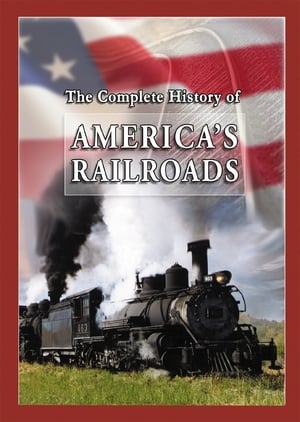
A production of the association of American Railroads outlining the wonders of America's rail system.
A documentary on the railroads of America produced by the Association of American Railroads
"The End of the Line - Rochester's Subway" tells the little-known story of the rail line that operated in a former section of the Erie Canal from 1927 until its abandonment in 1956. Produced in 1994 by filmmakers Fredrick Armstrong and James P. Harte, the forty-five minute documentary recounts the tale of an American city's bumpy ride through the Twentieth Century, from the perspective of a little engine that could, but didn't. The film has since been rereleased (2005) and now contains the main feature with special portions that were added as part of the rereleased version. These include a look at the only surviving subway car from the lines and a Phantom tun through the tunnels in their abandoned state, among others, for a total of 90 minutes of unique and well preserved historical information.
A short documentary about the work of railwaymen and life on the railway.
The Second World War is a black page in the history of the Belgian national railways. The company was taken over by the German occupiers and 'trains of death' transported victims of the Nazi regime to concentration camps. In this documentary from 1945 filmmaker Jacques Kupissonoff reconstructs the activities of 'Group G' that specialized in the sabotage of the railway network during the Second World War. The film includes exclusive images of wrecked railway infrastructure.
This 1996 documentary takes a nostalgic ride through history to present the experiences of Black sleeping-car porters who worked on Canada's railways from the early 1900s through the 1960s. There was a strong sense of pride among these men and they were well-respected by their community. Yet, harsh working conditions prevented them from being promoted to other railway jobs until finally, in 1955, porter Lee Williams took his fight to the union.
A multibillion-pound investment is underway to make our railways bigger, better and faster. Over three years, we go behind the scenes with Wales’s newest rail body as they try to make ambitious promises a reality.
After the last train at night and before the first in the morning, 800 people are hard at work behind the scenes making London's Underground fit to travel on. Including brushing dust from ventilation ducts, ‘fluffers’ cleaning up rubbish, routine rail replacement and fixing a broken rail discovered at 3.30am.
Le Dragon de Fer
Take a breathtaking train a ride through Nothern Quebec and Labrador on Canada’s first First Nations-owned railway. Come for the celebration of the power of independence, the crucial importance of aboriginal owned businesses and stay for the beauty of the northern landscape.
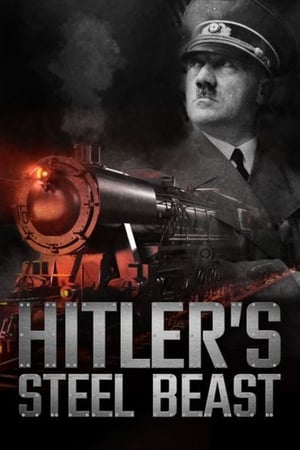
Trace the history of Hitler's armored private train, a 15-car mobile headquarters boasting state-of-the-art communications and anti-aircraft cannons.
First Thursday of each month, the members of Stockholm's model railroad club meet and run their beloved trains on a schedule. The trains pass towns such as Bångfors and Farsarvet. Sometimes, a delay occurs, which then spreads throughout the network.
Documentary filmmakers offer a fascinating look at one of the most spectacular engineering feats of the 19th Century as the story of the Transcontinental Railroad comes to life in a film that's sure to appeal to historians and railroad enthusiasts alike. As legions of tireless workers toiled for six years to realize the vision of shady entrepreneurs and imaginative engineers, the remarkable railway dream slowly became a reality. But not everyone was so pleased with the remarkable achievement. Despite the devastating effect that the tremendous transportation breakthrough would have on the Native American population, the lasting impact of the Transcontinental Railroad on the politics and culture of a rapidly expanding country would forever mark it as an invaluable component of the American success story.
A film about winter railroading in the Canadian Rockies and the men who keep the lines clear. The stretch between Revelstoke and Field, British Columbia, is a snow-choked threat to communications. The film shows the work of section hands, maintenance men, train crews and telegraph operators.
In the summer of 2004, on a car journey in Eastern Europe, Pavla Fleischer met and fell in love with Eugene Hutz, lead singer of New York's Gypsy Punk band Gogol Bordello. Captivated by his energy and his musical verve, and desperate to get to know him better, she decided to make a film about him. The Pied Piper of Hutzovina follows Eugene and Pavla on their subsequent road trip through Eugene's home country, Ukraine. It is the story of two people traveling together on two very different courses. Her aim is to rediscover a forgotten romance; his is to rediscover his roots. She hopes to find love on the road; he hopes to find musical inspiration from the gypsy culture he is determined to preserve. This is an intimate portrait of a filmmaker with a passion for her subject, and a punk musician with a longing to revisit his past. Theirs is a journey which tests their relationship and challenges their perceptions of the music they both love
TGV, la réussite française
The film explores how the three British colonies of New Brunswick, Nova Scotia and Prince Edward Island became provinces of Canada and charts the subsequent decline of their economies after Confederation. Photographs, archival drawings, cartoons and interviews with Maritime historians are used to document the case.
A detailed look at the gradual decline of Shenyang’s industrial Tiexi district, an area that was once a vibrant example of China’s socialist economy. But industry is changing, and the factories of Tiexi are closing. Director Wang Bing introduces us to some of the workers affected by the closures, and to their families.
The British Railways modernisation programme of the 1960s radically changed the rail network, and the British Transport Films unit and the TV news were there to capture it. Compiled here is never before released colour footage of Southern steam at Waterloo (with Nine Elms depot), all the major London stations, The Blue Pullman and early diesels, The Golden Arrow and Night Ferry service, goods and mail, steam on the Metropolitan Railway and building the Victoria Line.