A charming yet mischievous man who navigates his community by scamming people and borrowing money. Despite his deceitful ways, Mabidi tries to maintain a semblance of normalcy at home, where he faces his no-nonsense wife, Maria.
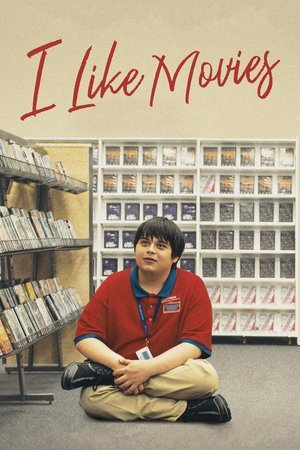
Socially inept 17-year-old cinephile Lawrence Kweller gets a job at a video store, where he forms a complicated friendship with his older female manager.
When Melody was a young child, 20+ years away from coming out as transgender, she developed an obsession with movies. One of her biggest hobbies was acting out her favorite VHS tapes, FBI warnings and trailers included, in front of her parents' camcorder. Mom and dad realized this was an easy way to keep their child busy. Thus, the camera became a sort of babysitter, resulting in dozens of tapes featuring Melody performing in front of the (usually stationary) camera.
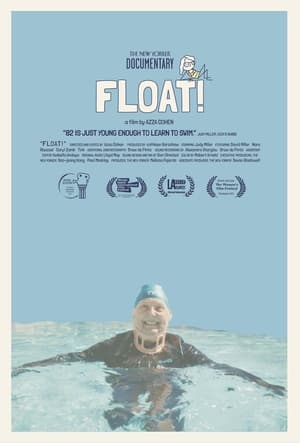
With depth, intimacy, and humor, FLOAT! captures filmmaker Azza Cohen's magnetic grandma’s life-affirming journey learning to swim at 82, inspiring audiences to defy societal expectations of aging and to boldly look forward at every stage.
A new law has swept through the land, bananas are illegal. A government agency has been created named the Anti Banana Movement or ABM to stop those who smuggle bananas.
A charming young boy on a quest of greatness provides hope by teaching those in need, how to do a backflip.
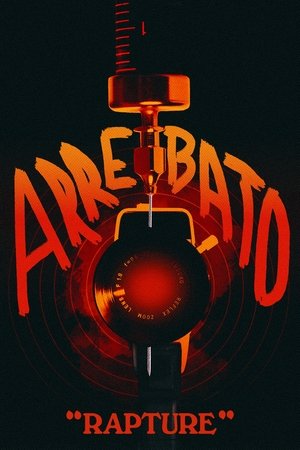
José Sirgado is a low-budget filmmaker whose heroin addiction distorts his perspective of the real world. Although he is a depressed and unstable individual, his mood improves when he receives the mysterious films of Pedro, with whom he shares his passion for cinema.
After purchasing their home, a young couple begins documenting their lives.
An home movie documentary about a young man with a camera who tries to recount and reframe a pivotal moment in his childhood: the death of his mother. An intimate and personal story about what remains of that mother-son relationship, now marked by an unbridgeable distance and an absence with which it is necessary to come to terms.
In home-movies shot in the ‘90s by her father, the filmmaker discovers in these inherited images powerful fictions of the Argentinian middle class and the country’s recent history.
Stone Street documents the life and experiences of a Trinidadian diaspora family and their enduring connection to the long standing family home in Port of Spain. Through the intersecting journeys of this extended and extensive family, the filmmaker explores themes of home, belonging and identity in a life defined by the fragmentary nature of a migratory Caribbean culture. This experimental documentary combines a lyrical first person voice with a family archive of home made audio visual artifacts, interviews and events. As the documentary explores the fragmentary nature of Caribbean identity, it simultaneously celebrates the fragments of domestic memorializing found in home movies, videos and photographs. Stone Street uses these various forms to evoke the experience of a complex and diverse Caribbean and Caribbean diaspora identity.
Memory is a collaboration with musician Noah Lennox (Panda Bear), exploring the relationship between a musician and filmmaker and their personal reflection on memories. From Super 8 home movies and entirely handmade, this film explores familiar memories, the present moment combined with past experiences and how it all seems to evade from our present memory.
Germany, 1929. Helmut Machemer and Erna Schwalbe fall madly in love and marry in 1932. Everything indicates that a bright future awaits them; but then, in 1933, Adolf Hitler and the Nazi Party rise to power and their lives are suddenly put in danger because of Erna's Jewish ancestry.
Two generations dialogue through the images they filmed of their children, a reflection of the emotional bond that arises from their involvement with what was shot.
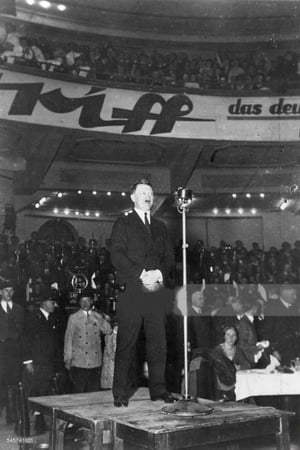
Comprised of video shot during the Nazi regime, including propaganda, newsreels, broadcasts and even some of Eva Braun's colorized personal home movies, we explore the way in which the Third Reich infiltrated the lives of the German population, from 1933 to 1945.
Notable for providing a bucolic, personal view of high-ranking Nazis. Eva Braun was the longtime romantic companion to Adolf Hitler, as well as a photographer and amateur filmmaker. Her 8mm Agfacolor-stock home movies, recorded at her leisure, were seized by the US Army in 1945. They were subsequently assembled into 8 reels, from 28 reels of original camera negatives. The US National Archives received this 8-reel film in 1947, and in 2012 began the digital restoration process.
1°. Nel porto di Genova, Veliero ("1. In the Port of Genoa, Sailing Ship") is a 1928 silent amateur film by Guglielmo Baldassini, preserved as a 2K DCP from a 9.5mm reversal print without intertitles. Held by Fondazione Home Movies in Bologna, the film shows a sailing ship entering Genoa’s port, likely shot from a small boat. Baldassini, a Milanese painter and etcher, used the Pathé Baby format to capture landscapes and seascapes, often as references for his artwork. His archive includes 95 reels filmed between 1926 and the early 1930s, focusing on family, Milan, coastal scenes, and mountains. He developed his films at home, experimenting with tinting, toning, and exposure correction. Many reels show emulsion decay due to aging and chemical treatments. Notes by Michele Manzolini and Mirco Santi appear in the 44th Pordenone Silent Film Festival catalogue.
A silent amateur film directed by Nena Lavello. It is preserved as a 2K DCP (1'31" at 16 fps) from a 9.5mm reversal print without intertitles, held by Fondazione Home Movies – Archivio Nazionale del Film di Famiglia in Bologna. According to Michele Manzolini in the 44th Pordenone Silent Film Festival catalogue, the film was likely shot in Lavagna, where the Lavello family spent extended stays at their country house, Villa Rocca. The footage captures leisure activities of Nena Lavello and her group of friends, known locally as the “robustine” for their energetic and athletic lifestyle. Scenes include beach outings, sailing, and games. The Pathé Baby camera used for filming was purchased in April 1925 by her father Arturo Lavello, possibly for travel or as a gift. The film reflects moments of youthful recreation along the Ligurian coast
A staged birthday celebration and a visit to the director’s father’s home. From the interplay of memory and imagination, the film explores how family archives shape fictions of the past.
A brief amateur silent film (1'54", DCP from 9.5mm reversal, 16 fps) without intertitles, sourced from Fondazione Home Movies – Archivio Nazionale del Film di Famiglia, Bologna. It forms part of a larger group of 27 amateur 9.5mm films attributed to Nena Lavello, who was 16 years old at the time of filming. Shot during the spring and summer of 1925, the collection documents a range of domestic and travel scenes, including visits to Sicily, Campania, and northern Italy. This particular film captures moments of leisure and companionship on the beach at Lavagna, reflecting the filmmaker’s early engagement with light, composition, and movement. As noted by Michele Manzolin in the 2025 Pordenone Silent Film Festival catalogue, the footage serves as a visual record of youthful play and friendship, offering insight into the personal and expressive potential of early amateur filmmaking.