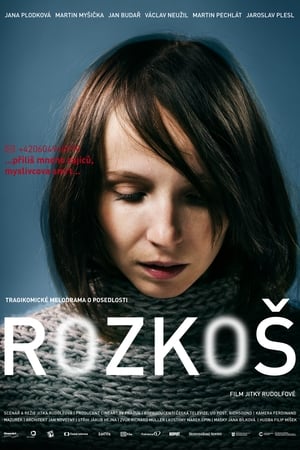
The film's main theme is obsession. An obsession with love, with art, originality, copying, with success, money and... with oneself. Sooner or later, if we lose our rational upper hand over it and let ourselves be dragged down by it, every obsession leads to destruction. But it is only when being dragged down, in spite of all the cuts and bruises, that we find a unique DELIGHT, if only for a few short moments - and what else is life really about? It is like a drug. What at first seems to be weak and trivial is capable of expanding and growing into a serious problem that can appear to be absolutely incomprehensible and absurd to those who have never experienced anything like it.
Evan, an orphaned 22-year-old who grew up in the foster care system, buys a vintage 8mm camera in a yard sale from an elderly man, ends up with reels of the man's old home movies, and begins to live vicariously through these home movies.
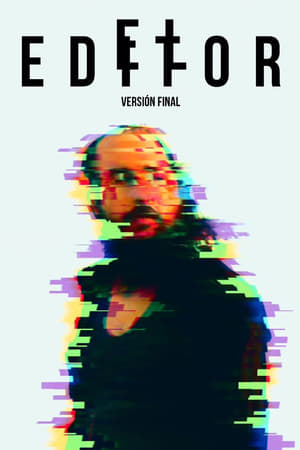
Marcos, an independent film and video editor, works editing late into the night. On a typical night at work, he has a seizure that causes him to lose consciousness. Upon waking up, he discovers that his way of perceiving life has changed in such a way that he now lives everything and sees it in the same way as a cinematographic montage.
A film editor breaks up with his girlfriend, unsure if he is in love.
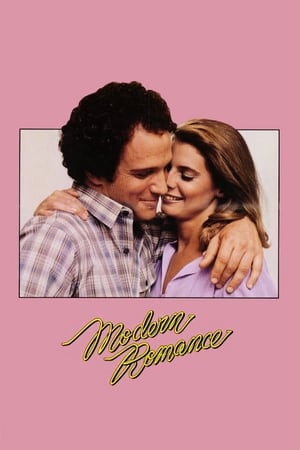
A sophisticated Hollywood film editor, on location for a film she is working on, falls for a local cowboy who is hired to work on the film.
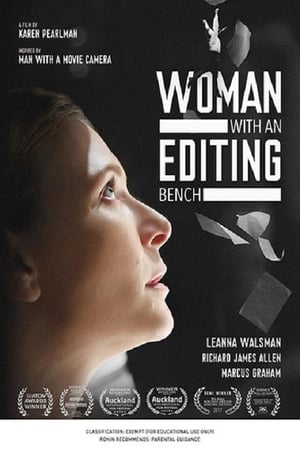
Inspired by the woman who edited "Man with a Movie Camera" (1929), "Woman with an Editing Bench" reveals the personal impact of Stalin’s censorship of cinema on a woman navigating politics, bureaucracy and the impetuous outbursts of collaborators to create something beautiful despite the odds.
Julien, a movie director, is on the phase of editing his new film, "Juliette sacrifiée". Hurried by his producer, he asks for the help of a professional editor. It is Anne, with whom Julien is soon falling in love. During the whole of the movie, both are sitting in front of the editing table, where they listen to music, talk about politics and what movies should and should not be about.
Documentary about the art of film editing. Clips are shown from many groundbreaking films with innovative editing styles.
Edward is a friendly, harmless film editor in the splatter and gore department of a horror film company. Ed is assigned to work on the new Loose Limbs series of horror films after the previous editor killed himself with a hand grenade. Later his reality begins to twist and distort into a horrifying world where nothing is as it seems. Soon enough this turns Ed into Evil Ed!
An editor and his daughter work to restore a family heirloom — an old silent horror film — unaware that each frame inches them closer to a dark spirit.
Observing the behind-the-scenes experiences full of stories, film editors struggle alone in silence, facing time pressure and demands for perfection, as they try to maintain mental balance amidst the endless routine.
Legendary film editor and sound designer Walter Murch talks about his work and philosophy. (Based on over 50 hours of Murch's lectures, interviews, and commentaries.)
This film tells the life story of Ziva Postec, emphasizing the period when she was editing Shoah from 350 hours of footage.
A film director and sound designer discover a disturbing sound cue hidden in the mix of their short film, forcing the director to confront demons from his past.
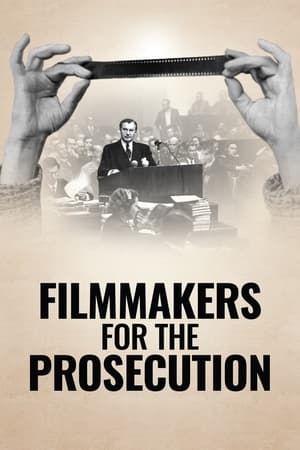
In 1945, two young American soldiers, brothers Budd and Stuart Schulberg, are commissioned to collect filmed and recorded evidence of the horrors committed by the infamous Third Reich in order to prove Nazi war crimes during the Nuremberg trials (1945-46). The story of the making of Nuremberg: Its Lesson for Today, a paramount historic documentary, released in 1948.
Directed by Zbigniew Gniazdowski and Aleksander Hertz.
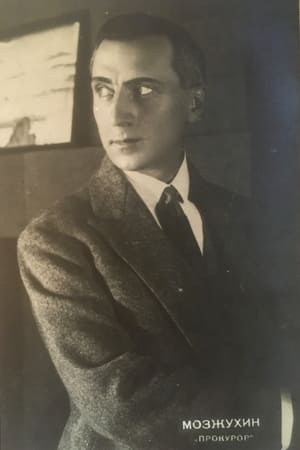
Prosecutor Olsen's lover, the singer-songwriter Betsy, leaves him for a new passion. And he, speaking in court as a prosecutor, remains deaf to the dictates of feelings, a ruthless servant of the harsh Law. Some time later, Betsy kills her new lover in a fit of jealousy; Olsen, who retained his feelings, nevertheless becomes her accuser at the trial. He seeks the condemnation of Betsy, but comes to the realization that he lived unrighteously, allowing himself to be judged, becoming a servant of Themis. Exit in the classic tradition of the great mute: Olsen commits suicide.
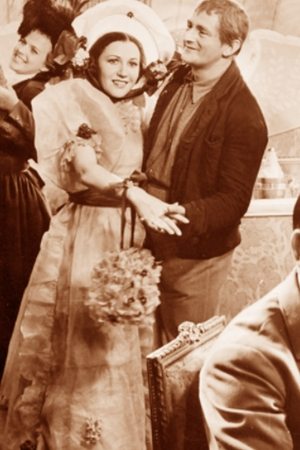
Getsel, a wandering Purim player, comes to a Galica village and gets a job with Reb Nuchem, the shoemaker. He falls in love with Esther, the shoemaker's daughter, but knows she is in love with a wandering circus player. However, Getzel is content in his work and dreams. Esther's father inherits a fortune and attempts to marry her to a man of his choice, but she flees with Getzel to Warsaw, where he meets and marries the circus player. Getzel returns to the village and is blamed for Esther's disappearance until she shows up and explains what happened. Getzel shoulders his pack and wanders on to another village.
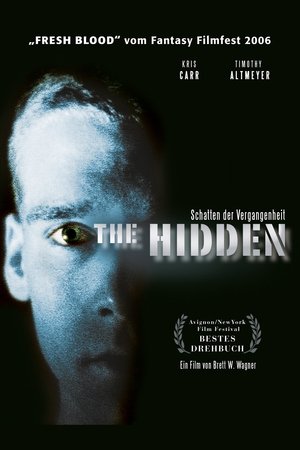
Renee Unger (Kris Carr), a good wife and expectant mother, lives with her husband, Eric (Timothy Altmeyer), in a quiet Ohio town where there aren't many secrets. But everything changes when Eric's younger brother, Colson (Todd Swenson), recently released from prison after turning 21, comes to live with the family. Colson's strange behavior starts to unnerve Renee, while Eric clams up at any mention of why his brother was imprisoned. As the mystery deepens, so does Renee's sense of dread.
This Czechoslovakian children’s film takes place during the last days of the Austro-Hungarian empire. The young son of a horse trainer loves nothing more than riding his horse, until he is stricken by polio…