A deer, disillusioned by the consumerism that defines his life. A lizard, ostracized from society, forever wandering. A chance meeting in the middle of a field. Who will survive? And who will transcend existence? Preserved by the Academy Film Archive in 2009.
A compilation of four Mother Goose stories "photographed in three-dimensional animation" and unified by a prologue and an epilogue with Mother Goose herself magically setting up a projector to show the films. The familiar nursery rhymes are "Little Miss Muffet," "Old Mother Hubbard," "The Queen of Hearts," and "Humpty Dumpty." Preserved by the Academy Film Archive in 2004.
Wallace and Gromit have run out of cheese, and this provides an excellent excuse for the duo to take their holiday to the moon, where, as everyone knows, there is ample cheese.
Wallace rents out Gromit's former bedroom to a penguin, who takes up an interest in the techno trousers created by Wallace. However, Gromit later learns that the penguin is a wanted criminal.
Wallace's whirlwind romance with the proprietor of the local wool shop puts his head in a spin, and Gromit is framed for sheep-rustling in a fiendish criminal plot.
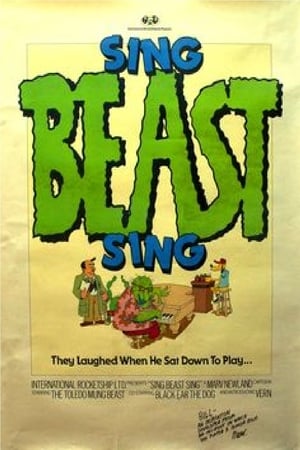
Del is a song writer for the obnoxious Mr. Mega, and in love with Didi, Mega's secretary. His quest to write a hit tune brings him to the wacky world of Flooby Nooby, where he just might learn to write songs from the heart.
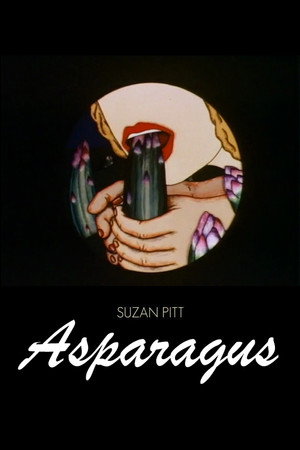
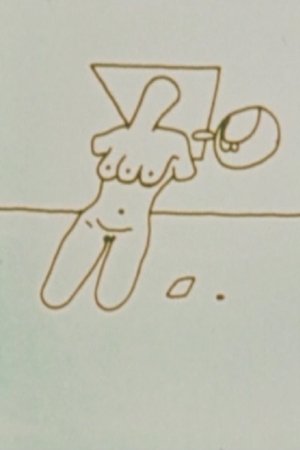
A symbolic reflection on issues of female sexuality, art and identity constructs.
Legacy takes the audience on a rapid-fire journey through the evolution of the world, starting with a cosmic bang, evolving through billions of years of plants, animals and the creation of natural resources, ending with man and his bounty – “sitting on his world contemplating his coconut”. Preserved by the Academy Film Archive in 2012.

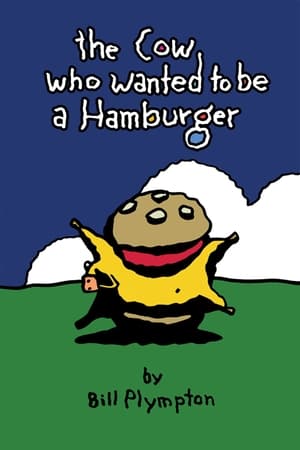
A children's fable about the power of advertising, the meaning of life and ultimately the test of a mother's love. Preserved by the Academy Film Archive in 2016.
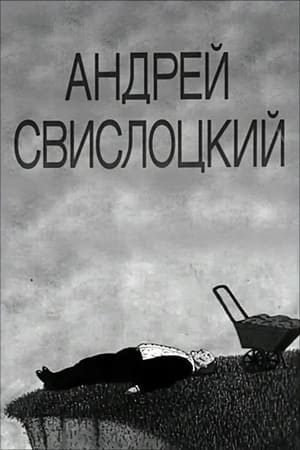
This animated short focuses on the lives of three eccentric people living on a farm in the Ukrainian countryside. Told in a non-linear, stream of consciousness style, the film depicts the deceitful relationship between a master and his two servants. Preserved by the Academy Film Archive in 2007.
An intoxicated man trespasses into an art gallery after hours.
Why do dogs bark at such innocent creatures as pigeons and squirrels... what are they afraid of? This film answers that eternal question.
The bizarre adventures of the cartoon character Foska, drawn by 22 animators working in collaboration. Each animator worked on his or her own sequence only and did not know what action preceded or followed his or her sequence, except that the first drawing of a sequence is the last drawing from the previous sequence. Preserved by the Academy Film Archive in 2010.
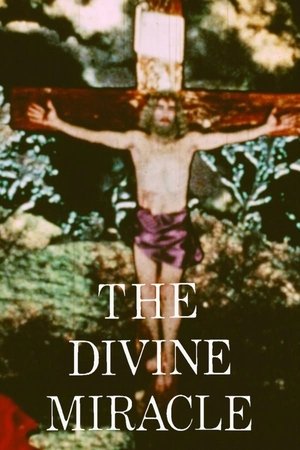
When The Hand of God creates Adam, he must learn the ways of the world, and can only hope for company.
A 1968 animation/documentary that criticises the industrial system. Preserved by the Academy Film Archive.
A village is ruled by the church, but is filled with hypocritical sinners who constantly spy on each other. Preserved by the Academy Film Archive in 2008.
The cartoon is one of the Marshall Plan's most popular films. A clash between a shoemaker and a hat maker illustrates the contrasts between protectionism and free trade. Preserved by the Academy Film Archive in 2003.
Two boys go outside at night to capture a bird. Preserved by the Academy Film Archive in 2003.
As Christmas approaches, Frannie Stein learns from her snide friend Gloria Oestriger that there is no Santa Claus. Frannie's disbelieving, but her father confirms the horrible truth. Frannie enlists the help of her younger brother, Kenny, and they go to a graveyard to dig up some parts, which they assemble in the Stein basement. Soon, they've finished their creation and are ready for revenge on Gloria. Who says there's no Santa? Preserved by the Academy Film Archive in 2012.
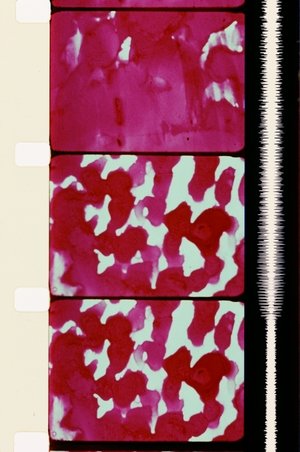
After the title, a white screen gives way to a series of frames suggestive of abstract art, usually with one or two colors dominating and rapid change in the images. Two figures emerge from this jungle of color: the first, a shirtless man, appears twice, coming into focus, then disappearing behind the bursts and patterns of color, then reappearing; the second figure appears later, in the right foreground. This figure suggests someone older, someone of substance. The myth? Preserved by the Academy Film Archive in 2012.