Intertwined stories of people fighting for love, survival and the truth during quarantine.
Documentary about the life of Simón Bolívar, directed by Antonio Bacé.
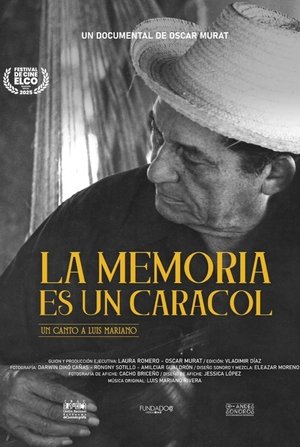
Documentary about the life of Luis Mariano Rivera.
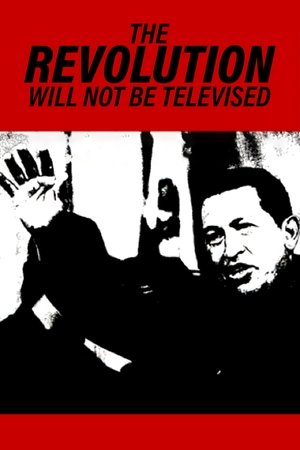
Hugo Chavez was a colourful, unpredictable folk hero who was beloved by his nation’s working class. He was elected president of Venezuela in 1998, and proved to be a tough, quixotic opponent to the power structure that wanted to depose him. When he was forcibly removed from office on 11 April 2002, two independent filmmakers were inside the presidential palace.
Cruz Quinal, "the mandolin king," lives near Cumana in a mountain valley surrounded by sugarcane fields. Perpetuating 16th century Spanish traditions of guitar-making, Cruz fashions such musical instruments as cuatros, marimba, escarpandola, and his own creation, a mandolin with two fretboards. He is an accomplished musician as well. In this moving portrait, Cruz compares himself to a decaying colonial church across the street: revered yet neglected, the village altar stands, paint peeling, under the open sky.
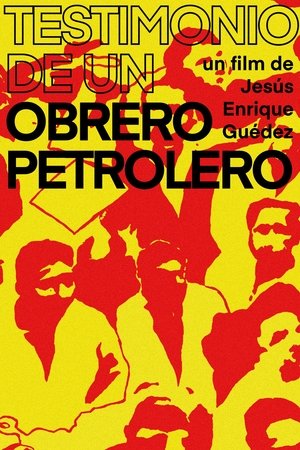
Through the testimony of Manuel Taborda, a pioneer of labor organizing in Venezuela’s oil fields, this documentary revisits the experiences of oil workers between 1920 and 1936. Their memories reveal a world marked by corporal punishment, exploitation, racial segregation, and disease, alongside the emergence of collective resistance against the American and British oil companies that controlled the industry and the government that enabled them.
In 1969, the Renovación Universitaria movement and the subsequent raid on the Central University of Venezuela by the government of Rafael Caldera, triggered a strong wave of protest in the Institutes of Higher Education in Venezuela. This documentary collects part of the events that took place in the city of Mérida, Mérida State, where the University of the Andes is located.
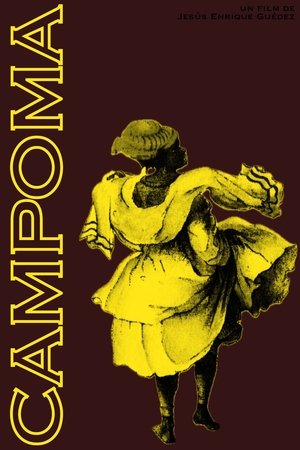
Short that tells the history of Campoma, a small Venezuelan town founded by black slaves.
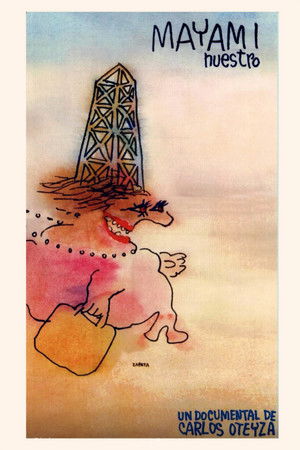
Mayami Nuestro goes beyond the slogan "tá barato, dame dos" (“it’s cheap, give me two”) to force a rethinking of Venezuela’s relationship with oil and national identity. Produced at the height of the oil boom, this 34-minute documentary examines Venezuelan lifestyles in the 1970s and early 1980s, questioning the consumerist fantasies fueled by petro-wealth. Through interviews with merchants, bankers, U.S. academics, and the testimonies of Venezuelans themselves, the film maps the era’s version of the “American Dream” as lived—and projected—abroad. Winner of national and international awards and directed by Carlos Oteyza, Mayami nuestro offers a sharp, historically grounded critique and an open invitation for new generations to reflect on the legacy of oil and its cultural consequences.
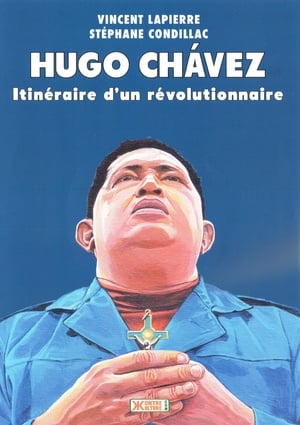
Hugo Chávez: Itinéraire d'un révolutionnaire
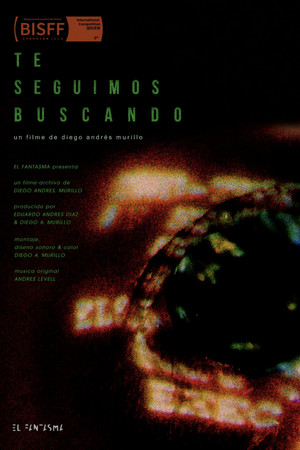
A machine-voice makes a "sad film of his homeland" for a dying patient to ease its passing: footage from Kennedy's visit to Venezuela in 61' creeps through montage errors, and a seemingly endless poem comes alive one last time.
Imagen de Caracas was an experimental film spectacle, directed by Jacobo Borges and Mario Robles in 1968 for the 400 anniversary of the foundation of Caracas. It needed more than 48768 meters of film and 5000 actors.
The second movie in David Hare's Johnny Worricker trilogy. Loose-limbed spy Johnny Worricker, last seen whistleblowing at MI5 in Page Eight, has a new life. He is hiding out in Ray-Bans on the Caribbean islands of the title, eating lobster and calling himself Tom Eliot (he’s a poet at heart). We’re drawn into his world and his predicament when Christopher Walken strolls in as a shadowy American who claims to know Johnny. The encounter forces him into the company of some ambiguous American businessmen who claim to be on the islands for a conference on the global financial crisis. When one of them falls in the sea, their financial PR seems to know more than she's letting on. Worricker soon learns the extent of their shady activities and he must act quickly to survive when links to British prime minister Alec Beasley come to light.
Sylvia returns to Sweden after having lived abroad for six years. She visits her sister Karin, and is shocked to see how her husband and children regard her as a live-in housekeeper. She convinces Karin to take a vacation with her in Stockholm.
When a boy is too confused to speak with his non-communicative family, words eventually lose their meaning. He decides to communicate with his dandruff and a cup of cold coffee instead. His father ignores these eccentricities, assuming it is just a ploy to get attention. Meanwhile, the boy's sister likes exercising seductively in front of men and is better able to capture her father's attention than her brother. Their mother is oblivious, perpetually talking to people on her mobile phone and the space the family occupies grows narrower and narrower.
A man with a clipboard asks passersby a survey question: "Are you the favorite person of anybody?" He has a scale, from "very certain" on down. His manner is open. He offers oranges to one respondent. He talks, one at a time, to three people. Their answers, however brief, are revealing.
Simon Templar creates false identities named after saints in order to steal money from various criminal organizations and redistribute the wealth to others.
Biguá, a port worker, awaits a son with his young girlfriend and embarks on the high seas. Javier, at 40 years old, has a wife he loves, works, enjoys a good time; and imagines recurring dreams. Another life, with another being very different, they cross as in a magical and mysterious dream. The film revisits the theme of the double and its question: will there be, somewhere in the world, a double for each one of us? And, if it exists, what would happen if we took their life?
Encouraged by her father who hopes to save her from a life in the provinces, Jette is about to spend a year volunteering overseas. But love stands in the way of her father's plans, and she no longer knows what she wants.
While he loses his clandestine work, and because he believes that Maroussia and him will no longer be able to love each other as well, Frank leaves to earn as much as she: twelve thousand, just what it takes to have a year before them. No more no less.