Set to a classic Duke Ellington recording "Daybreak Express", this is a five-minute short of the soon-to-be-demolished Third Avenue elevated subway station in New York City.
“Symphonic Sketches” tells the story of one classical music concert performed by the Denver Philharmonic Orchestra. Musicians from diverse racial backgrounds connect to the repertoire in unique ways and stage an unforgettable performance.
A chronological look at the life and career of jazz musician, composer, and performer Dave Brubeck (1920-2012 ), presented through contemporary interviews, archival footage of interviews and performances, and commentary by family, fellow musicians, and aficionados. Emphases include his mother's influence, his wife's invention of college tours, his skill as an accompanist, the great quartet (with Desmond, Morello, and Wright), his ability to find musical ideas everywhere, his orchestral compositions, his religious conversion, and his unflagging sweet nature.
Taken in by the musical world as a young orphan, Rick Martin grows up with a desire to play pure jazz instead of the commercial gigs he lands, whilst also coping with the problems caused by his tempestuous marriage to an aloof heiress.
Tenor saxophonist Jimmy McGary was a major presence in the Cincinnati music scene from the 1950s until his death in the early ’90s. With music rooted in Bebop with a progressive slant, the Jazz legend was a session player for King Records and released his first album as a bandleader — The First Time (with a quartet that included pianist Pat Kelly) — in 1979. McGary’s spirit and legacy have lived on well after his passing and well beyond Cincinnati, as evidenced in this new documentary film.
Imagine an AM Radio Station with a dawn to dusk license that played nothing but jazz and comedy records. Did I mention it FLOATED in the Ohio River and changed the culture of a Community? The history of Cincinnati Jazz is long, wide, diverse and in the case of WNOP sometimes beyond belief. Saxophonist turned filmmaker Christopher Braig's second Film will focus on the people, music, and cities that kept "The Jazz Ark" sailing for 42 years from 1968 to 2000.
In the late 1990s, iconic photographer Bruce Weber barely managed to convince legendary actor Robert Mitchum (1917-97) to let himself be filmed simply hanging out with friends, telling anecdotes from his life and recording jazz standards.
After a seven-year absence, Charlotte Andergast travels to Sweden to reunite with her daughter Eva. The pair have a troubled relationship: Charlotte sacrificed the responsibilities of motherhood for a career as a classical pianist. Over an emotional night, the pair reopen the wounds of the past. Charlotte gets another shock when she finds out that her mentally impaired daughter, Helena, is out of the asylum and living with Eva.
A biographical film featuring the music and times of Bill Evans with interviews from Tony Bennett, Jack Dejohnette, Billy Taylor, Paul Motian, Jon Hendricks, Orin Keepnews, Bobby Brookmeyer, Pat Evans and more, including family and friends who knew Bill Evans well.
An insecure up-and-coming pianist fights to replace her injured childhood idol as the lead soloist at the most prestigious orchestra in the country.
"It must schwing!" was the motto of Alfred Lion and Francis Wolff, two German Jewish immigrants who in 1939 set up Blue Note Records, the jazz label that was home to such greats as Miles Davis, John Coltrane, Herbie Hancock, Thelonious Monk, Art Blakey, Dexter Gordon and Sonny Rollins. Blue Note, the most successful movie ever made about jazz, is a testimony to the passion and vision of these two men and certainly swings like the propulsive sounds that made their label so famous.
During the 1960s, two American jazz musicians living in Paris meet and fall in love with two American tourist girls and must decide between music and love.
Kirk Whalum presents this music documentary-cum-live concert performance exploring the impact of jazz on modern retellings of the Gospel. The film includes performances by Kirk Whalum himself along with George Duke, Lalah Hathaway, Doc Powell and Kevin Whalum.
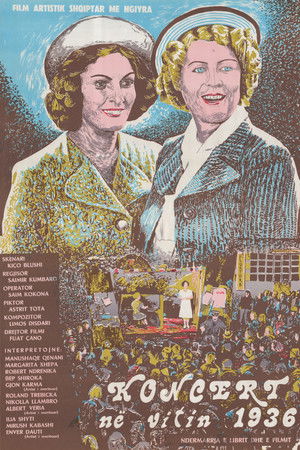
In 1936, two female artists (a singer and a pianist) visit the city of Lushnja, which was very conservative.
In the 1930s, jazz guitarist Emmet Ray idolizes Django Reinhardt, faces gangsters and falls in love with a mute woman.
Set in 1860's Transylvania, a group of travelers ends to the Dracula's castle.
Saxophone player Charlie ‘Bird’ Parker comes to New York in 1940 and is quickly noticed for his remarkable way of playing. He becomes a drug addict but his loving wife Chan tries to help him.
Singer-songwriter Winslow Leach seeks revenge on the nefarious music producer Swan, who steals both Winslow's music and his favorite singer for the grand opening of Swan's new rock palace, the Paradise.
Stop for Bud is Jørgen Leth's first film and the first in his long collaboration with Ole John. […] they wanted to "blow up cinematic conventions and invent cinematic language from scratch". The jazz pianist Bud Powell moves around Copenhagen -- through King's Garden, along the quay at Kalkbrænderihavnen, across a waste dump. […] Bud is alone, accompanied only by his music. […] Image and sound are two different things -- that's Leth's and John's principle. Dexter Gordon, the narrator, tells stories about Powell's famous left hand. In an obituary for Powell, dated 3 August 1966, Leth wrote: "He quite willingly, or better still, unresistingly, mechanically, let himself be directed. The film attempts to depict his strange duality about his surroundings. His touch on the keys was like he was burning his fingers -- that's what it looked like, and that's how it sounded. But outside his playing, and often right in the middle of it, too, he was simply gone, not there."
In a bland, utilitarian world of order, one worker finds his inner jazz