In 1967 Canadian filmmaker Hugh O'Connor came with a crew to eastern Kentucky to make a film showing people from all walks of life in the United States. They finished the day by filming coal miners and their families in rental houses. As the filmmakers were leaving, Hobart Ison, the owner of the property, drove up and fired three shots, killing Hugh O'Connor. Elizabeth Barrett, from Kentucky herself, explores why this happened by trying to understand the people and culture of eastern Kentucky.
The story behind the murder of 16-year-old Becky Watts, who was killed by her stepbrother Nathan Matthews and his 21-year-old partner Shauna Hoare in Bristol in February 2015. This programme documents the huge police manhunt that unfolded in the wake of her disappearance, and the police investigation which eventually brought her murderous stepbrother to justice.
Steve McNair was an NFL legend whose life was seemingly cut short by a crime of passion. Is there more to this chilling tragedy than meets the eye?
71 years in the making, this feature documentary experience reveals the extraordinary life journey of Hollywood's most unlikely hero, Danny Trejo.
A young mother’s mysterious death and her son’s subsequent kidnapping blow open a decades-long mystery about the woman’s true identity, and the murderous federal fugitive at the center of it all.
Rosa is a Mexican woman who, at the age of 17, migrated illegally to Austin, Texas. Some years later, she was jailed under suspicion of murder and then taken to trial. This film demonstrates how the judicial process, the verdict, the separation from her family, and the helplessness of being imprisoned in a foreign country make Rosa’s story an example of the hard life of Mexican migrants in the United States.
Never-before-seen testimony is included in this documentary on Emmett Louis Till, who, in 1955, was brutally murdered after he whistled at a white woman.
ABC retells the dark, disturbing story of Manson — and his twisted cult of devoted followers he instructed to carry out a series of grisly homicides in 1969. In this two-hour documentary.
The line between justice and revenge blurs when a devastated family uses social media to track down the people who killed 24-year-old Crystal Theobald.
Imagine the prison of Alcatraz, only 10 times worse, built on tropical, hellish and deadly islands, lost to the rest of the world. Three tiny castaway islands rise away from the coast of French Guyana, in South America: The Devil's Islands. Now buried under an impenetrable jungle, lay the lost remains of what had been for a hundred years the most storied convict prison in history. There, while most of the prisoners faded into oblivion, a few became legends. Some because they were innocent, as in the scandalous Dreyfus Affair, some because they somehow escaped the islands of nightmare, as did the "butterfly", Henry Charrière, immortalized by Steve McQueen in Papillon. Now 50 years after the prison doors slammed shut for the last time, we explore what's left of the Devil's Islands' unbelievably dark and oppressive realm.
Using two separate filmmaking teams (an all-white crew filming white residents and an all-black camera crew filming black residents), TWO TOWNS OF JASPER captures very different racial views by townsfolk in Jasper, Texas, the location for a racially motivated murder of an African American man in 1998.
Out of State is the unlikely story of native Hawaiians men discovering their native culture as prisoners in the desert of Arizona, 3,000 miles, and across the ocean, from their island home.
The documentary, " Death and the Judge", revolves around Iran's most famous criminal judge, Azizmohammadi. He served as a criminal judge for 45 years and issued about 4500 death sentences; a record in not only Iran, but also the world. This documentary looks into his personal and professional life as he is followed within his home with his family, in the court of law, and in his retirement days. The ultimate purpose of the documentary is to deduce the role of death in the judge's life as he either takes life away from criminals or death comes to his loved ones. During his retirement, he is once again given the choice between the life and death of a person, despite no longer being a judge.
“The Vanishing Trial” looks into “trial penalty,” the term used to describe the substantially longer prison sentence a person receives if they exercise their constitutional right to trial instead of plead guilty. The documentary focuses on four individuals who were forced to make that excruciating choice.
The Stanford prison experiment was a landmark psychological study of the human response to captivity, in particular, to the real world circumstances of prison life, and the effects of imposed social roles on behaviour. It was conducted in 1971 by a team of researchers led by Philip Zimbardo of Stanford University.
A documentary about juveniles who are serving life in prison without parole and their victims' families.
British documentarian Nick Broomfield creates a follow-up piece to his 1992 documentary of the serial killer Aileen Wuornos, a highway prostitute who was convicted of killing six men in Florida between 1989 and 1990. Interviewing an increasingly mentally unstable Wuornos, Broomfield captures the distorted mind of a murderer whom the state of Florida deems of sound mind -- and therefore fit to execute. Throughout the film, Broomfield includes footage of his testimony at Wuornos' trial.
The creative chemistry of four brilliant artists —drummer John Densmore, guitarist Robby Kreiger, keyboardist Ray Manzarek and singer Jim Morrison— made The Doors one of America's most iconic and influential rock bands. Using footage shot between their formation in 1965 and Morrison's death in 1971, it follows the band from the corridors of UCLA's film school, where Manzarek and Morrison met, to the stages of sold-out arenas.
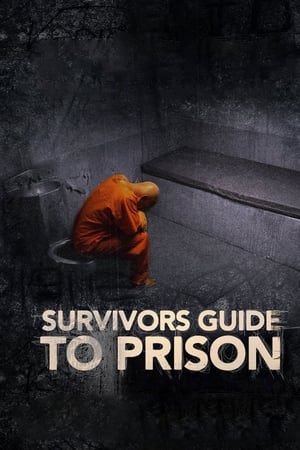
Today, you're more likely to go to prison in the United States than anywhere else in the world. So in the unfortunate case it should happen to you - this is the Survivors Guide to Prison.
Mihai Moldoveanu, a former Romanian army officer, was sentenced to 25 years behind bars for a crime he claims he did not commit. Following a long series of attempts to prove his innocence, the European Court of Human Rights ruled in Moldoveanu's favor in June 2012. The documentary follows him after his provisional release and focuses on the referral of the case and the consequences of the new sentence, giving the viewer the role of a juror in a complicated and controversial lawsuit.