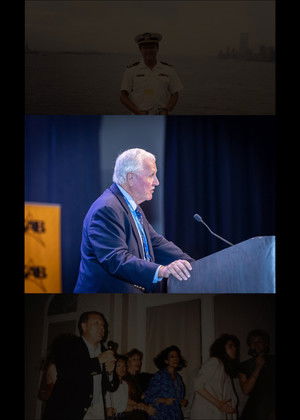
Highlighting the career of former GAB President and broadcasting legend, Bob Houghton. This documentary short was produced for his induction into the Georgia Association of Broadcasters Hall of Fame in March of 2025.
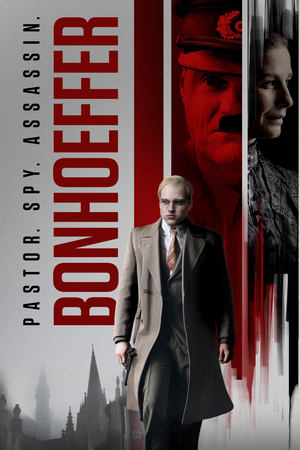
As the world teeters on the brink of annihilation, Dietrich Bonhoeffer joins a deadly plot to assassinate Hitler, risking his faith and fate to save millions of Jews from genocide.
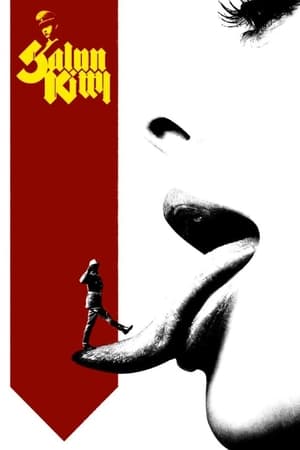
Set in Berlin at the dawn of World War II, Salon Kitty follows an ambitious SS officer who takes control of a premier, high-end brothel frequented by foreign diplomats and Nazi elites. Replacing the original workers with fanatical German women trained as informants, he covertly transforms the luxury establishment into a sophisticated intelligence hub to gather secret information from its powerful clientele.
As curfew approaches, an everyday heroine risks it all in a smuggling operation from Nazi-occupied Poland.
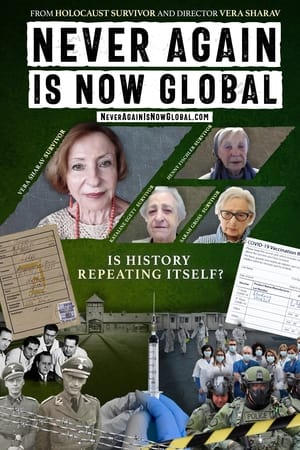
Holocaust survivors, children of survivors, and grandchildren - as well as German freedom fighters - express their shock at the Covid era's fear-mongering and divisive dictates that are reminiscent of the prelude to the Holocaust. This ambitious five-part docu-series is the brainchild of Holocaust survivor and human rights activist Vera Sharav.
Boston's V66 music video station came and went in the mid-1980s but in the 18 months on the air, it was one of the only over-the-air music video channels ever created. But even popular success didn't mean it was going to last...
Six sequences about Fascism and its segments throughout history.
Les survivants, l'impossible départ après la Shoah
The documentary film follows the life and career of Milen Tsvetkov against the backdrop of historical events in Bulgaria that have transformed journalism and the media market in the country since 1989.
The history and enduring legacy of one of the world's biggest and most influential radio stations.
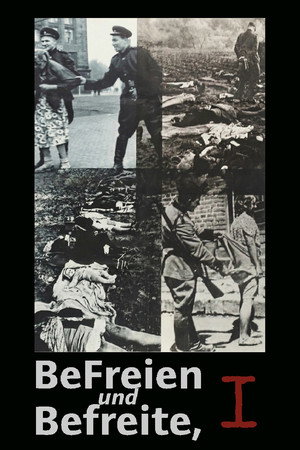
Based on years of research into the mass rapes committed by the Red Army at the end of the Second World War. In the first part of the documentary Helke Sander interviews multiple German women who were raped in Berlin by Soviet soldiers in May 1945. Most women never spoke of their experience to anyone, after 46 years of silence they talk for the first time publicly about their violent experiences that have left such a mark.
Familiar radio voice Ben Grauer leads the viewer on a behind the scenes tour of the National Broadcasting Company studios -- both radio and television -- in Rockefeller Center and Hollywood. The original 25-minute film previewed by network execs and affiliates in the fall of 1948 was cut down to 20 minutes before its first broadcast, reportedly to excise high-profile stars and programs such as Amos 'n' Andy, Jack Benny, and Edgar Bergen that had since left NBC for other networks.
An investigation of how Hollywood's fabled stories have deeply influenced how Americans feel about transgender people, and how transgender people have been taught to feel about themselves.
In 1941 Nazi Germany, 16-year-old Helmuth Hübener begins questioning the regime after learning the truth about the war and seeing his Jewish friend persecuted. With two friends, he secretly listens to banned foreign broadcasts and distributes leaflets exposing Nazi lies. As the Gestapo closes in, the teenagers face mounting danger for choosing conscience over obedience. Based on the true story of one of Germany’s youngest resistance fighters.
One day in the life of television is a documentary that was broadcast on ITV on 1 November 1989. Filmed by over fifty crews exactly one year earlier, it was a huge behind-the-scenes look at a wide range of activities involved in the production, reception and marketing of British television. The project was organised by the British Film Institute and produced and directed for television by Peter Kosminsky. A book by Sean Day-Lewis was published to accompany the documentary. It contained the thoughts of people throughout Britain, including industry professionals, who recorded their feelings and experiences of television viewing on 1 November 1988, the day that the documentary was filmed.
Set in Remies, France in 1941 during World War II, a Jewish man tries to escape Nazi persecution and a chance encounter with a woman sitting next to him on the train. Based on a true story.
The order comes in the summer of 1941 from Propaganda Minister Joseph Goebbels himself: The best animators are summoned to Berlin. Their task: Producing feature-length cartoons in ‘Disney quality’ with the newly founded ‘Deutsche Zeichenfilm GmbH’. To get trained, the Disney movie “Snow White” is retraced frame by frame. After the final victory, one new feature-length production of quality shall be released every year from 1947 onwards – that is the plan. Only in 1943, the first production is completed: “Armer Hansi”, a 17-minute-long colour movie, realized with the effortful multiplane technology. The second film by the ‘Deutsche Zeichenfilm’ is only completed in 1946 – by DEFA. In the territories occupied by Germany, cartoons are produced as well, sometimes harmless ones, sometimes propagandistic ones. With excerpts from animated movies, live action film documents, and witness reports by contemporaries, this documentary draws a picture of the cartoon production in the Third Reich.
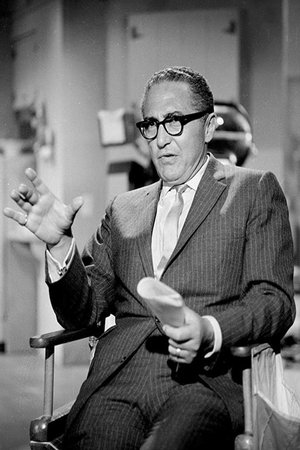
A loving tribute to a forgotten pioneer of the golden age of television. Starting out as a Runyonesque character actor, Sheldon Leonard went on to produce some of the most beloved and groundbreaking shows of all time, such as The Andy Griffith Show, The Danny Thomas Show, The Dick Van Dyke Show and I Spy. A rare treat, this film is a delightful retrospective of Leonard’s body of work, including priceless clips from his productions— as well as his hilarious appearances on shows such as The Jack Benny Program—and interviews with many of his friends and colleagues, including Mary Tyler Moore, Andy Griffith, Dick Van Dyke, Carl Reiner, Ron Howard and Leonard himself.
Summer 1936 - The Berlin Olympics, organized by the Nazi regime on the eve of World War II, acted as a grand showcase for a Germany that was athletic, peaceful and rejuvenated. The violence and hate that until then had reigned in the streets of Berlin suddenly vanished. Adolf Hitler became the triumphant host of European countries he would soon try to invade or face in a deadly global conflict.
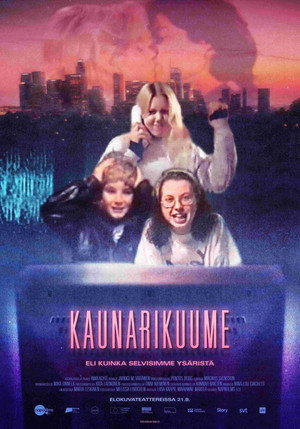
With the Soviet Union’s dissolution dragging down the economy of neighboring Finland, the Scandinavian country was plunged in a period of protracted recession. And with no recovery in sight, a soap opera offered Finns a respite from the grim reality; the debut of The Bold and the Beautiful on television quickly amassed a vast and dedicated following, whereas the arrival of American idols in the country, on tour, elicited unprecedented frenzy.