Elba - Italiens Trauminsel im Mittelmeer
A 1962 West German documentary film directed by Hermann Leitner and Rudolf Nussgruber.
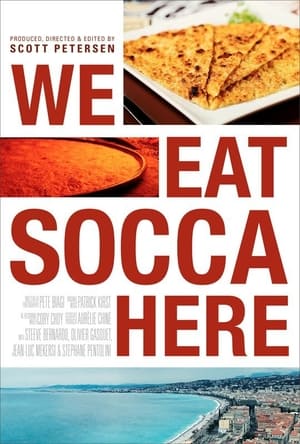
The hidden story of a savory local specialty found only on the French Riviera and the surrounding areas. Socca enjoys a historical and cultural significance that far outweighs its simple and rustic four ingredients. How Nice!
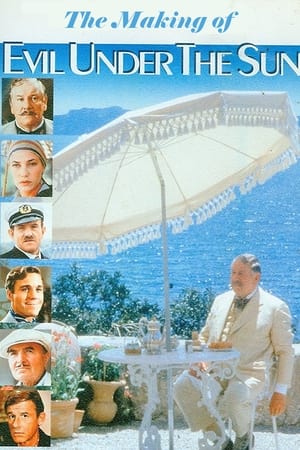
Director Guy Hamilton and several of the stars of Agatha Christie's "Evil Under The Sun" walk you through the making of the film.
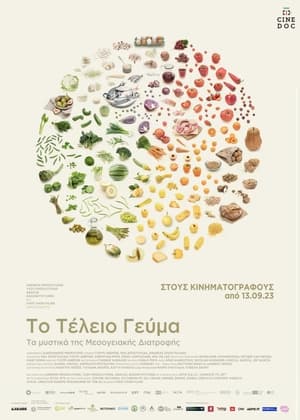
A food-loving and scientific tribute to the Mediterranean diet and, not least, the liquid gold: olive oil.
British historian Bettany Hughes tours the eastern Mediterranean in search of facts behind the legends of "the face that launched a thousand ships," exploring the ways Greeks made love and war circa 1300 B.C.
A documentary about Göran Schildt and his relationship with the Mediterranean.
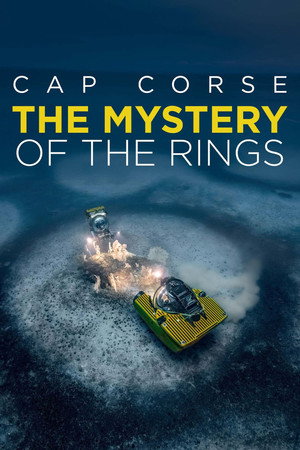
Explore the mysterious giant rings of the Mediterranean, buried at a depth of 120m, with the world-famous Laurent Ballesta, world-renowned diver and his team, to understand the origin of these unique and unknown formations.
La Corse, belle et méditerranéenne
Pictures of the Mediterranean made with bread, oil and wine. In one meal the history, geography, economy, climate, culture and people of the Mediterranean. Close up of threshing floors, threshing floors, mills. Dietary habits, production methods, daily routines together with the natural and built environment make up the cultural body of the most interesting, perhaps, man-made environment in history. A culture that runs as a commonplace even in seemingly different worlds. The Mediterranean emerges in a sea of convergence and meeting without, however, ignoring the dynamics of the different.
Santa Maria
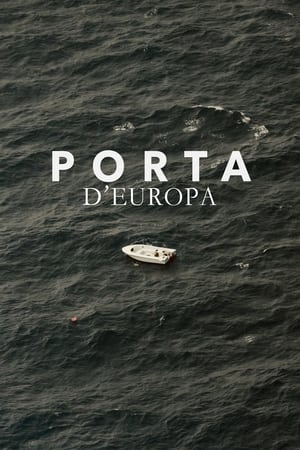
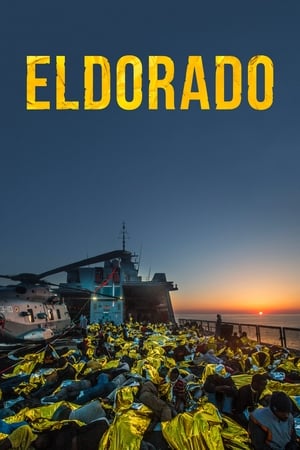
Drawing inspiration from his personal encounter with the Italian refugee child Giovanna during World War II, Markus Imhoof tells how refugees and migrants are treated today: on the Mediterranean Sea, in Lebanon, in Italy, in Germany and in Switzerland.
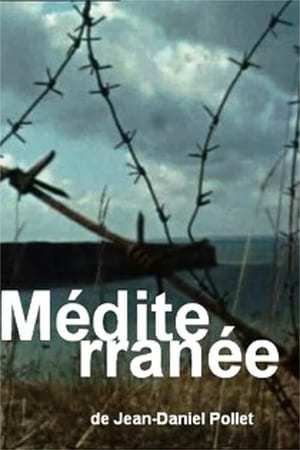
[Here] Pollet made a work that is the very definition of what French critics like to call an ovni or ufo (as in ‘unidentified filmic object’). [It] has been described as being ‘like a comet in the sky of French cinema,’ an ‘unknown masterpiece,’ and an ‘unprecedented’ work that refuses interpretation even as it has provoked reams of critical writing. Its rhythmic collage of images – a girl on a gurney, a fisherman, Greek ruins, a Sicilian garden, a Spanish corrida – is accompanied by an abstract commentary written by Sollers, and only the somber lyricism of Antoine Duhamel’s score holds the film’s elements together. At first viewing, you fear that [it] might fly apart into incoherent fragments. Instead, over the course of its 45 minutes it invents its own rules, and you realize you’re watching something like the filmic channeling of an ancient ritual.
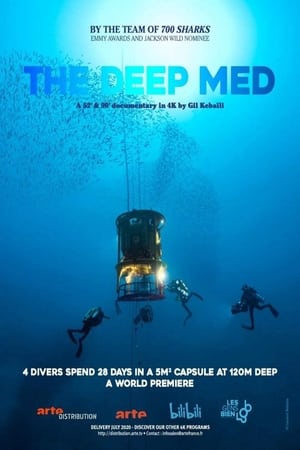
The Mediterranean. Because people have been travelling there for thousands of years, it is believed to be without secrets. And yet, far below its surface, lie vast unexplored territories, luxurious gardens worthy of the finest tropical coral reefs. These natural wonders are inaccessible to the traditional diver, in a twilight zone, between 60 and 120 m, where there’s less than 1% of sunlight. If diving at such depths is always a challenge, staying there is a fantasy, a utopia that becomes reality in Planet Mediterranean. In the tradition of Commander Cousteau and his "houses under the sea," the team of diver-photographer Laurent Ballesta is undertaking a new world-record setting mission in complete freedom and without time limit.
"Give me ten million dollars and trust me, we'll deliver a low-cost microprocessor compatible with Intel". This was former IBM Fellow and Dell Senior VP Glenn Henry's 1995 pitch to start a microprocessor company focused on low-cost Intel-compatible processors ("x86"). This documentary follows Henry and his team as they race to complete their latest chip, and offers an inside look at Centaur's unique management environment.
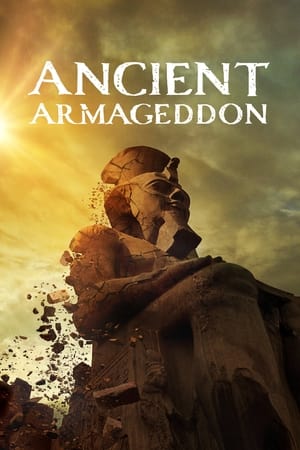
This explores the mysterious and catastrophic collapse of ancient civilizations during the late Bronze Age, from the Hittites to the Mycenaeans and the Egyptians, revealing the tumultuous events that brought an end to a thriving era of human history, and warns we may be facing similar threats today.
Mimmo Villari is 29 years old in 1975, lives in Calabria, has a dusty guitar in the attic and the sacred fire of music that once burned his stomach is now turning into embers. In that period the first experiences of pirate radio arose in Italy. Mimmo is thrilled by the rumors about it and wastes no time: he builds himself an FM transmitter and thus sets up Radio Perla del Tirreno, the first pirate radio station in Bagnara Calabra. The voices of the radio reflect on politics, philosophy, civic education, creating a discourse that is the portrait of a society and an era.
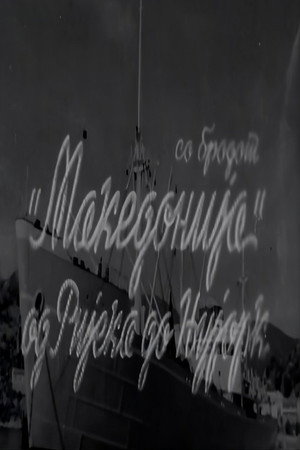
A travel documentary about the ship "Macedonia" which sets sail from the port of Rijeka, travels along the Mediterranean Sea stopping at Alexandria, Genova, Marseilles, Algiers and arrives at the final destination in New York.
A short distance from Marseille, at Cape Morgiou, in the depths of the Calanques massif, lies the Cosquer cave, discovered only about thirty years ago by a diver, Henri Cosquer. With its bestiary of hundreds of paintings and engravings - horses, bison, jellyfish, penguins - the only underwater decorated cave in the world allows us to learn a little more about Mediterranean societies 30,000 years ago. Today, threatened by rising water levels accelerated by global warming, this jewel of the Upper Paleolithic is in danger of being swallowed up. To save the cave from disappearing, the Ministry of Culture has chosen to digitize it. From this virtual duplicate, a replica has been made on the surface to offer the public a reconstruction that allows them to admire these masterpieces.
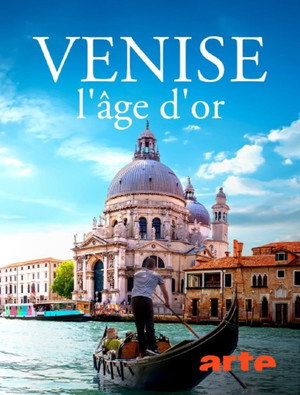
Venedigs goldenes Zeitalter. Glanz und Gewalt