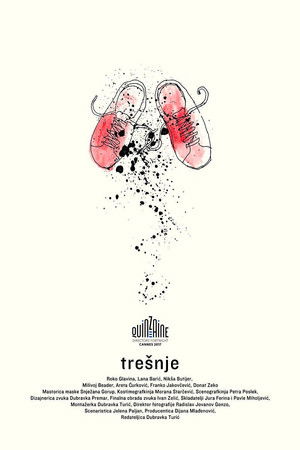
In this sun soaked adventure for the entire family, a group of five orphaned children form their own makeshift family while attempting to operate outside the rules of society. Though they must sometimes steal to survive, their loyalty to one another means that they will always have a brother or sister to count on.
A young countess, Nera Keglević, is fighting against believing in witches by using witchcraft. But the problem is that local judge Krajačić is accusing Nera to be witch for revenge.
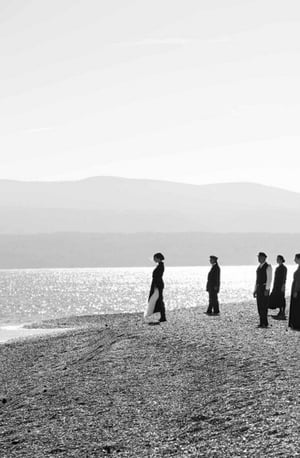
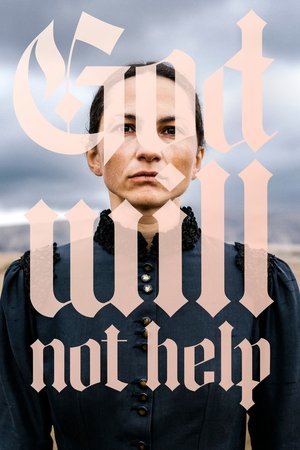
A Chilean woman, Teresa, comes into a firmly structured and isolated mountain community of Croatian shepherds in the early 20th century, claiming to be the widow of their émigré brother. Her arrival changes the dynamics between the members of the community and brings unrest, but also inspiration for other women.
The video installation entitled Partenza (Italian for departure, and used in many of Croatia’s island and coastal dialects) express the global insecurity of contemporary society and the fragility of human existence. Metaphorically, they address a story about departure, waiting and separation, dictated by migrations. In the early 20th century, it was usual yet traumatic for men to leave Croatian islands (mostly bound for the countries of South America) due to poverty and hunger. One of these tragic stories is weaved into the author’s family history. The installation is inspired by the life story of Renata’s great-grandmother who lived on the island of Brač, whose husband went to Chile looking for work in order to secure his family’s future. Like many of the island’s women, she waited for her husband who, like many of the men, never returned.
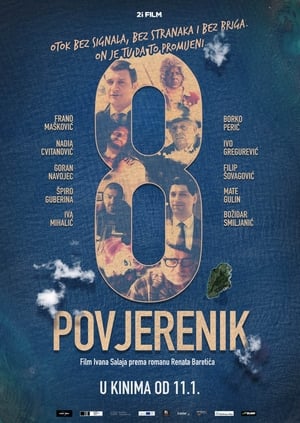
Siniša Mesjak, an arrogant and ambitious politician on the rise, finds himself in the middle of a scandal. To hide him from the public, the president appoints him as the commissioner of Croatian government on the furthest settled island Trečić, where he is tasked with the organization of local elections. The previous seven commissioners haven't succeeded.
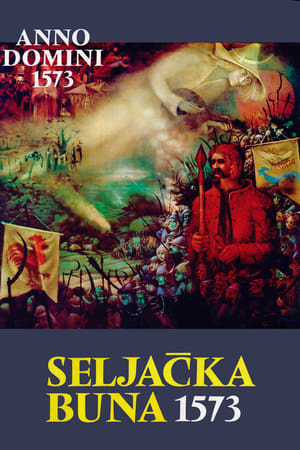
Movie adaptation of the history novel by August Senoa, about Matija Gubec, the leader of peasant revolt of 1573.
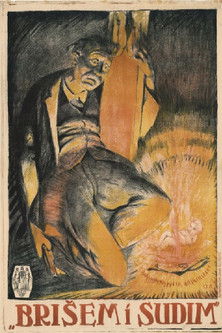
Brišem i sudim is a Croatian film. Only one minute of the film is saved.
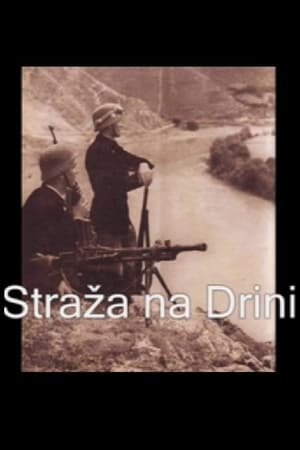
A compilation of week journals made for Nazi-puppet regime in Croatia during WW II which show the warfare of Ustasha forces against Yugoslav partisans and Chetniks in eastern Bosnia.
The movie Karolina Rijecka is loosely based on the legendary story of young Karolina Belinic. When the English fleet began firing cannons on the Adriatic port of Rijeka, young Karolina boarded the ship of English Admiral John Leard and negotiated a cease-fire to save the town from destruction.
The painful challenges experienced in the life of a farmer from Zadar, Croatia, in the years from World War I to World War II.
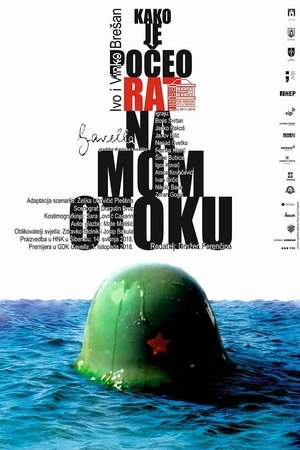
At the beginning of 1991, Yugoslav army did not acknowledge Croatian's independence, and still holding few military barracks in Croatia. Gajski travels to an island to get his son out of the army. Locals have besieged the barracks and organized a festival to try with singing and recitals to get major Aleksa and his soldiers to surrender, but Aleksa has explosives thru the barracks and wants to blow up the island.
On the eve of Yugoslav war in 1991, English ecologist Henry comes to the city of Osijek in order to save the world's oldest oak. After many dangerous and funny adventures, they finally arrive to nearby village where the oak is located.
The year is 1940, Croatian coast, Kingdom of Yugoslavia. Jakov, a poor peasant from hinterland, and his daughter Mala, go to the city, trying to find a job to repay a debt...
In a small Croatian village in 1991, a carpenter Kuzma falls for much younger Ana. In spite of their surroundings' opposition towards their relationship, the couple marries and Ana gives birth to their son. Being also familiar with the statuary, he makes a sculpture of Madonna for the local church. A quiet life of the village is disturbed when the first clashes between Croats and Serbs arise.
The story about the Bleiburg massacre, seen from a Croatian Home Defenders point of view.
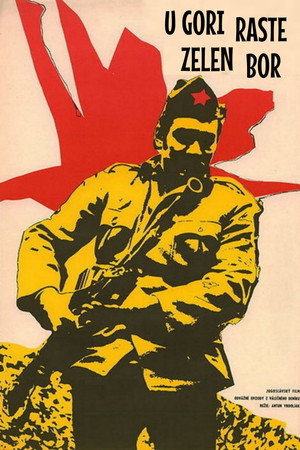
WW2 story about group of prisoners who are trying to escape the death camp, run by local pro-Nazi militia.
A family from isolated village in Lika makes a good living out of American pension earned by their late granddad Djuradj and received by his widow Nedja. The very existence of a family is threatened when Nedja dies, but the head of the family comes up with a cunning plan.
A pseudo biography of Dora Pejačević (10 September 1885 - 5 March 1923), a Croatian composer.
A young man is determined to find out what happened to his grandfather who was arrested and then disappeared in WW2, why did the new communist government label their family as traitors and why was his father killed many years later.
Three loosely connected stories about football fans in Zagreb, Croatia, during the day of the country's biggest derby between Zagreb's GNK Dinamo and Split's NK Hajduk.