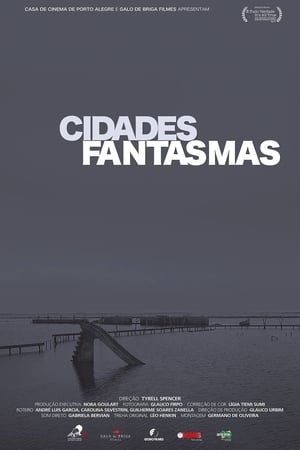
In Humberstone (Chile), little was left of the saltpeter's prosperity. Near the old Fordlandia (PA), squatter houses are the last signs of the city built by Henry Ford. Armero (Colombia), had its population wiped out by the eruption of the Nevado del Ruiz volcano in 1985. Twenty-five years after a flood, ruins of Villa Epecuén (Argentina) expose the remains of the old water station.
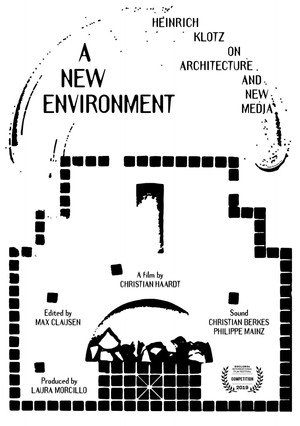
The old world is gone. Our landscape bears scars. Entire cities have been levelled. Is it possible to regenerate the city without covering over the warnings of war’s aggressions? Or can these ruins provide a unique chance to reinvent the city thoroughly? The art historian Heinrich Klotz took precisely these questions, concerning the reconstruction of Germany’s historical districts after World War II, as the departure point of his practice.
Florent Tillon takes an anthropological lens to Las Vegas, Nevada. What he finds is some curious new species of Americana. (Dorothy Woodend, DOXA Documentary Film Festival)
A documentary portrait of Calcutta
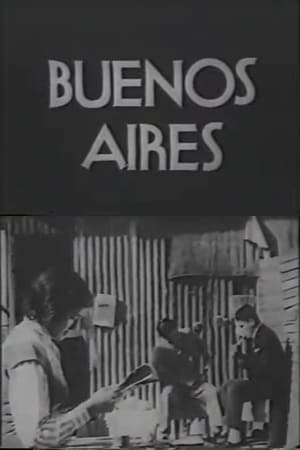
An urban documentary that explores economic inequality in Buenos Aires through the contrast between large mansions and skyscrapers that coexist with slums.
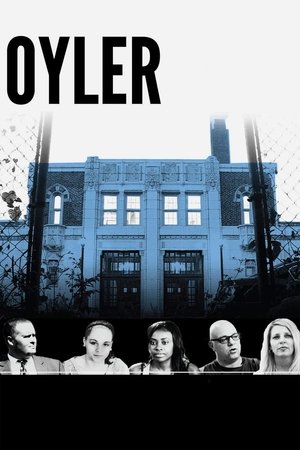
A Cincinnati public school fights to break the cycle of poverty in its Urban Appalachian neighborhood, where senior Raven Gribbins aims to become the first in her troubled family to graduate and go to college. When Principal Craig Hockenberry's job is threatened, it becomes clear it's a make-or-break year for both of them.
A documentary about the design of cities, which looks at the issues and strategies behind urban design and features some of the world's foremost architects, planners, policymakers, builders, and thinkers.
A film commissioned by the Municipal Housing Authority that was meant to praise the city council's social housing policy; It was screened in a private session for Mayor Porcioles and was not accepted; a new, happier, more hopeful ending was added, but even so it was never publicly shown and came to be known as "the movie that never existed."
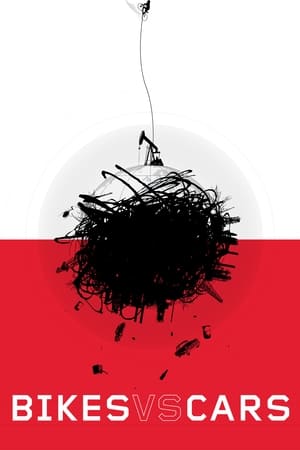
Bikes vs Cars depicts a global crisis that we all deep down know we need to talk about: Climate, earth's resources, cities where the entire surface is consumed by the car. An ever-growing, dirty, noisy traffic chaos. The bike is a great tool for change, but the powerful interests who gain from the private car invest billions each year on lobbying and advertising to protect their business. In the film we meet activists and thinkers who are fighting for better cities, who refuse to stop riding despite the increasing number killed in traffic.
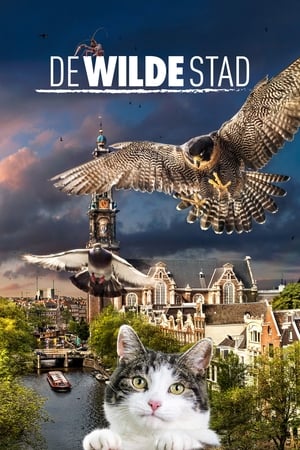
The city from the unique perspective of the many wild animals and plants that inhabit it. Seen through the eyes of the adventurous urban cat, Abatutu.
"The theme of the film HIDDEN CITIES is personal urban perceptions, which we call 'the city'. The city, as a living organism, reflecting social processes and interactions, economic relations, political conditions and private matters. In the city, human memories, desires and tragedies find expression in the form of designations and marks engraved in house walls and paving slabs. But what the city really is under this thick layer of signs, what it contains or conceals, is what we are researching in the HIDDEN CITIES project. The source material for the film are 9 sequential photo works created by Gusztáv Hámos between 1975 and 2010. Each of these 'city perceptions' depicts essential situations of urban experiences containing human and inhuman acts in a compact form. The cities in which the photo sequences have been made are Berlin, Budapest and New York – places with a traumatised past: Wars, dictatorships, terrorist catastrophes."
What does it mean to be awake in a world that seems satisfied to be asleep? Kris and Michal push their experiences of life and love to a breaking point as they restlessly roam the city streets in search of answers, adrift in the euphoria and uncertainty of youth.
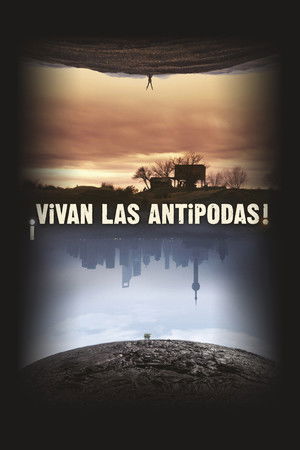
What would be the shortest route between Entre Rios in Argentina and the Chinese metropolis Shanghai? Simply a straight line through the center of the earth, since the two places are antipodes: they are located diametrically opposite to each other on the earth's surface. During his visits to four such antipodal pairs, the award-winning documentary filmmaker Victor Kossakovsky captured images that turn our view of the world upside down.
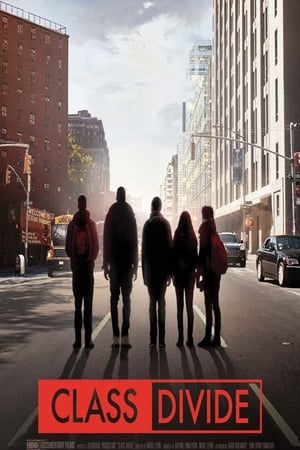
A look at NYC’s gentrification and growing inequality in a microcosm, Class Divide explores two distinct worlds that share the same Chelsea intersection – 10th Avenue and 26th Street. On one side of the avenue, the Chelsea-Elliot Houses have provided low-income public housing to residents for decades. Their neighbor across the avenue since 2012 is Avenues: The World School, a costly private school. What happens when kids from both of these worlds attempt to cross the divide?
The story of the often contradictory and always audacious public figure, Vincent A. "Buddy" Cianci, the former Mayor of Providence, RI. The film tracks Cianci's entanglements with city council opposition, union skirmishes, personal scandals, and criminal indictments. The result is a fascinating study of American local politics and a surprising tale of a man who, in the words of one commentator, "has a city as his mistress."
Documentary short film about the Antwerp harbour.
A Texan begins a cross-country journey in hope of finding the empty loft she keeps seeing in visions.
This is the story of Dona Virginia, an elderly woman who awaits the expropriation of her house. Year after year, the government threatens to destroy the place, her past and her memories.
We mark a new milestone in the chapter of human flight. Join Jetman Yves Rossy and his protege, Jetman Vince Reffet as they explore the limits in the city of dreams. "The real dream is to be completely free"
A journalist in Rotterdam has to show the city to an important foreign relation. He shows her the Rotterdam port.