The quasi-fictional story of transgender sex workers living in Rio de Janeiro's swampy red light district, who are joined by a group of hippies and a runaway stockbroker, "Mangue-Bangue" is the paradigmatic expression of the post-1968 spirit of desbunde, the Brazilian slang catchword for "sex, drugs, and rock 'n' roll".
An unknown future. A boy confesses to the murder of another in an all-boy juvenile detention facility. More an exercise in style than storytelling, the story follows two detectives trying to uncover the case. Homosexual tension and explosive violence drives the story which delivers some weird and fascinating visuals.
A commercial artist with a lisp chooses silence, unexpectedly propelling his career. His perceived innovation leads to rapid advancement in an ad agency. Mueller-Stahl shines in this biting critique of East German workplace culture.
Newly arrived in Hollywood from England, Dennis Barlow finds he has to arrange his uncle's interment at the highly-organised and very profitable Whispering Glades funeral parlour. His fancy is caught by one of their cosmeticians, Aimee Thanatogenos. But he has three problems - the strict rules of owner Blessed Reverand Glenworthy, the rivalry of embalmer Mr Joyboy, and the shame of now working himself at The Happy Hunting Ground pets' memorial home.
Under the impetus of the 75th anniversary of the bamboo top-handle bags, the House presents a contemporary retelling of an ancient Japanese story entitled ‘Taketori Monogatari (The Tale of the Bamboo Cutter).’ Makoto Nagahisa stages the plot of finding oneself, along with true love, in a Tokyo betwixt and between reality and a dream. Dressed in looks from the Gucci Love Parade collection, Hikari Mitsushima, Aoi Yamada, and Eita Nagayama star in the story shedding a new light on the Gucci Bamboo 1947 and Gucci Diana Beloved lines.
A look at what goes on backstage during the last broadcast of America's most celebrated radio show, where singing cowboys Dusty and Lefty, a country music siren, and a host of others hold court.
The film begins as a documentary about an author known for autofiction. By incorporating multiple making-of layers, it blends the process of making the documentary with the author’s narrative technique.
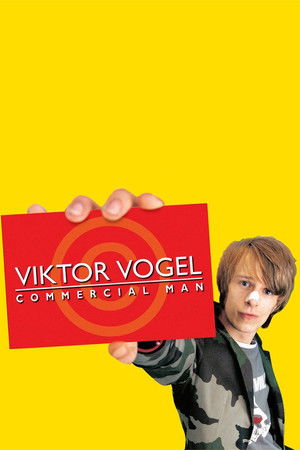
Edward Kaminsky, an aging ad man, wants a golden parachute from his agency; he must first land the Opel auto contract. Rosa, a youth with wealthy parents, wants to establish herself as an artist. The clumsy and enthusiastic Viktor, not quite honest, wants work. When he wanders into Kaminsky's meeting with Opel and says something about irony, the Opel director wants him in on the campaign. Then he steals an idea from Rosa that the Opel director loves. Before Rosa discovers he's expropriated her idea, Rosa and Viktor become lovers. Father-son feelings materialize between Kaminsky and Viktor. Can the impulsive Viktor hold it together before Rosa learns the truth and flies away?
A rich farmer is well known for being very unkind. He's misanthropic, misogynous and cantankerous. Until he meets by chance a gorgeous girl...
Prometheus, on an Odyssean journey, crosses the Brooklyn Bridge in search of the characters of his imagination. After meeting the Muse, he proceeds to the "forest." There, under an apple tree, he communes with his selves, represented by celebrated personages from the New York "underground scene" who appear as modern correlatives to the figures of Greek mythology. The filmmaker, who narrates the situations with a translation of Aeschylus' Prometheus Bound, finds the personalities of his characters to have a timeless universality.
Five lonesome cowboys get all hot and bothered at home on the range after confronting Ramona Alvarez and her nurse.
An advertising man, young, casual and a yuppie, stands up his girlfriend and suddenly finds himself relegated to the role of the fifth wheel, which seriously questions his self-esteem.
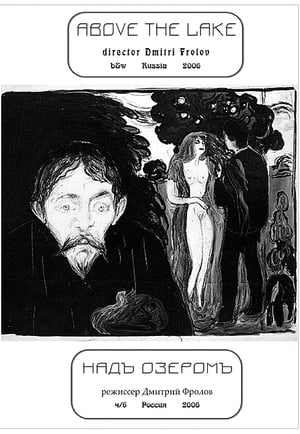
Avant-garde homage to pre-revolution Russian silent movies, and to the poet Aleksandr Blok.
A filmmaker gets lost in a world of his own creation, literally. He is plotted against by his outer demons, searches for his lost sex scene and contends with several other versions of himself. A joyful rule-breaking carnival ride through a filmmaker's dreamland.
Cissie Colpitts drowns her cheating husband and, in the ensuing cover-up, enlists the help of lonely coroner Henry Madgett, an old friend with a longstanding weakness for her charms. But when Cissie's daughter and granddaughter—both also named Cissie Colpitts—decide to resort to the same methods for solving conflicts with their own frustrating husbands, the women and their repeated appeals for help begin to wear on Madgett's conscience.
In the 1920s, Man Ray directed four films which, although largely unknown by the general public, made him into a major figure in avant-garde cinema. His films were to be as radical as his images or objects. Included: Le Retour à la Raison, Les Mystères du Château du Dé, Emak-Bakia, L'étoile de Mer and collected shorts.
Korea, the now: A young man makes a fateful encounter with a stranger he passionately falls in love with. When Unk rides his scooter through the night he fails to notice a drunk pedestrian, a man called Boaz, and hits him. The accident has unforeseen repercussions since shortly afterwards Unk and Boaz start an intense relationship that leads into a gradually worsening dependency.
A young man, attempting to watch a VHS tape of "Love Streams" by John Cassavetes on his television, is constantly harassed and annoyed by outside forces.
The world shifts subtly while silent watchers already understand.
The film appears like a ritual with splendids and crypteds psalms. The Great Master of Order (Marcel Mazé, new fetish actor after Aloual) seduces the young male prey with a running cinema projector which carves Murnau's Nosferatu extracts on their bodies. Metamorphosis, rituals passages, Eros and Thanotos, illusion and reality, film into the film are the themes and images in perpetual osmosis in this Stéphane Marti's opus.