Shots fired inside a club frequented by black Brazilians in the outskirts of Brasilia leave two men wounded. A third man arrives from the future in order to investigate the incident and prove that the fault lies in the repressive society.
Elliot Page brings attention to the injustices and injuries caused by environmental racism in his home province, in this urgent documentary on Indigenous and African Nova Scotian women fighting to protect their communities, their land, and their futures.
The little-known story of a deadly race massacre and carefully orchestrated insurrection in North Carolina’s largest city in 1898 — the only coup d’état in the history of the US. Stoking fears of 'Negro Rule', self-described white supremacists used intimidation and violence to destroy Black political and economic power and overthrow Wilmington’s democratically-elected, multi-racial government. Black residents were murdered and thousands were banished. The story of what happened in Wilmington was suppressed for decades until descendants and scholars began to investigate. Today, many of those descendants — Black and white — seek the truth about this intentionally buried history.
Polvere in Sala
The extraordinary work of the American artist Philip Guston is a milestone in modern painting. Guston is one of the most discussed painters of his time and today a star of the younger generation of contemporary artists. ARTE is showing the documentary on the occasion of the major Guston retrospective at the Tate Modern in London.
Award-winning documentarian Jenner Furst seeks answers from Dr. Fauci about the origins of COVID-19, a bio-arms race with China, and what could be the largest coverup in modern history. Awaiting Fauci’s reply, Furst falls down a rabbit hole, decoding hundreds of thousands of pages of documents with prominent scientists, intelligence analysts, former government officials, and whistleblowers. Risking career and reputation, Furst depoliticizes one of the most controversial stories of our time, in an urgent scientific docu-thriller that is Oppenheimer meets Outbreak.
A film that exposes the shocking truth behind the economic crisis of 2008. The global financial meltdown, at a cost of over $20 trillion, resulted in millions of people losing their homes and jobs. Through extensive research and interviews with major financial insiders, politicians and journalists, Inside Job traces the rise of a rogue industry and unveils the corrosive relationships which have corrupted politics, regulation and academia.
In the run-up to parliamentary elections in mid-October, Polish filmmaker Marcin Wierzchowski travelled across his country to gauge the atmosphere in a society that is more divided than ever.
In 1971, after being rejected by Hollywood, Bruce Lee returned to his parents’ homeland of Hong Kong to complete four iconic films. Charting his struggles between two worlds, this portrait explores questions of identity and representation through the use of rare archival footage, interviews with loved ones and Bruce’s own writings.
Exploring the fallout of MIT Media Lab researcher Joy Buolamwini's startling discovery that facial recognition does not see dark-skinned faces accurately, and her journey to push for the first-ever legislation in the U.S. to govern against bias in the algorithms that impact us all.
Pop star Leigh-Anne Pinnock confronts her experience as the only black member of Little Mix, and as a black woman in the music industry. She embarks on her own very personal journey to understand how she can use her platform and privilege to combat the profound racism she sees in society around her.
A look at the April 15, 1989 tragedy at Hillsborough Stadium in Sheffield, England, where a stampede in the stadium's standing-room-only areas killed 96 people and injured 766. The film also examines the ongoing efforts of victims' families to seek truth and justice, as well as tangible effects on English football, including stadium upgrades and the emergence of the English Premier League.
VH1 uncovers the frightening allure and danger of skinhead rock, a key recruitment tool in the U.S. white power movement. You'll hear from the bands and their fans, and learn the remarkable story of George Burdi, a hate rock pioneer who now plays in a multicultural band in Toronto. We'll also examine the rock against racism movement, revealing a battle for the hearts and minds of young music fans.
OBAIDA, a short film by Matthew Cassel, explores a Palestinian child’s experience of Israeli military arrest. Each year, some 700 Palestinian children undergo military detention in a system where ill-treatment is widespread and institutionalized. For these young detainees, few rights are guaranteed, even on paper. After release, the experience of detention continues to shape and mark former child prisoners’ path forward.
Recy Taylor, a 24-year-old black mother and sharecropper, was gang raped by six white boys in 1944 Alabama. Common in Jim Crow South, few women spoke up in fear for their lives. Not Recy Taylor, who bravely identified her rapists. The NAACP sent its chief rape investigator Rosa Parks, who rallied support and triggered an unprecedented outcry for justice. The film exposes a legacy of physical abuse of black women and reveals Rosa Parks’ intimate role in Recy Taylor’s story.
Aileen Wuornos remains a rarity: a female serial killer. From childhood abuse to death-row revelations, this documentary revisits her life and crimes.
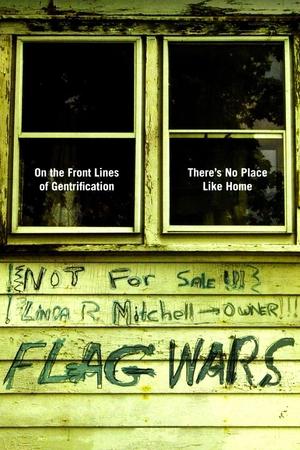
Filmed over four years, this documentary focuses on the impacts of gentrification as gay white professionals move into a largely black working-class neighborhood in Columbus, Ohio.
A shocking political exposé, and an intimate ethnographic portrait of Pacific Islanders struggling for survival, dignity, and justice after decades of top-secret human radiation experiments conducted on them by the U.S. government.
A sensitive examination of child sexual assault, based on the case of a girl who was raped in her New Jersey elementary school by another eleven-year-old student.
The film looks at men and women of color in the U.S. Merchant Marine from 1938-1975. Through chronicling the lives of these men and women who, with a median age of 82, are beset with a host of life-threatening illnesses, the movie tells how they navigated issues of racism, disparities in the workplace, gender and familial relations.