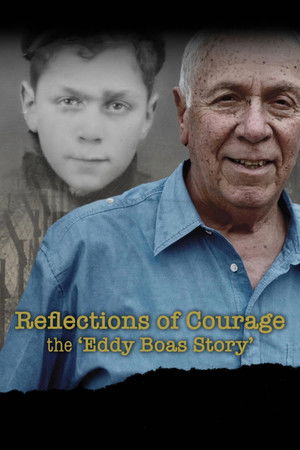
The Pittsburgh History Series is an ongoing series of hour-long documentaries that highlight various parts of our city's history. Since 1988, these documentaries have captivated local audiences by mixing memories, old films, [mementos], home movies, snapshots and new interviews.
Nazi propaganda film “exposes” the United States and its plans against Germany and the German people. Shows so-called signs of decay, gang-wars, slums, riots of blacks, etc. Small wonder, the comment is, that the Statue of Liberty turns it back on America.
As the campaign to force Jews out of Germany ramps up, the American government blocks efforts to help rescue many of these displaced persons, and Americans' antisemitism only seems to get worse.
Packed with drama, high emotions and cliff-hanger moments, Australia Says Yes is the intimate and personal history of struggle and perseverance that propelled Australia to say Yes to marriage equality. The film shows how a group of determined individuals fought tirelessly against unjust laws that treated LGBTIQ people as second-class citizens, creating a movement that saw them go from criminals to legally equal over the course of five decades.
Hamburg, Germany, 1939. Getting a passage aboard the passenger liner St. Louis seems to be the last hope of salvation for more than nine hundred German Jews who, desperate to escape the atrocious persecution to which they are subjected by the Nazi regime, intend to emigrate to Cuba.
Le Soliloque des muets
What would your family reminiscences about dad sound like if he had been an early supporter of Hitler’s, a leader of the notorious SA and the Third Reich’s minister in charge of Slovakia, including its Final Solution? Executed as a war criminal in 1947, Hanns Ludin left behind a grieving widow and six young children, the youngest of whom became a filmmaker. It's a fascinating, maddening, sometimes even humorous look at what the director calls "a typical German story." (Film Forum)
A documentary that explores the myth behind the truth. Different people around the globe reinterpret the legend of Che Guevara at will: from the rebel living in Hong Kong fighting Chinese domination, to the German neonazi preaching revolution and the Castro-hating Cuban. Their testimonies prove that the Argentinian revolutionary's historical impact reverberates still. But like with all legends, each sees what he will, in often contradictory perspectives.
In 1609, Henry IV sent Inquisition judge Pierre de Lancre to the French Basque Country to investigate witchcraft. In the trials, 80 people were sentenced to death at the stake. Between the 15th and 17th centuries, a total of between 40,000 and 60,000 people fell victim to such waves of persecution in Europe. How can this phenomenon be explained?
The Last Jews of Baghdad takes a historical and personal look at the persecution, torture, escape and exodus of over 160,000 Iraqi- Jews between the years 1940 through 2003. Hear from the survivors the real reasons why they left their beloved homeland of over 2500 years and if they will ever return.
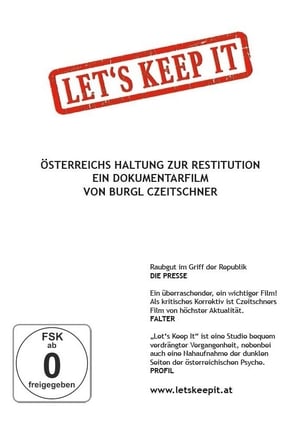
Let's keep it is a cinema documentary (99') about the still problematic attitude of the Republic of Austria towards the restitution of "aryanized" real estate which - for whatever reason - became the property of Austria after 1945. The film is also the director's bow to the victims of the darkest chapter of Austria's recent history. A chapter that seems to have been extended to a certain extent when it comes to restitution of looted property to the descendants of Holocaust victims.
Shortly before Christmas 1744, Vienna, the center of power in the Habsburg Empire, is the scene of a disastrous drama with repercussions for the whole of Europe. Against the spirit of enlightenment and tolerance, the very young Maria Theresa orders the expulsion of the allegedly disloyal Jews from Prague.
The Polish city of Łódź was under Nazi occupation for nearly the entirety of WWII. The segregation of the Jewish population into the ghetto, and the subsequent horrors are vividly chronicled via newsreels and photographs. The narration is taken almost entirely from journals and diaries of those who lived–and died–through the course of the occupation, with the number of different narrators diminishing as the film progresses, symbolic of the death of each narrator.
The film returns to the origins of the creation of the State of Israel (from 1896 to 1948) and highlights the responsibility of the Western World.
The first woman rabbi in the world, Regina Jonas, comes to light, courtesy of Rachel Weisz – who plays her – and her father George Weisz, who was the executive producer for this poetic and beautiful documentary. The daughter of an Orthodox Jewish peddler, Jonas was ordained in Berlin in 1935. During the Nazi era and the war, her sermons and her unparalleled devotion brought encouragement to the persecuted German Jews. Regina Jonas was murdered in Auschwitz in 1944. The only surviving photo of Jonas serves as a leitmotif for the film, showing a determined young woman gazing at the camera with self-confidence.
One neighborhood in New York City, March 2020: the coronavirus is spreading rapidly, the federal government is clueless, and life seems increasingly surreal. A month later, the city has become an epicenter of the pandemic as the death rate spirals upwards. Then the racial justice protests erupt... Strange Days Diary NYC is an intimate account of living through a disruptive, frightening, yet inspiring time.
The film showcases the voices of past and present Hougang residents, alongside commentary by historians, public intellectuals, politicians, and volunteers. Charting Hougang’s history from the mid-eighteenth century, the film features personal recollections of growing up in Hougang, residents’ sentiments towards state-led redevelopment and relocation, and the political journey of the community in the context of the Workers’ Party having won the Hougang Parliamentary seat a little over 30 years ago.
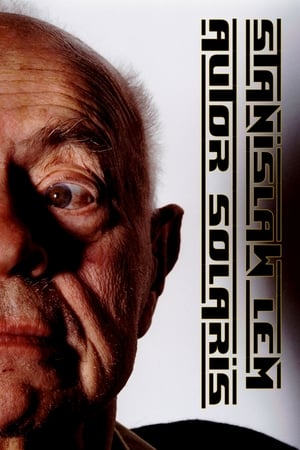
An account of the life and work of the Polish writer Stanisław Lem (1921-2006), a key figure in science fiction literature involved in mysteries and paradoxes that need to be enlightened.
A Moment in Her Story is an honest, complex exploration of some of the major challenges faced by those active in the Second Wave women's movement of the late 60s and early 70s.
This short documentary depicts the search, discovery and authentication of the only known Norse settlement in North America - Vinland the Good. Mentioned in Icelandic manuscripts and speculated about for over two centuries, Vinland is known as "the place where the wild grapes grow" and was thought to be on the eastern coast between Virginia and Newfoundland. In 1960 a curious group of house mounds was uncovered at l'Anse aux Meadows in northern Newfoundland by Drs. Helge Ingstad and Anne Stine Ingstad of Norway. Added to the United Nations World Heritage List, l'Anse aux Meadows is considered one of the most important archaeological sites in the world.