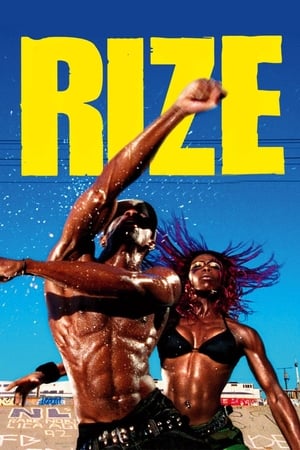
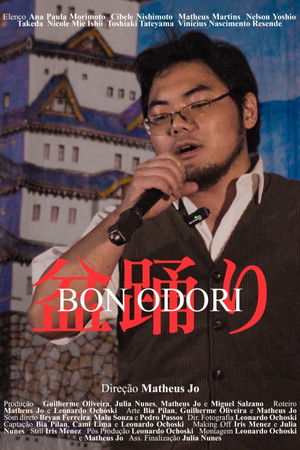
A documentary film that highlights two street derived dance styles, Clowning and Krumping, that came out of the low income neighborhoods of L.A.. Director David LaChapelle interviews each dance crew about how their unique dances evolved. A new and positive activity away from the drugs, guns, and gangs that ruled their neighborhood. A raw film about a growing sub-culture movements in America.
It's hard to define her. And that's precisely the way Lady Gaga wants it. Yes, Stefani Joanne Angelina Germanotta had a plan to remake herself into an outrageous icon. It began with Italian Catholic New York City roots then expanded to glam pop, electronic rock, burlesque and even jazz alongside nonagenarian crooner, Tony Bennett. Piano lessons began at age four and taught Stefani to create music by ear. There were lead roles in high school standard Broadway show productions then open mic nights at downtown clubs and 1 1/2 years of formal training at N.Y.U.'s Tisch School of the Arts. Even a rape at age nineteen slowed but did not stop the mission that would yield over 200 million combined album and song sales. No wonder that Gaga's fans call her "Monster Mother." An outrageous fashion sense has wrought costumes made of plastic bubbles and raw meat. While elaborate videos and spectacular stage sets are the norm,
Dance for All
Anma (The Masseurs) is a representative and historical work by the creator of Butoh dance, Tatsumi Hijikata in his early period in the 1960s. The film is realized not only as a dance document but also as a Cine-Dance, a term made by Iimura, that is meant to be a choreography of film. The filmmaker "performed" with a camera on the stage in front of the audience. With the main performers: Tatsumi Hijikata and Kazuo Ohno, the film has the highlights such as Butohs of a soldier by Hijikata & a mad woman by Ohno. There is a story of the mad woman, first outcast and ignored, at the end joins to the community through her dance. Inserted descriptions of Anma (The Masseurs) are made for the film by the filmmaker, but were not in the original Butoh. The film, the only document taken of the performance, must be seen for the understanding of Hijikata Butoh and the foundation of Butoh.
Welcome to CRUNCH Fitness! If you're on a mission to flatten your belly, firm your thighs, lift your butt and get your body fighting fit then it's time for Belly, Butt & Thighs Bootcamp.
A high-school folk dancing group heads to Latvian School Youth Song and Dance Festival, an event that takes place every five years and is part of the Latvian national identity – this is the culmination point of five years of work. Away from their homes and parents, they spend seven days and nights together. They are 18 and have just graduated, and this seems to be the last idle summer of their lives. Dreams mix with boredom, silly jokes with serious conversations. Taking care of one another creates affection and grows into a collective power. There are thousands like them at the festival. Every individual sensation turns into a common celebration that becomes more than just a tradition.
Círculos
Brazilian singer Maria Bethania has a 40-year singing career. A documentary shows her concerts and famous family.
Three sisters dance the Mikado in this very early film from the Edison company.
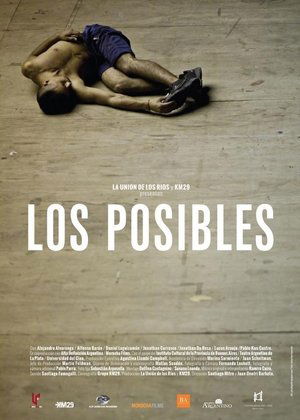
Santiago Mitre co-directs his first movement following The Student together with choreographer Onofri Barbato. Although it would have been more accurate to say “his first film-story-adventure-movie-great movie following The Student”, the word movement fits perfectly in Los posibles, the most overwhelmingly kinetic work Argentine cinema has delivered in many, many years. The film deals with the adaptation of a dance show directed by Onofri together with a group of teenagers who came to Casa La Salle, a center of social integration located in González Catán, trying to find some refuge from hardship. Already entitled Los posibles, the piece opened in the La Plata Tacec and was later staged in the AB Hall of the San Martín Cultural Center. Now, it dazzles audiences out of a film screen, with extraordinary muscles and a huge heart: Los posibles is a rhapsody of roughen bodies and torn emotions. Precise and exciting, it’s our own delayed, necessary, and incandescent West Side Story.
Tchai is the word used by Ju/'hoansi to describe getting together to dance and sing; n/um can be translated as medicine, or supernatural potency. In the 1950's, when this film was shot, Ju/'hoansi gathered for "medicine dances" often, usually at night, and sometimes such dances lasted until dawn.
In this "fake documentary", a doctor returns to Brazil after his studies in Paris. Setting out to practice Medicine, he becomes an indigenous messiah and, in time, a cannibal.
Documentary on the great American Ballerina Wendy Whelan
"La Gigue" (Gaumont #590) is part of the "Miss Lina Esbrard. Danseuse cosmopolite et serpentine" series of 4 films, and should not be confused with "Danse excentrique" (Gaumont #587), "Danse serpentine" (Gaumont #588, the only extant film in the series), or "Danse fantaisiste" (Gaumont #589).
"Danse serpentine" (Gaumont #588) is part of the "Miss Lina Esbrard. Danseuse cosmopolite et serpentine" series of 4 films, and should not be confused with "Danse excentrique" (Gaumont #587), "Danse fantaisiste" (Gaumont #589) or "La Gigue" (Gaumont #590).
It is late 2004, and 34-year-old Englishman Alistair Appleton is about to fly from London to the Brazilian coast, where he will drink ayahuasca for the first time. With wit, insight, and sensitivity, Alistair shares this experience with us, and chats with some fellow participants before and after the ayahuasca ceremonies. For the past few years, Alistair had been working as a television presenter. In 2000, he started making trips to the Centre for World Peace and Health in Scotland to learn how to meditate. When clinical psychologist Silvia Polivoy opened an ayahuasca healing center in Bahia in 2004, Alistair faced his fears and seized the opportunity to attend.
With the coveted glitter ball trophy once again up for grabs, how will series winner Chris Hollins fare against other celebrity favourites - including Austin Healey, Kelly Brook, Mark Ramprakash, Ali Bastian, and Natalie Cassidy? As they take to the stage alongside their professional partners including; Kristina Rihanoff, James and Ola Jordan, Brian Fortuna, Natalie Lowe and Ian Waite, in brand new breathtaking outfits and daring routines. They will need to impress judges; Len Goodman, Bruno Tonioli, Craig Revel Horwood and Arlene Philips. Who as always, are ready with quips, banter and razor-sharp observations!
Where are you, João Gilberto? sets out in the footsteps of German writer Marc Fischer who obsessively searched for the legendary founding father of Bossa Nova and last great musical legend of our time, Brazilian musician João Gilberto, who has not been seen in public for decades. Fischer described his journey in a book, Hobalala, but committed suicide one week before it was published. By taking up Marc Fischer's quest, following his steps one by one, thanks to all the clues he left us, we pursue João Gilberto to understand the history, the very soul and essence of Bossa Nova. But who can tell whether we will meet him or not?
A documentary that exposes the shocking truths behind industrial food production and food wastage, focusing on fishing, livestock and crop farming. A must-see for anyone interested in the true cost of the food on their plate.
Pina Bausch created and performed Café Müller for her dance company Tanztheater Wuppertal. The dance was inspired by and based on her childhood memories of watching her father work at his café in Germany during and immediately following World War II. In this silent style featurette, Bausch shows a restaurant after closing, in which the ghosts of the departed customers stumble blindly into walls and onto chairs but fail to find one another.