An account of the revolutionary years of the legendary American journalist John Reed, who shared his adventurous professional life with his radical commitment to the socialist revolution in Russia, his dream of spreading its principles among the members of the American working class, and his troubled romantic relationship with the writer Louise Bryant.
Bombs tear through Bombay in 1993, wreaking havoc and polarising the citizens. With perpetrators at large, the state launches a massive man-hunt to unmask the perpetrators behind these events.
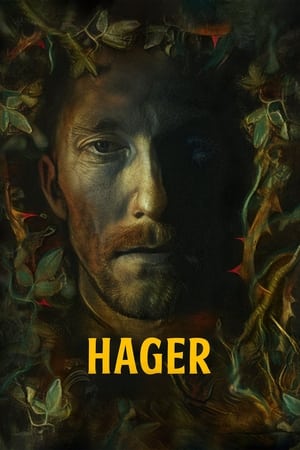
After his colleague Schweitzer goes missing during a drug raid, undercover cop Till Hager is tasked with tracking down a mysterious new drug called "Abaddon" - a substance which supposedly drags it's users down the deepest depths of hell.
Tucumán, Argentina, 1965. Three years before George A. Romero's Night of the Living Dead was released, director Ofelio Linares Montt shot Zombies in the Sugar Cane Field, which turned out to be both a horror film and a political statement. It was a success in the US, but could not be shown in Argentina due to Juan Carlos Onganía's dictatorship, and was eventually lost. Writer and researcher Luciano Saracino embarks on the search for the origins of this cursed work.
Chronicles of a male homosexual drug addict in 1980's in voice-over with long take scenes from Rome, television snippets of news of Gulf War and commercials.
Director Michael Apted revisits the same group of British-born adults after a 7 year wait. The subjects are interviewed as to the changes that have occurred in their lives during the last seven years.
Poland, 1970. When popular protests erupt in the streets due to rising prices, the communist government organizes a crisis team. Soon after, the police use their truncheons and then their firearms. The story of a rebellion from the point of view of the oppressors.
The story, told by the survivors, of a group of young men, members of a Uruguayan rugby team, who managed to survive for 72 days, at an altitude of almost 4,000 meters, in the heart of the Andes Mountains, after their plane, en route to Chile, crashed there on October 13, 1972.
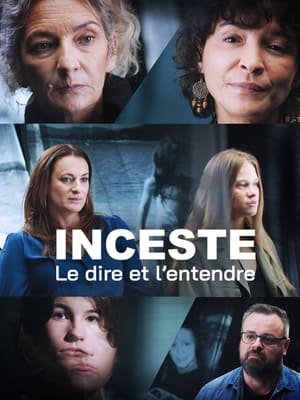
For decades, pupils at the children's village of Riaumont, in northern France, run by Catholic monks and priests, were abused: until 2019, thousands of children suffered beatings, forced labor and sexual violence.
Hamburg, Germany, 1939. Getting a passage aboard the passenger liner St. Louis seems to be the last hope of salvation for more than nine hundred German Jews who, desperate to escape the atrocious persecution to which they are subjected by the Nazi regime, intend to emigrate to Cuba.
A Kafkaesque docudrama of an actual case involving a Christchurch small businessman and the New Zealand Inland Revenue Department. Most people can relate to running up against a bureaucrat (especially the tax man), who knows he can cause you trouble if you say something he doesn't like and then proceeds to use his power to hurt you. In this case, the businessman, Dave Henderson refuses to give in and, for the most part, kept his sense of humour.
According to the official history of Afghanistan, ruthless destruction has always prevailed over art and creation; but there is another tale to be told, the forgotten account of a diverse and progressive country, seen through the lens of innovative filmmakers, a story that survives thanks to a few brave Afghans, a small but very passionate group that secretly fought to save a huge film archive that was constantly menaced by war and religious fanaticism.
This was a very human account of the lives and deaths of Marie Antoinette and Louis the XVI focusing primarily on Marie. It is an account of their lives from birth to death and the circumstances leading to the downfall of the French monarchy.
“Unhappy with the limited structure of league newsreels, Nykino, a splinter filmmaking collective, produced a MARCH OF TIME-type series under the banner THE WORLD TODAY. Only two episodes were released, the first premiering with Strand’s THE WAVE (1936). This one, like NATIVE LAND, addresses fascism in America.” - Bruce Posner” (via Light Cone). Not to be confused with the similarly titled Black Legion from 1937, directed by Archie Mayo.
With Australia at war in Vietnam in 1967, suddenly Prime Minister Harold Holt disappeared without a trace—an event unparalleled in the history of western democracy. Four decades later, a coronial inquiry confirmed that Harold Holt had accidentally drowned. Some people may still believe that Holt was a spy and fled to China in a submarine. But most suspect there was more to his disappearance than has ever been revealed. Reconstructed from eyewitness accounts, this dramatised documentary tells the story of the Prime Minister's secret world in the months before he disappeared — a world of betrayal, blackmail, political treachery, a poisonous feud, mounting physical and mental strain, and near-death experiences. Featuring Normie Rowe as Harold Holt, Nicholas Hope as William McMahon and Tony Llewellyn-Jones as John McEwen, this film reveals explosive new aspects of the case.
Peels back centuries of legend and myth to tell the story of Saint Patrick through historical reenactments, expert interviews and Patrick’s own writings, tracing his journey from man to saint.
Shinichi Tsuda, a Naoki Prize winning author, is working to publish his newest story. It revolves around Tsuyama, a driver for a call girl business in Toyama Prefecture, who comes across a mysterious counterfeit bill and has his life targeted by underworld kingpin Kurata. Is his story fact or fiction? His editor, Nahomi Torikai, decides to verify whether his latest work is mere fiction based on real-life experiences. She looks into a family that vanished, a post office worker who went missing, a shady load of cash, the whereabouts of the doves, and the fateful encounter from that night... A series of shocking facts are revealed from Tsuda’s stories. Why did the counterfeit money end up in Tsuda’s hands? What is the “ending” that Tsuda wished to portray?
A view of the religious tensions between Muslims and Buddhist through the portrait of the Buddhist monk Ashin Wirathu, leader of anti-Muslim movement in Myanmar.
Imagine what it would be like if black settlers arrived to settle a continent inhabited by white natives? In 1788, the first white settlers arrived in Botany Bay to begin the process of white colonisation of Australia. But in Babakiueria, the roles are reversed in a delightful and light-hearted look at colonisation of a different kind. This satirical examination of black-white relations in Australia first screened on ABC TV in 1986 to widespread acclaim with both critics and audiences alike. This is the story of the fictitious land of Babakiueria, where white people are the minority and must obey black laws. Aboriginal actors Michelle Torres and Bob Maza (Heartland) and supported by a number of familiar faces from the time, including Cecily Polson (E-Street) and Tony Barry, who starred in major ABC-TV hits such as I Can Jump Puddles and his Penguin award-winning Scales of Justice. Babakiueria was awarded the United Nations Media Peace Prize in 1987.
This historical drama tells the story of Qin Shihuang, who unified China's vast territory and declared himself emperor in 221 B.C. During his reign, he introduced sweeping reforms, built a vast network of roads and connected the Great Wall of China. From the grandiose inner sanctum of Emperor Qin's royal palace, to fierce battles with feudal kings, this film re-creates the glory and the terror of the Qin Dynasty, including footage of Qin's life-sized terra cotta army, constructed 2,200 years ago for his tomb.