Follow Chris Pratt as he explores the burial place and history of St. Peter beneath St. Peter's Basilica.
Wolfgang Staudte, one of Germany’s most important film directors, learned from his mistakes during the Nazi era and went on to make satirical political films of high artistic merit. Former colleagues, film theorists, and his biographers are interviewed; his estate and the film archive in Potsdam are examined in detail; and his most important feature films are taken a closer look at.
When an all-women* drumming group is founded for the first time in a small town in southern Germany, it throws a 400-year-old children’s and local heritage festival into disarray—and with it raises the question of how tradition, identity, and social change are reconciled.
A man talks about his tendencies, which he is trying to overcome. He has sexually assaulted young girls on multiple occasions and has been caught multiple times. This man has already spent ten years of his life behind bars. Now that he’s free again, he’s hoping to find help through psychoanalysis, which he has voluntarily sought out. In stark contrast is the young woman who stabbed her own child to death and has been in prison for twelve years—serving a life sentence. The woman recounts the harrowing story of her youth and her marriage, during which she herself was beaten and abused until she ended up killing not her tormentors, but her own child.
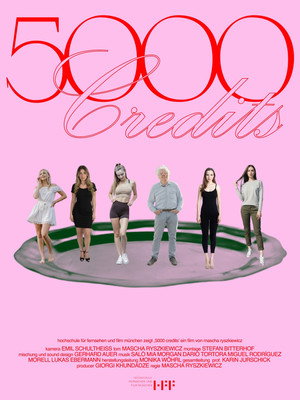
Gerhard is 73 and trying to find a young girlfriend from Eastern Europe online. When doubts arise about the authenticity of the dating platform he uses, he turns to his tenant Mascha, 23, for help. As they search for the truth, a more difficult question emerges: is Gerhard ready to let go of the illusion of online love?
Zeruya Shalev is the voice of Israel. Her topics: family conflicts, love and pain. In the film, she tells her family story which is inextricably linked to the founding of Israel.
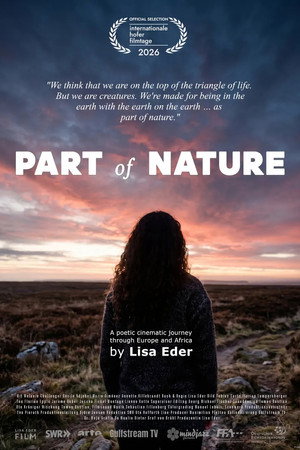
An essayistic film about the very core of humanity: we are beings created to live with and on the Earth. Yet still, despite knowing better, we destroy the very foundations of our existence. The film accompanies protagonists from the fields of philosophy, agriculture and forestry, and architecture. Their work has the potential to initiate necessary processes of transformation. Their stories are placed in a broader context: the individual as part of the whole, connection and belonging.
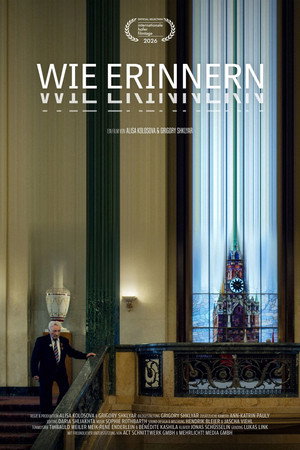
In 2020s Berlin, 95-year-old Leonid Berezin, along with other surviving eyewitnesses, is fighting to keep alive the memory of a nearly forgotten Nazi war crime: at the age of twelve, he survived the Siege of Leningrad—the systematic starvation of what is now Saint Petersburg.
In 1948, a little girl sits smiling on a Parisian carousel – for the first time she experiences a moment of carefree childhood. Her parents are Holocaust survivors; Lily Brett was born just after the end of World War II in a DP camp in Feldafing. The writer Lily Brett artistically explores the trauma she inherited in a remarkable way, marked by gentle humor rather than bitterness or anger. Not as an accuser, but as a bridgebuilder.
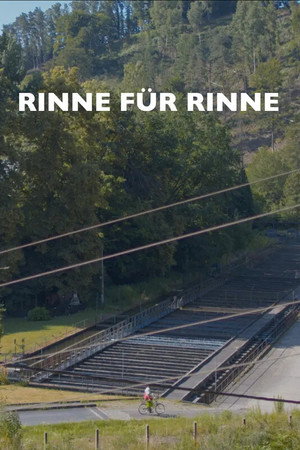
The trout farm on the Lachsbach survived the economic upheaval after the fall of the Berlin Wall. Traces of this change can be seen not only in the place, but also in its people. More than a generation later, the film explores what has remained and what has had to give way.
Nebbishy filmmaker Joanna Arnow documents her yearlong relationship with an open-mic poet provocateur. What starts out as an uncomfortably intimate portrait of a dysfunctional relationship and protracted mid-twenties adolescence, quickly turns into a complex commentary on societal repression, sexuality and self-confrontation through art.
My Really Cool Legs! follows a group of pediatric amputee athletes who challenge themselves beyond their disability. Led by their amputee mentor and coach, these kids dance and ski, ice skate and run, refusing to let their disability define who they are and what is possible.
This is the story of the few people who went ahead, beyond racial prejudice. And their struggle to open the workplace to other people.
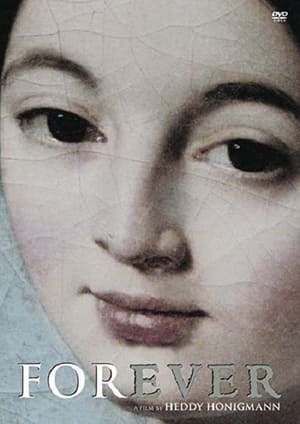
Père-Lachaise - one of the world's most famous and beautiful cemeteries - is the final resting-place of a gifted group of artists from all eras and corners of the world. Some - such as Piaf, Proust, Jim Morrison and Chopin - are worshiped to this day. Others have fallen into oblivion, or are visited occasionally by a single admirer. In Forever we see the mysterious, calming and consoling beauty of this unique cemetery through the eyes of people of flesh and blood. Many come for their 'own' beloved: husbands, wives, family and friends. Others Honor 'their' artist by leaving behind a personal message or a flower. While admirers share with us the importance of art and beauty in their lives, the graveyard gradually reveals itself as a source of inspiration for the living. Death offers little consolation except for the passing of time, the melancholia of a moss-covered tomb, and the beauty and power of a piece of music, a poem or a painting Written by Cobos
Akerman spends a month in Tel Aviv, in an apartment by the sea, contemplating childhood, family, and her Jewish identity.
A brooding, deceptively rich series of near-static shots of farms, factories, townscapes, and—in dispassionate middle distance—people going about their mundane daily tasks in sparsely populated southeastern Oregon.
An odyssey towards the self, an invitation to rediscover sensitivity. It is a journey through time, countries, and elements – water, earth, mountains, form – an expedition that intimately explores, without judgment or taboo, the relationship humans maintain with other species, as well as the awareness we have of ourselves and of our planet.
Mahaleos voices and music have accompanied the people of Madagascar ever since the collapse of the colonial regime. Yet, even after 30 years of success, the groups seven musicians still keep their distance from the world of show-business, and remain deeply committed to helping their countrys development; their professions range from surgeon to farmer, physician to sociologist and member of parliament. Accompanied by the groups rhythmic melodies, the film follows the singers through their daily lives, giving us a glimpse of the far-reaching social and economic problems of the Malagasy people. The combined talents of the Brazilian, Cesar Paes, and the Malagasy, Raymond Rajaonarivelo, have produced a work that is both ethereal and concrete, poetic and political.
The film sought to portray a relatively unknown and isolated rural world and, through a highly politicized discourse, affirmed the genuineness of “folk culture.” Representative of the new documentary film movement that developed in Portugal after the revolution, the movie encouraged the local retrieval of the Caretos tradition. A ritual that seemed to be doomed by the conjoined impact of emigration, the colonial war and the crisis of agriculture was thus brought back to life. - Paulo Raposo
The main character of this documentary is one of Georgia's most popular actors, Kakhi Kavsadze, who walks us through this chronicle of the Kavsadzes, a family of famous Georgian folk singers and actors.