In the 1936 short Allegretto, diamond and oval shapes in primary colors perform a sensual, upbeat ballet to the music of composer Ralph Rainger. The geometric dance is set against a background of expanding circles that suggest radio waves. [Early Version and Late Version preserved by the Academy Film Archive in 1999].
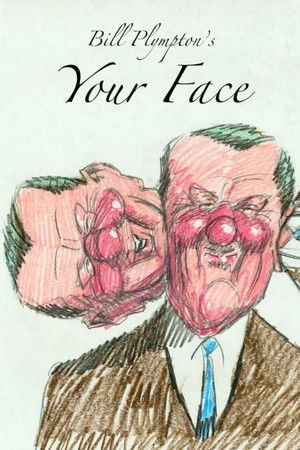
A tenor, in suit and tie, with a receding hairline, sings a ballad to his love, “Your Face Is Like a Song,” to simple piano accompaniment. Preserved by the Academy Film Archive in 2015.
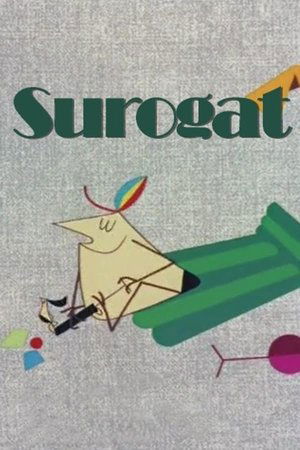
With magic inflatable objects that spring to life to fill his every need, a flippant beachgoer wants for nothing. Well... almost nothing.
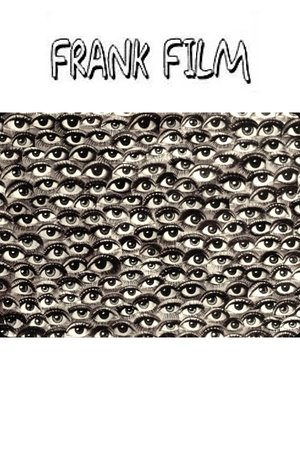
A compilation of images co-creator Frank Mouris had collected from magazines interwoven with two narrations, one giving a mostly linear autobiography and the other stating words having to do with the images, the story the first voice is relating, or neither. Preserved by the Academy Film Archive.
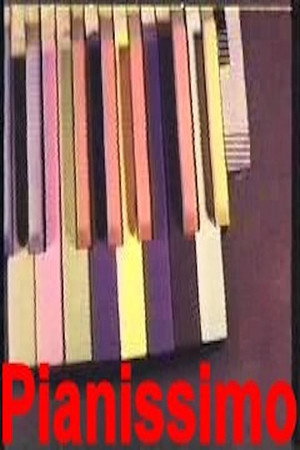
An experimental animated short film in which a piano plays a song and the keys, hammers, and various other parts of the piano are different colors. Preserved by the Academy Film Archive in 2007.

Mother Earth and Father Time converse about the choices humans make. Preserved by the Academy Film Archive in 2010.
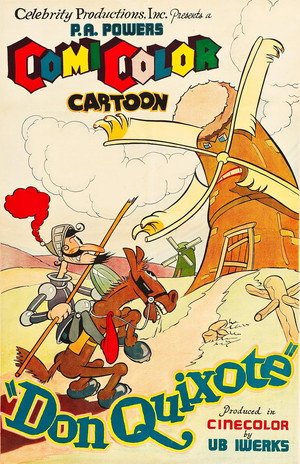
A comically ridiculously altered version of the classic tale, in which Don Quixote is victorious over his imaginary enemies and emits Tarzan-like yells of triumph. Preserved by the Academy Film Archive in partnership with The Film Foundation in 1998.
An abstract animated film in which colored, richly textured light moves in a black, three-dimensional space. The pictures and the electronic score are unified in a strict structure made of three main sections which progressively develop three subsections. The film may look like it was made using computers or video to the unaware, but it is purely the result of animation and much optical printing. Preserved by the Academy Film Archive in partnership with iotaCenter and National Film Preservation Foundation in 2007.
Opening with a classic image of Chairman Mao spewing red star tears, this animation is a masterful example of Beckett’s distinctive technique as he continuously develops a cycle of six drawings, culminating in their transmutation via the optical printer. Preserved by the Academy Film Archive in partnership with iotaCenter and National Film Preservation Foundation in 2007.
Rip Van Winkle, a lazy American man, wanders off one day with his dog Wolf into the Kaatskill mountains where he runs into an odd group of men drinking and playing bowls. He drinks some of their mysterious brew and passes out. When he wakes up under a tree he is astonished to find that 20 years have passed and things are a lot different. Preserved by the Academy Film Archive in 2013.
One of Oskar Fischinger's earliest films, Seelische Konstruktionen (as it is known in German), clearly points the way to the masterpieces of musically-blended experimental animation he would conceive in the decades to come. The sense of masterful timing and rhythm, the easy and natural -- though patently Fischinger-esque -- character traits of the subjects, and the smooth precision of both line and movement are all present already. Unique is the black-silhouetted, semi-cartoon characters (not nearly as rigidly self-contained as Lotte Reiniger's cut-out forms) which seem to adhere to no physical limitations whatsoever. Morphing into shapes, structures, objects, patterns, and even one another, as though they were made of pure mercury and set to music. As for the "story", it's rather non-sensical, and certainly silly, but also has a slightly dark and devious tinge to it as well; men becoming monsters, uncontrollable shape-shifting and the constant, almost desperate movement.
A woman's nightly domestic rituals—from putting her baby to bed to making love—unspool in a playful parade of surreal, straight-from-the-id images.
Short film by John Whitney. Preserved by the Academy Film Archive in 1999.
Short film preserved by the Academy Film Archive in 2000.
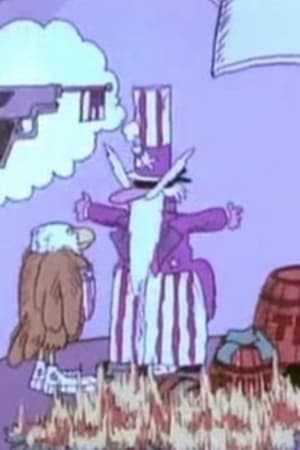
Uncle Sam has been living peacefully in the American southwest, running a gas station. But when terrorists kidnap the Statue of Liberty, Uncle Sam teams up with an eagle to go rescue her. Preserved by the Academy Film Archive in 2007.
Sausage City illustrates Beckett's additive cycle process. Constantly evolving rectangular shapes provide a foundation for an environment inhabited by mutating blobs (or sausages). Sounds and shapes create a moving space that teeters on the edge between control and chaos. The ending is somewhat mystifying, pulling us out of the surreal environment and revealing its origins. Preserved by the Academy Film Archive in 2007.
The animation referred to as Early Animations or Quacked Jokes is an anomaly among Beckett's films. It was probably not intended to be shown outside of his sphere of friends, being a collection of early experiments and directions. While lacking the sophistication and artistry that is found in his six finished works, this film provides invaluable insight into his first attempts at animation and clues to some of his later work. Preserved by the Academy Film Archive in partnership with iotaCenter and National Film Preservation Foundation in 2007.
"Marx was born in Queensland, Australia, and was a landscape painter and model there before moving to San Francisco. However, when she arrived, she found herself in the midst of fascinating non-objective painting and filmmaking activity. She was greatly influenced by the work of Harry Smith and Jordan Belson, and changed her own style to non-objective, receiving graphic inspiration from Jungian brain drawings, symbols in the occult sciences, and the design used by Eastern cultures, all of which being important elements in the San Francisco school mystical school of non-objective art." -Robert Pike, A Critical Study of the West Coast Experimental Film Movement. Preserved by the Academy Film Archive in 2000.
Motion Painting No. 1 is a 1947 experimental short animated film in which film artist Oskar Fischinger put images in motion to the music of Johann Sebastian Bach’s Brandenburg Concerto no. 3, BWV 1048. It is a film of a painting (oil on acrylic glass); Fischinger filmed each brushstroke over the course of 9 months. In 1997, this film was selected for inclusion in the United States National Film Registry by the Library of Congress as being “culturally, historically, or aesthetically significant”. Preserved by the Academy Film Archive in 2000.
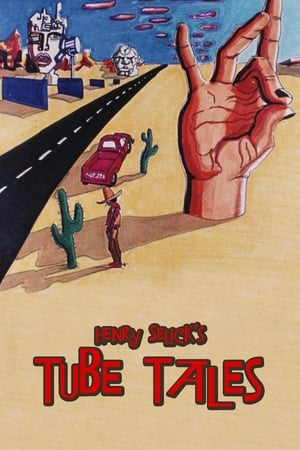
An animated parody of television commercials and the television audience.