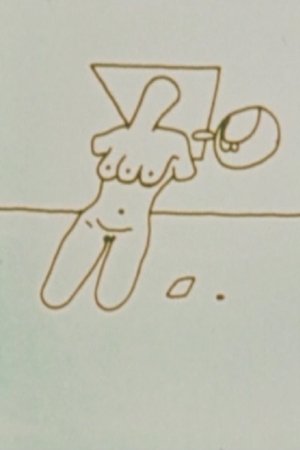
An animated film drawn in india ink directly on 65 mm film. It was reduced optically to 35mm film with colour added. The story of the film concerns a rivalry between two simple stick figures characters for the championship in a unicycle race. Preserved by the Academy Film Archive in 2011.
Gore's second solo film, DREAM OF THE SPHINX is highly representative of his fluid, expressive line work and characteristic traversals through space. Preserved by the Academy Film Archive in partnership with CalArts and iotaCenter in 2009.
Begins as a whimsical piece with 'sheets' of lines running down the screen, progressing into more and more complex geometic patterns but without deviating from the basic precepts of 'dot and line' animation. Jazz piano on a lazy Sunday afternoon, and a spring color palette. -- Stephanie Sapienza. Preserved by the Academy Film Archive in 2001.
A collaborative piece by Gore and Beckett, the film begins with one of Gore's characters composing a letter, to eventual mail it. Beckett's animation takes over at this point, transforming the envelope into a looping, cascading form that seems to be perpetually turning itself inside out. A brief Gore finale bookends the piece, which is one of only two extant examples of Gore's unique animation work. This film is usually appended to Gore's own Dream of the Sphinx. [Source: Mark Toscano] Preserved by the Academy Film Archive in partnership with CalArts in 2009.
An mutoscope motion picture installation commissioned for the 86th anniversary of the Guggenheim museum. Later preserved and turned into a short film. Preserved by the Academy Film Archive in 2000.
The animation, music, and optical printing of Kitsch in Synch was produced by Beckett and the students in two classes he was teaching at CalArts. Although a group project, it is clear that Beckett was the director. The playful, catchy soundtrack is used to create a cycle of building tension and release. The brightly colored shapes create approximate symmetrical formations and become more densely layered, with glimpses of iconographic objects and even live footage near the end. Preserved by the Academy Film Archive, in partnership with the iotaCenter, in 2007.
"I think of Odalisque as my first film. It was completed after film school and I worked with just a graphite pencil, a small group of colored pencils and animation bond. It is a trilogy of amorous dreams coming from the imagination of a woman recalling her childhood, her beloved twin so difficult to separate from and becoming an adult sexual person. The aria Sempre Libera from La Triviata by Verdi opens the film and the poem Leda and the Swan by WB Yeats ends it. It was great to work with Michael Riesman who created the sound track. I loved working in NYC in those days with Robin McDaniel, Rebecca High and others." Preserved by the Academy Film Archive in 2017.
Beckett cycles through a limited number of drawings, but adds new information to each drawing every time we see it, giving the sense of a world that is infinitely rich and also obviously contained tightly within the edges of the paper. Preserved by the Academy Film Archive in partnership with iotaCenter and National Film Preservation Foundation in 2007.
In Flesh Flows we see a balance of Beckett’s keen drawing ability, in the probing erotic forms, and his technical acuity, which transforms the carnal images into a compelling, transcendent experience. Preserved by the Academy Film Archive in partnership with iotaCenter and National Film Preservation Foundation in 2007.
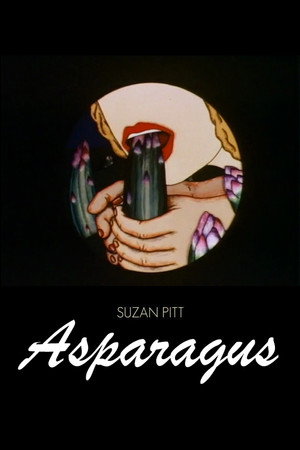
A symbolic reflection on issues of female sexuality, art and identity constructs.
A vibrant animation by Patricia Marx. Preserved by the Academy Film Archive in 2000.
NO NO NOOKY TV posits sexuality to be a social construct in a "sex-text" of satiric graphic representation of "dirty pictures." Made on an Amiga Computer and shot in 16mm film, NO NO NOOKY TV confronts the feminist controversy around sexuality with electronic language, pixels and interface. Even the monitor is eroticized in this film/video hybrid that points fun at romance, sexuality, and love in our post-industrial age. Preserved by the Academy Film Archive in 2017.
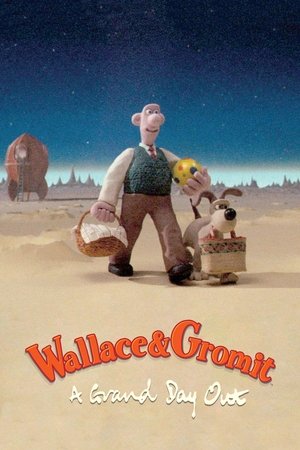
Wallace and Gromit have run out of cheese, and this provides an excellent excuse for the duo to take their holiday to the moon, where, as everyone knows, there is ample cheese.
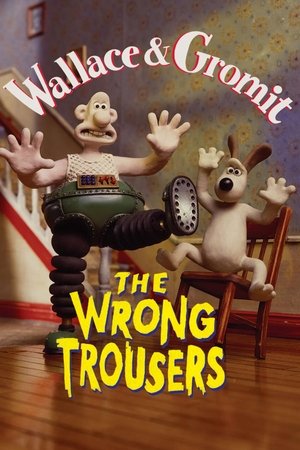
Wallace rents out Gromit's former bedroom to a penguin, who takes up an interest in the techno trousers created by Wallace. However, Gromit later learns that the penguin is a wanted criminal.
Wallace's whirlwind romance with the proprietor of the local wool shop puts his head in a spin, and Gromit is framed for sheep-rustling in a fiendish criminal plot.
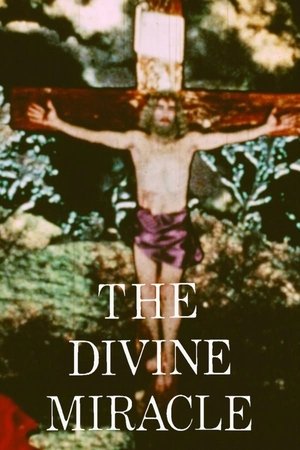
A surrealist translation of Catholic devotional postcard imagery set into unsettling motion. Preserved by the Academy Film Archive in 2008.
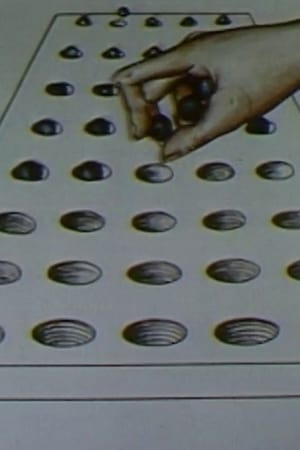
An animated short consisting of 4 segments: bowl, garden, theatre, marble game. Preserved by the Academy Film Archive in partnership with Harvard Film Archive in 2015.
An instructional video that teaches, through stop-motion animation, how to build a bridge over a gorge that can hold heavy military equipment. Preserved by the Academy Film Archive in 2004.
The bizarre adventures of the cartoon character Foska, drawn by 22 animators working in collaboration. Each animator worked on his or her own sequence only and did not know what action preceded or followed his or her sequence, except that the first drawing of a sequence is the last drawing from the previous sequence. Preserved by the Academy Film Archive in 2010.
An animated comedy short from the 1920s. Preserved by the Academy Film Archive in 2008.