"China Gate" tells the story of young Chinese fight to change their fate through studying. Right before dawn, students in Huining have already started their self-studying session; hard working youngsters have filled up the space of school ground. This is one of the most poverty-stricken Counties in Western China; here people's only hope is in education, as the way to change their social status. Therefore all their effort point towards the College Entrance Examination, the process is like going through a gate, those who pass can study at urban Universities, and have the chance to build a better life. During the same winter season in Beijing, a graduate student faces a big decision. Should he keep trying to survive in the big city or get back to his countryside home? The exhausted faces at the Beijing underground seem to be revealing the truth about their distance in between. The student comes to see the flag ceremony at Tiananmen Square, where the pulsing symbol of the nation lies.
Filmed over three years on China’s railways, The Iron Ministry traces the vast interiors of a country on the move: flesh and metal, clangs and squeals, light and dark, and language and gesture. Scores of rail journeys come together into one, capturing the thrills and anxieties of social and technological transformation. The Iron Ministry immerses audiences in fleeting relationships and uneasy encounters between humans and machines on what will soon be the world’s largest railway network.
Xu Xin’s film “Dao Lu” (China 2012) offers an exclusive “in camera” encounter with Zheng Yan, an 83 year-old veteran of the Chinese Red Army, who calmly relates how he has navigated his country’s turbulent history over three-quarters of a century.Born to a wealthy family in a foreign concession, Yan joined the Chinese Communist Party (CCP) in 1941 because he sincerely believed in the socialist project, and in its immediate capacity to free China from the Japanese yoke and eradicate deep-rooted corruption.
Zhang Ming went back to his hometown Wushan to record the last images before it being changed forever by the upcoming Three Gorges Dam.
The "Great Sichuan Earthquake" took place at 14:28 on May 12, 2008. In the days after, ordinary people salvage destroyed pig farms in the mountains, collect cheap scrapped metals, or pillaging other victims' homes. Behind the media circus of official visits is an inconsolable grief of families searching for loved ones. As the Lunar New Year approaches, vagabonds and family tell of the ill-handling of rebuilding schemes and misuse relief funds. As they prepare for another visit from a high official, the refugees are swept out of the town and into tent cities. The promise to put a roof over their heads before winter seems impossible to keep.
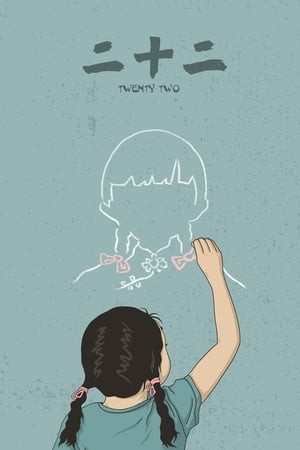
Follow the lives of the elderly survivors who were forced into sex slavery as “Comfort Women” by the Japanese during World War II. At the time of filming, only 22 of these women were still alive to tell their story. Through their own personal histories and perspectives, they tell a tale that should never be forgotten to generations unaware of the brutalization that occurred.
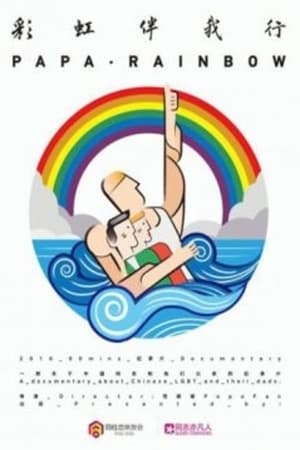
For Chinese parents, finding out that their kid is gay usually presents a major tragedy, with the big majority utterly unable to accept the homosexuality of their son or daughter. However, during recent years a fresh rainbow wind has been blowing over the Chinese mainland: a pioneer generation of Chinese parents has been stepping up and speaking out on their love for their gay kids. This documentary features 6 mothers from all over China, who talk openly and freely about their experiences with their homosexual children. With their love, they are giving a whole new definition to Chinese-style family bonds.
KJ is a biography of a HK musical genius. At the age of 11, KJ won the Best Pianist price and went to Czech to perform with a professional orchestra. Touching on subjects such as the meaning of life, God and the artistic process, the director’s 6-year-conversations with KJ reveal how a young man inspires by his music teacher, Nancy Loo and how he conflicts with his peers and parents. KJ is not about the victory of a genius, but how he learns to be a "human being".
A highway is waiting to go through a quiet village in Hunan, a province in central China where Mao was from. Due to the high cost of construction, construction companies and migrant workers who live on road work rush to here like the tide. In the following four years, they root in this strange place for interests, paying sweat and blood, even their lives. With their arrival, local village and peasants are forced to change their lives. Many hidden interest lines and hidden rules about road construction of the nation are unveiled, together with the shocking truth and emerging secrets.
The film explores the hidden face of poverty in one of the world's most affluent and capitalistic cities. Directed by CHEUNG King Wai (KJ: Music and Life), the film follows five Hong Kong families of different backgrounds that receive government subsidies. How do the poor get by in a glossy city that flaunts conspicuous consumption and hides poverty in cavernous public housing estates? All's Right With The World shares the different stories of these low-income families, their daily living conditions, and their ways of celebrating Chinese New Year.
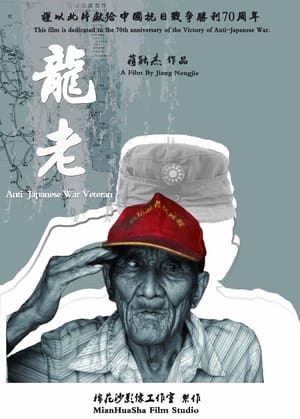
To commemorate the 70th anniversary of the victory of WWII, this documentary film describes the eight years of dauntless air-force fighting of the republic of China during the Anti-Japanese War, with only 300 combat-capable aircraft from China while Japan had over 2000.
The little-known Hunan Suining County is an ordinary but full of magical places. As the theoretical point of the rocket wreckage launched by the Xichang Satellite Launch Center, it has greeted the rocket wreckage from the sky dozens of times in the past 20 years since 1990. This mysterious and dangerous “out-of-town visitor” broke the poor and peaceful life of the 160,000 locals in the jurisdiction. 2008 is China's "Olympic Year" and "Aerospace Year." The people of Suining, like the people of the whole country, are looking forward to the Olympics to pay attention to the Olympics and are proud of the growing strength of the comprehensive national strength including aerospace strength. They also have to bear the fate of falling from the sky.
This film documents the 11th Beijing Independent Film Festival in 2014, from the preparations before the opening ceremony to the process of its forced cancellation, the event which spurred the Cinema on the Edge series. The footage used for the film was captured by audience members, local artists, invited directors and special guests, festival volunteers and workers, as well as journalists and members of the media. It is a film produced by the collective.
17 riders with avarage age 81 decide to follow the dream of their youth and start their journey to ride around Taiwan island.
One long tracking shot through a park in Chengdu.
Li Shouwang is the leader of a blind storytellers team, learned storytelling at the age of 19. His childernare living hard in other cities. Li's money amost goes to his children's pocket every year. But with urbanisation, the storytellers have lost almost all their audience. As the conflict between the storytelling team and the village team intensified, his son, who was far away from home, became the only spiritual sustains... When he was excited that his son would be taking his family home for Chinese New Year, what's await is a sigh.
A soon-to-be first-time voter, the filmmaker’s thought-provoking journey into the Rust Belt and South captures four Asian American voters’ ardent first time grassroots political participation ignited by the 2016 rise of “Chinese Americans for Trump.” FIRST VOTE is a character driven cinema verité style film chronicling the democratic participation of four Asian American voters from 2016 through the 2018 midterm elections.
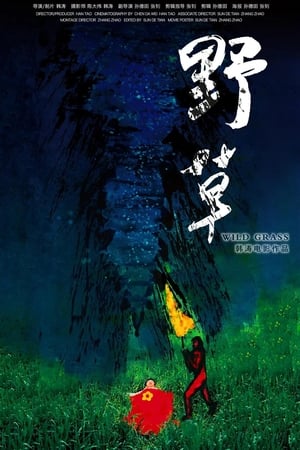
Han Tao’s latest film is set in a textile factory of the 1970s. Chong Er, a worker there, is in love with newcomer Xiao Lan and pursues her. They get married, but the happy time does not last long. Chong Er was executed, allegedly for breaking the law. More than 30 years later, the textile factory is closed down. The truth behind the case is finally revealed, but time has diluted everything and changed everyone’s visage. The film attempts to reconstruct the mental state of that generation, even though the workers and everything in the factory have been forgotten. Once upon a time, there were so many energetic lives that worked and lived there. The confining space was everything they had – where life began and ended, becoming eternally trapped in memories.
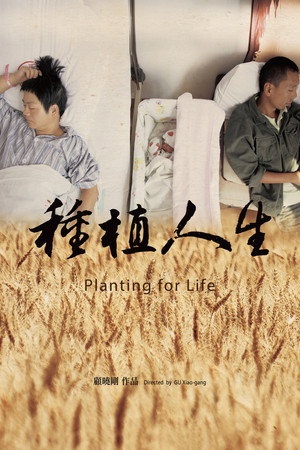
This is a story about a five-year battle waged between the farmers of two villages and the local government over land-use rights. This documentary illustrates the subtle changes being made to the rules of the game between officials and citizens, and provides deep human insight into the loss, despair and increasing awareness experienced by common farmers in the pursuit of land-use rights.
A documentary chronicling the coming of age of a young chinese man.