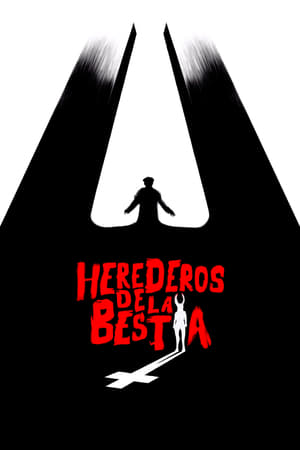
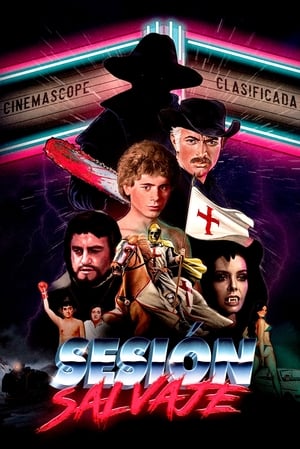
A Danish writer travels to Mexico with the purpose of locating a mysterious Apache tribe that fervently seeks to remain in obscurity.
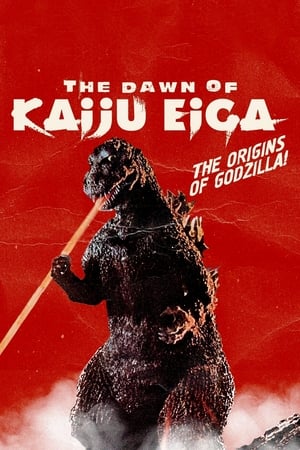
Tucumán, Argentina, 1965. Three years before George A. Romero's Night of the Living Dead was released, director Ofelio Linares Montt shot Zombies in the Sugar Cane Field, which turned out to be both a horror film and a political statement. It was a success in the US, but could not be shown in Argentina due to Juan Carlos Onganía's dictatorship, and was eventually lost. Writer and researcher Luciano Saracino embarks on the search for the origins of this cursed work.
Four lives that could not be more different and a single passion that unites them: the unconditional love for their cinemas, somewhere at the end of the world. Comrades in Dreams brings together six cinema makers from North Korea, America, India and Africa and follows their efforts to make their audiences dream every night.
The legendary British-American actress Olivia de Havilland (1916-2020), who conquered Hollywood in the thirties, challenged the film industry when, in 1943, she took on the all-powerful producer Jack Warner in court, forever changing the ruthless working conditions that restricted the essential rights and freedom of artists.
A couple decides to watch Big, a successful film released in 1988, starring Tom Hanks and directed by Penny Marshall, not once, but thirty times, sometimes accompanied by family and friends who come to their home to watch and discuss it.
France, 1974. The erotic film Emmanuelle, directed by Just Jaeckin, breaks all records for cinema attendance: the story of the creation of a sensual epic that marked a turning point in the struggle for sexual emancipation.
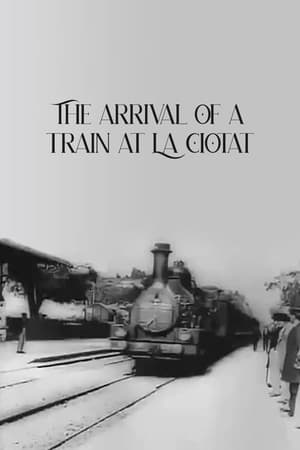
A group of people are standing along the platform of a railway station in La Ciotat, waiting for a train. One is seen coming, at some distance, and eventually stops at the platform. Doors of the railway-cars open and attendants help passengers off and on. Popular legend has it that, when this film was shown, the first-night audience fled the café in terror, fearing being run over by the "approaching" train. This legend has since been identified as promotional embellishment, though there is evidence to suggest that people were astounded at the capabilities of the Lumières' cinématographe.
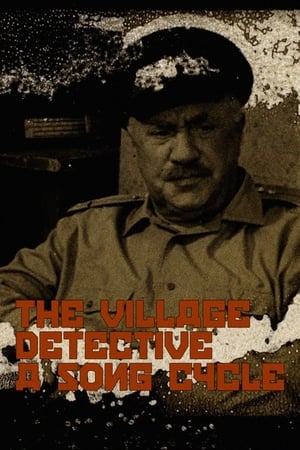
Atlantic Ocean, off the coast of Iceland, July 9, 2016. The surprising discovery of a canister —containing four reels of The Village Detective (Деревенский детектив), a 1969 Soviet film—, caught in the nets of an Icelandic trawler, is the first step in a fascinating journey through the artistic life of film and stage actor Mikhail Ivanovich Zharov (1899-1981), icon and star of an entire era of Russian cinema.
E. T. the Extra-Terrestrial, Steven Spielberg's endearing movie released in 1982, achieved the triple feat of bringing to life one of the most iconic characters in pop culture, revolutionizing science fiction cinema and establishing itself as one of the highest-grossing family movies in the history of cinema, capable of making the whole world laugh and cry.
A young woman, who has inherited her grandparents' huge house, a fascinating place full of amazing objects, feels overwhelmed by the weight of memories and her new responsibilities. Fortunately, the former inhabitants of the house soon come to her aid. (An account of the life and work of Fernando Fernán Gómez [1921-2007] and his wife Emma Cohen [1946-2016], two singular artists and fundamental figures of contemporary Spanish culture.)
How does the vision of the brilliant Spanish filmmaker Luis García Berlanga (1921-2010) remain relevant in a time whose popular culture has little to do with his own? Since to understand the secrets of an artist it is essential to know the person behind, his family, his friends, his collaborators, as well as prestigious filmmakers and actors trace a collective portrait of a creator as singular as he is universal.
The greatness, fall and renaissance of Hammer, the flagship company of British popular cinema, mainly from 1955 to 1968. Tortured women and sadistic monsters populated oppressive scenarios in provocative productions that shocked censorship and disgusted critics but fascinated the public. Movies in which horror was shown in offensive colors: dreadful stories, told without prejudices, that offered fear, blood, sex and stunning performances.
One-man armies, meet-cutes, casual strolls away from huge explosions — stars and industry insiders toast and roast these cinematic chestnuts and more.
The story of Italian cinema under Fascism, a sophisticated film industry built around the founding of the Cinecittà studios and the successful birth of a domestic star system, populated by very peculiar artists among whom stood out several beautiful, magnetic, special actresses; a dark story of war, drugs, sex, censorship and tragedy.
Since he was a child, Estèphe dreams to work in the movie industry, alongside those whom he watches films with passion. Cinema become quickly a leisure activity, spend with his friends, directing his first amateur movies. Could he dream bigger, growing up in Normandy, far from the studios and knowing nobody in this industry ? Estème dedicate himself to his studies, without lose sight of his ultimate dream.
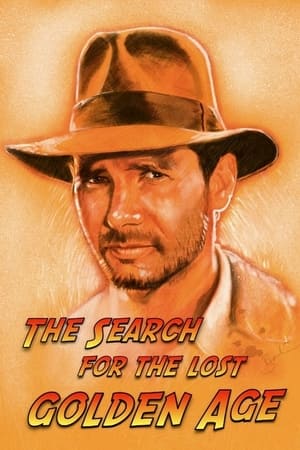
The chronicle of the mind-blowing journey that was Hollywood during the seventies; the true and gripping story of the last golden age of American cinema, an exalted celebration of creativity and experimentation; but also of sex, drugs and rock 'n' roll: a turbulent and dark tale of ambition, envy, betrayal, hatred and self-destruction.
Deep Throat, a pornographic film directed by Gerard Damiano, a film-loving hairdresser, and starring Linda Lovelace, a shy girl manipulated by a controlling husband, was released in 1972 and divided audiences, who began to talk openly about sex, desire and female pleasure; but also about violence and abuse; and about pornography, until then an almost clandestine industry, as a revolutionary cultural phenomenon.
A portrait of the actress and singer Pepa Flores, an incarnation of the recent history of Spain, who, in just twenty-five years of intense career, went from being Marisol, child prodigy of the Franco dictatorship, to being one of the first communist militants, icon of the Transition; an idol of the masses who became a discreet person after having claimed her right to remain silent.
An account of the life and work of Swiss painter, sculptor, architect and designer H. R. Giger (1940-2014), tormented father of creatures as fearsome as they are fascinating, inhabitants of nightmarish biomechanical worlds.
A short documentary about the rapidly disappearing era of heritage movie palaces and the film going experience once offered within those hallowed walls.