“In a world that often demands certainty, Dialogues des Carmélites invites us to sit with profound questions that have no easy answers: What makes a life worthy? How can we be truly prepared for our inevitable end? What does security mean when everything familiar is threatened? What sustains us when our institutions crumble? … Rather than imposing answers, the opera creates room for reflection on how faith manifests not as abstract doctrine, but as lived experience under extraordinary pressure.” — Louisa Muller, Director’s Note. Juilliard Opera directed by Louisa Muller. Matthew Aucoin conducts the Juilliard Orchestra. Performed and recorded on April 26, 2025 at the Peter Jay Sharp Theater. Dialogues des Carmélites, an opera by Francis Poulenc. Libretto adapted by the composer.
Herbert Wernicke's production of Richard Strauss's "Der Rosenkavalier", filmed live at the Festspielhaus Baden-Baden on 31 January 2009. Renée Fleming is the Marschallin, Diana Damrau is Sophie, Sophie Koch is Octavian, Franz Hawlata is Baron Ochs, Franz Grundheber is Faninal, Jane Henschel is Annina, and Jonas Kaufmann is the Italian singer. Christian Thielemann conducts the Münchner Philharmoniker.
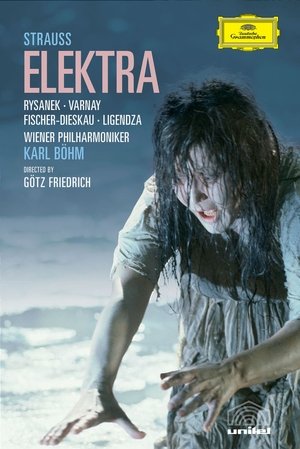
The Nikolaus Lehnhoff production of Richard Strauss's "Elektra", recorded live at the Salzburger Festspiele in 2010. Iréne Theorin stars as Elektra, with Eva-Maria Westbroek as Chrysothemis, Waltraud Meier as Klytämnestra, Robert Gambill as Aegisth, and René Pape as Orest. Daniele Gatti conducts the Wiener Philharmoniker.
Opera is an inherently theatrical medium that does not lend itself readily to the realism of film treatment. The shining exception is Puccini's Tosca, an action-packed melodrama that unfolds in three taut and gripping acts like the meatiest of Hollywood films noir. And unlike most operas, these three acts are set in three very specific Roman locales. Thus this 1976 film takes place in the church of Sant'Andrea della Valle (Act 1), the Palazzo Farnese (Act 2), and the Castel Sant'Angelo (Act 3).
In 1810, Mustafà, Bey of Algiers and thoroughly fed up with his wife, the docile Elvira, orders the captain of the corsairs to find him one of those feisty Italian women. It turns out to be Isabella, an Italian woman of unparalleled beauty searching for her fiancé Lindoro, whom Mustafà happens to be holding captive in his seraglio. The Bey intends to give Lindoro to his wife Elvira, hoping to get rid of him once and for all. Isabella, accompanied by her annoying suitor Taddeo—whom she passes off as her uncle to save him from the gallows—relies on her powers of seduction. “L’italiana in Algeri” (The Italian Girl in Algiers) is a two-act dramma giocoso (opera buffa) by Gioachino Rossini, with a libretto by Angelo Anelli. It premiered at the Teatro San Benedetto in Venice on May 22, 1813. Recorded in the studios of Radiotelevisione Italiana (RAI) in Milan on July 10, 1957.
The first part of the Wagner's Der Ring des Nibelungen in the shortened version, prepared by Cord Garben.
The Flying Dutchman as played at Wiener Staatsoper in 2003
The opera that Claude Debussy created from Maurice Maeterlinck’s symbolist drama stands as one of the greatest achievements in the history of musical theatre.
When Barbe-bleue loses his fifth wife, the turbulent Boulotte is selected at random to be the next one. But Barbe-Bleue falls in love with Hermia – who loves the shepherd Saphir – and soon wearies of Boulotte. So, he asks his alchemist to concoct for him an “anti-wife” philtre. But, as on the previous occasions, it is merely a sleeping potion and Boulotte wakes up the other five “dead” wives. They reappear, dressed up as gypsies and bring the truth to light.
An adaptation from the controversial John Adams opera about the true life incident that took place in the mid 80s. The liner "Achille Lauro" is on a 12-day cruise in the Mediterranean. While the ship is docked in Alexandria, a maid discovers that four of the passengers are actually members of the Palestine Liberation Organization traveling incognito. Startled by their discovery, the PLO cadre is forced to act. They take the passengers on board hostage and demand the release of 50 Palestinian activists held in Israeli jails. As Egyptian, American, Italian, and Palestinian authorities bicker over the best way to handle the situation (and who would negotiate with the terrorists), the kidnappers find themselves dealing with rebellion among their captives, and an argument between the four PLO members and Leon Klinghoffer, a Jewish-American confined to a wheelchair, eventually escalates into violence.
Zurich Opera House production of Franz Léhar's operetta, with Dagmar Schellenberger, Rodney Gilfry, and Ute Gfrerer in lead roles. Baron Zeta is desperate that the fabulously wealthy widow Hanna Glavari marry a Pontevedrian man so that her fortune remains in the country. He attempts to match her and his handsome attaché, Danilo. It turns out that Danilo and Hanna had had a love affair in years past. Nevertheless, Danilo now refuses to love her because he doesn't want to appear like he is only interested in her money...
Live performance at Teatro Regio di Parma, April 15-26, 2011.
David McVicar's spellbinding production of LE NOZZE DI FIGARO is set in 1830s post-revolution France, where the inexorable unravelling of an old order has produced acute feelings of loss. In the relationship between Finley's suave, dashingly self-absorbed Count and Röschmann's passionately dignified Countess, which lies at the tragic heart of the opera, the sexy ease between a feisty Figaro (Erwin Schrott) and a sassy Susanna (Miah Persson) is starkly absent, the tenacious spark between Marcellina (Graciela Araya) and Bartolo (Jonathan Veira) suggesting what might be rekindled. The production is superbly complemented by the beauty of Paule Constable's lighting and Tanya McCallin's evocative sets. Antonio Pappano conducts (and accompanies the recitatives) with invigorating wit and emotional depth.
Aldo and his girlfriend Lucy reopen an abandoned opera house, but find out that the place is inhabited by a group of Phantoms.
In Restoration-era France, the ambitious Julien Sorel rises through society thanks to his intelligence, charm, and determination. Torn between Madame de Rênal and Mathilde de La Mole, he becomes entangled in passionate affairs, political intrigue, and religious conflict that ultimately shape his tragic fate. Inspired by Stendhal's classic novel, Pierre Lacotte transforms Le Rouge et le Noir into a grand three-act ballet set to an anthology of music by Jules Massenet.
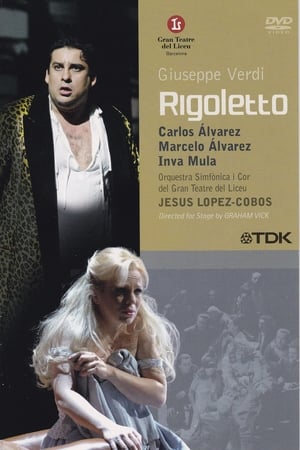
In celebration of Verdi's 200th birthday in 2013, the Festival d’Aix-en-Provence produced the composer's colorful masterpiece Rigoletto for the first time in its history. Verdi expert Gianandrea Noseda conducted the London Symphony Orchestra in a production that marked the return of the Canadian stage director Robert Carsen to the festival following a 17 year hiatus. Carsen sets his interpretation of this classic opera in the cutthroat world of the circus. Based on Victor Hugo's play Le roi s’amuse, Verdi's opera in three acts Rigoletto premiered in 1851. Similar to the play that inspired it, the opera faced censorship because of its controversial subject of libertinism at court. The opera’s tragic story revolves around the licentious Duke of Mantua, his hunchbacked court jester Rigoletto, and the jester’s beautiful daughter, Gilda.
The second part of the Wagner's Der Ring des Nibelungen in the shortened version, prepared by Cord Garben. Staged at the Teatro Colon, Buenos Aires, 2012
The third part of the Wagner's Der Ring des Nibelungen in the shortened version, prepared by Cord Garben. Staged at the Teatro Colon, Buenos Aires, 2012
La nuit espagnole
Opera singer Chivo is currently playing a singing cowboy, and Mexican bandito Braganza kidnaps him (along with Jane, an heiress) so he can learn to become more like the American movie gangsters he admires.