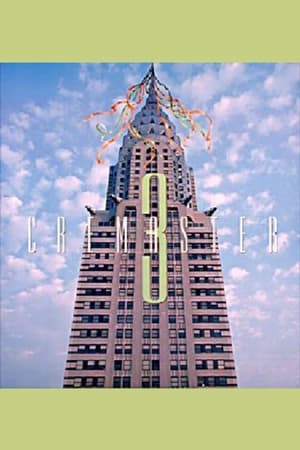
CREMASTER 3 is set in New York City and narrates the construction of the Chrysler Building, which is in itself a character - host to inner, antagonistic forces at play for access to the process of (spiritual) transcendence. These factions find form in the struggle between Hiram Abiff or the Architect...
An abstract and detailed observation of a young life told through a series of observational montages. Part of the 'Technicolour' series of films from Lot 108 Productions.
Inspired by Edogawa Ranpo’s novel, A Brute’s Love. The visual direction of this film is heavily influenced by Salvador Dalí, along with lots of other painters the director admired over the years. In many ways, this film is a reflection of personal artistic evolution.
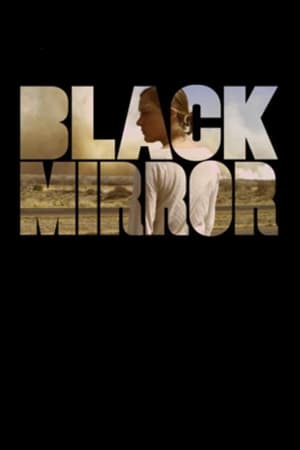
A nameless drifter navigates a barren landscape punctuated by satellite dishes, radio towers and droning airplanes. Stopping periodically in anonymous hotel rooms, she makes attempts to connect to an unidentified second party.
An experimental media installation of three windows exploring fragments of liminality. Three unique re-constructions of experiential instances volumising the cataclysms of thresholds. Experience the absence of definition, the absence of boundaries set and the absence of rationale. A myth is not to be understood, a myth is passed on, like a game of Chinese whispers, it takes its course and ages with time, suiting the demography and tale, it warps and distorts
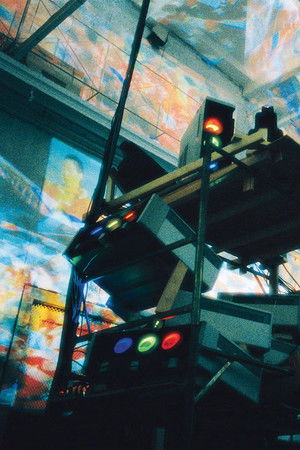
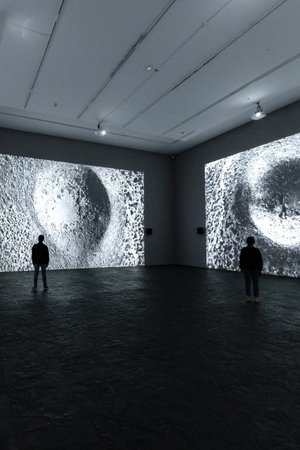
Sistine Chapel is an audio-visual collage of new footage and samples from Paik’s past videos, which featured many of his friends, collaborators, and public figures. It was Paik’s own way of summarizing his artistic career with video. The film installation consists of fast-paced and overlapping images that completely cover the gallery walls and ceiling—one of the most under-appreciated parts of architecture, according to Paik. With its electronic visuals and booming audio, interspersed with periods of silence, the immersive installation stands in stark contrast to the experience of its namesake.
Decalcomania
Arrancar los ojos is a project that proposes a constellation of works around the gaze and its political dimension. A reflection on the concepts of institutional violence, repression and collective trauma, focusing on the pattern of eye attacks by state security forces.
Short film in competition at the 48Hours Film Project. Sci-Fi/Mystery genre. Directed by Simone Marsella, starring Ludovica Castrichella, Dario Grasso and Federico Imola.
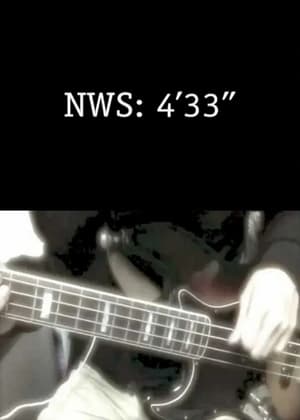
In February 2013, the New World Symphony presented Making the Right Choices: A John Cage Centennial Celebration, a spectacular three-day festival dedicated to the music and ideas of John Cage. As part of the festival, NWS hosted a new video installation entitled NWS: 4’33″, created by New York-based composer, director, performer and recording artist Mikel Rouse; which consisted of video performances contributed by Cage fans via a special YouTube site set up by Rouse. The public was invited to record and submit their own video, and visit the installation during the festival to see their work in the SunTrust Pavilion at the New World Center. These videos will be included in an online Archive of the event, a lasting tribute to this defining and seminal artist.
An audiovisual work that consists of 6593 frames of dust collected and scanned over a 2 month process by Nan Wang into an animated work combined with digital footage.
Zineb Sedira pays tribute to the history of African Cinema and the filmmakers who had inspired her.
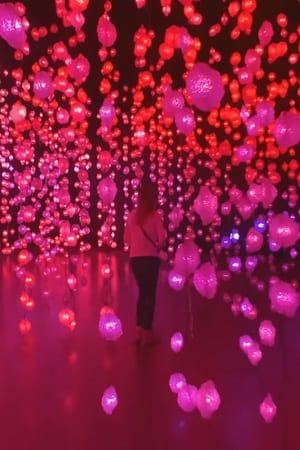
Each pixel is separated like an exploded screen, set in a chaotic way into the space. The video has a whole movement in the room, as one three dimensional image. The experience resembles the brain, working with electromagnetic waves and low voltage information.
A reflection on the iconic headquarters of the Johnson Publishing Company in downtown Chicago. The eleven-story Modernist building on South Michigan Avenue was home to Jet and Ebony magazines since its design in 1971. The building was heralded as the first major downtown Chicago building designed by an African-American architect since the eighteenth century. In the case of the Johnson family and its legacy, Hartt looks to the intersection of the publisher’s ideals and values, the style and aesthetics embodied by the site and the lasting cultural impact of the magazines.
Hartt’s film Et in Arcadia Ego, commissioned by The Glass House, responds to Philip Johnson’s mid-century modern residence and the surrounding landscape.
Patria I is a medium-length film by Juan Ibarlucía and Magela Crosignani that reimagines the form of the Baroque oratorio within the post-industrial landscape of Argentina in 2026. Drawing on a south american reinterpretation of the myth of Cain, and employing music, poetry, performance, and installation art, the work takes the audience on a powerful sonic and emotional journey that spans an extraordinary range of human experience—from extreme violence to compassion and tenderness.
"Dancing is sculpting in time." Shot around Indy Simin's "Echt in Vorm."
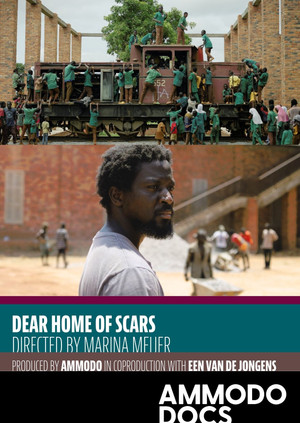
In Dear Home of Scars, we see celebrated visual artist Ibrahim Mahama return to his hometown of Tamale in Northern Ghana to visit Red Clay Studio, a lively cultural centre and art space he founded, where he works on a new art installation involving old colonial railcars and the reconstruction of a stretch of track. During British rule of Ghana (1821-1957), the colonisers used trains to transport gold and other resources to the coast. Remnants of track now lie abandoned as silent reminders of this history of exploitation. They are ‘scars in the landscape’, in the words of Mahama. The project brings new energy and self-awareness to local residents. Meanwhile, Mahama reflects on his role as a sought-after artist and builder of local communities.
An unnamed passer-by is forced to trace a circular route inside an abandoned tram station, facing loss and time. The broken walls act as a channel, transmitting fragmentary, blurred and analogical memories.
A film as part of the Spellbound installation at the Hayward Gallery in 1996 by Peter Greenaway.