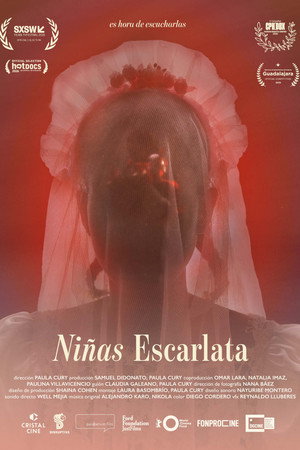
Some Things Are Hard To Talk About is a personal documentary about the secrets of abortions in my family over three generations. After I had an abortion I find out that both my mother and my grandmother secretly had abortions. An intricate story of family history, choices and resulting effects uncovers.
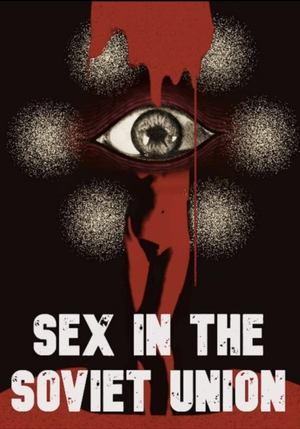
Procreation is the social duty of all fertile women, was the political thinking during the 1960s and 1970s in Romania. In 1966, Ceaucescu issued Decree 770, in which he forbade abortion for all women unless they were over forty or were already taking care of four children. All forms of contraception were totally banned. The New Romanian Man was born. By 1969, the country had a million babies more than the previous average. Romanian society was rapidly changing. By using very interesting archival footage and excerpts from old fiction films and by interviewing famous personalities from that time – gynecologists or mothers who were part of the new society - the director revives this period of tremendous oppression of personal freedom. Many deaths were caused by the mere fact that women, including wives of secret Romanian agents, famous TV presenters, and actresses, had to undergo illegal abortions. Many women were jailed for having them.
"What Donald Trump’s win means for abortion, immigration, foreign policy, and more. "Donald Trump, the 45th president of the United States, will also be its 47th president. After voting him out of office in 2020, American voters changed their minds, opting for a return to his policies and his politics. "But the second Trump presidency will look very little like the first. His policies have evolved, his circumstances have changed, and he will be returning to office with a much more focused plan than the one he entered with eight years ago. "In this video, we ask six Vox reporters what we should expect from Trump’s second term, on topics from foreign policy to abortion" (Vox).
At an Atlanta abortion clinic besieged by protesters, the director of operations, Tracii, takes necessary risks to safeguard staff and patients.
Avortement, les croisés contre-attaquent
A film that delves into director Jean Carlomusto's family history by trying to find out if the rumors about her grandmother's death -- trying to rid herself of an unwanted pregnancy in 1939 -- are true.
The bleached palette and home-movie aesthetics of Super 8 footage provide the image track for this testimonial about an illegal abortion in Mexico City in the 1960s, delivered in voiceover by the filmmaker’s mother. In its account of this intimate and disorienting memory, Lesser Choices summons a time of profound uncertainty—a moment from an era without rights—and offers a warning to the present.
Nothing more than Pastor Silas Malafaia talking about homosexualism, abortion and moral depravity, flying saucers and aliens all at once. For 90 minute straight!
Women have always sought ways to terminate unwanted pregnancies, despite powerful patriarchal structures and systems working against them. This film provides a historical overview of how church, state and the medical establishment have determined policies concerning abortion. From this cross-cultural survey--filmed in Ireland, Japan, Thailand, Peru, Colombia, and Canada--emerges one reality: only a small percentage of the world's women has access to safe, legal operations.
Women talk about the circumstances that drove them to seek illegal abortions and the often traumatic result. Interwoven with historical photographs and newsreel footage, the stories expose how the reality of women's lives were counterposed to what was socially and morally expected of them.
Exploring the rise of anti-abortion groups in Canada, the filmmaker also presents the feminist and pro-choice response that is being organized across the country.
French documentary campaigning for the liberalization of abortion and contraception, directed by Charles Belmont and Marielle Issartel in 1973.
The mother and daughter face the question of whether to keep the pregnancy or terminate it. Both are under pressure from relatives, friends, and doctors. Both are going through a difficult decision-making process. Each episode of the artistic part shows the life circumstances and the path that a woman in a crisis situation goes through. In documentary inserts, representatives of various professions (psychologists, lawyers, gynecologists, clergymen) tell how they face the problem of abortion in their lives.
In America women can go to jail for their husbands’ crimes, men are allowed to marry ten-year-olds, and abortions in some states are illegal, even in cases of rape. Documentary filmmaker Brice Lambert journeys through the American South and meets women who are at the receiving end of the attack on women’s rights since Donald Trump’s return to power.
Four people - Brittany, Hannah, Nick, and Ylonda - tell their stories about how access to abortion in their community helped them empower themselves to lead lives they want to live.
Gloria Allred overcame trauma and personal setbacks to become one of the nation’s most famous women’s rights attorneys. Now the feminist firebrand takes on two of the biggest adversaries of her career, Bill Cosby and Donald Trump, as sexual violence allegations grip the nation and keep her in the spotlight.
This film is made up of interviews from preteens to adults discussing their thoughts and feelings on sex, relationships, and parenting in relation to teen pregnancy.
Les trente courageuses de La Réunion, une affaire oubliée
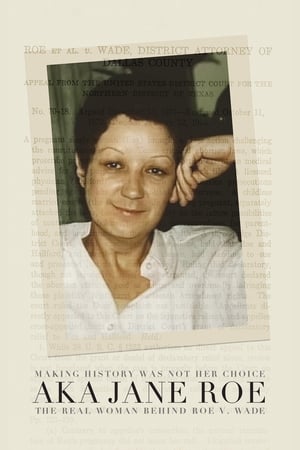
A portrait of Norma McCorvey, the “Jane Roe” whose unwanted pregnancy led to the 1973 case that legalized abortion nationwide, Roe v. Wade. The documentary unravels the mysteries closely guarded by McCorvey throughout her life.
Interviews from women involved in the 70's and 80's rock music industry. An examination of the people taking advantage of underage fans and calling for a "Me too" movement in the music world