Eight visually rich vignettes drawn from Kurosawa’s own dreams—fox weddings and vanished orchards, a soldier’s ghosts, a walk through Van Gogh’s canvases, nuclear nightmares, and a water-mill utopia—meditate on childhood, art, mortality, and humanity’s uneasy bond with nature.
New York, I Love You delves into the intimate lives of New Yorkers as they grapple with, delight in and search for love. Journey from the Diamond District in the heart of Manhattan, through Chinatown and the Upper East Side, towards the Village, into Tribeca, and Brooklyn as lovers of all ages try to find romance in the Big Apple.
Set against the backdrop of Iran's strict and oppressive legal system, this anthology film tells the stories of four men who each face a moral crisis when having to deal with death penalties.
A compendium of three short science-fiction films, each with a decidedly feminist slant.
Three short stories ("Zelenáči 1945", "Silvestr 1948" and "Zimní vítr 1951") about members of the SNB units guarding the Šumava border in the post-war years. Ivo Toman had artistic supervision over the debutants. The theme of the third short story was made in 1959 for the film "Entry Forbidden" by František Vláčil, who was also starting at the time.
An anthology of one-minute films created by 51 international filmmakers on the theme of the death of cinema. Intended as an ode to 35mm, the film was screened one time only on a purpose-built 20x12 meter public cinema screen in the Port of Tallinn, Estonia, on 22 December 2011. A special projector was constructed for the event which allowed the actual filmstrip to be burnt at the same time as the film was shown.
In three separate segments, set respectively in 1966, 1911, and 2005, three love stories unfold between three sets of characters, under three different periods of Taiwanese history and governance.
An omnibus film on children's rights and the problems that the youngest members of our society have to face. Each story tackles a specific theme and has its own hero.
Seven episodes, each taking place on a different day of the week, on the theme of suicide and violent death.
The first part, "My Brother's Lover," tells the story of a gay man's sister falling for his boyfriend. Graduate student Takeo lives with his sister, but he can't bring himself to tell her about his gay boyfriend, Riku. When Riku comes over to their house to have sex with Takeo, his sister falls in love with him. The second part, "His Child," tells the story of Akihiko, a man who falls for his straight friend and ends up looking after his friend's baby at his request. His lover, Yuki, can't stand seeing the baby. Is balancing love and child-rearing just as difficult for gay men?
Three distinct tales unfold in the bustling city of Tokyo. Merde, a bizarre sewer-dweller, emerges from a manhole and begins terrorizing pedestrians. After his arrest, he stands trial and lashes out at a hostile courtroom. A man who has resigned himself to a life of solitude reconsiders after meeting a charming pizza delivery woman. And finally, a happy young couple find themselves undergoing a series of frightening metamorphoses.
Three tales of love, ambition, and neurosis unfold in the city that never sleeps. In "Life Lessons" (Martin Scorsese), a tormented painter channels heartbreak into his art. In "Life Without Zoë" (Francis Ford Coppola), a precocious 12-year-old navigates privilege and loneliness in a Manhattan hotel. And in "Oedipus Wrecks" (Woody Allen), a man’s domineering mother literally becomes a looming presence over New York.
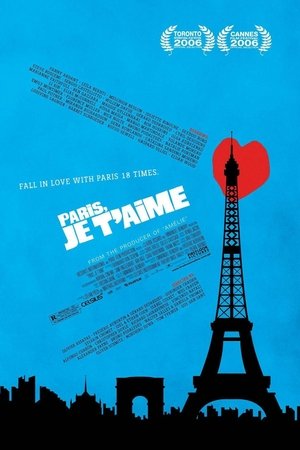
Olivier Assayas, Gus Van Sant, Wes Craven and Alfonso Cuaron are among the 20 distinguished directors who contribute to this collection of 18 stories, each exploring a different aspect of Parisian life. The colourful characters in this drama include a pair of mimes, a husband trying to choose between his wife and his lover, and a married man who turns to a prostitute for advice.
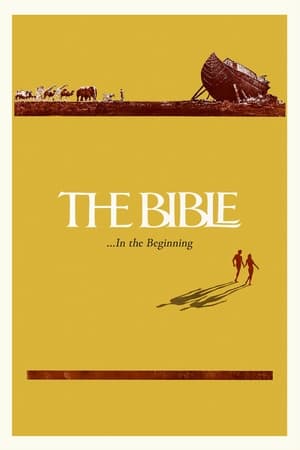
Covering only the first 22 chapters of the Book of Genesis, vignettes include: Adam and Eve frolicking in the Garden of Eden until their indulgence in the forbidden fruit sees them driven out; Cain murdering his brother Abel; Noah building an ark to preserve the animals of the world from the coming flood; and Abraham making a covenant with God.
Follows interconnected stories of several different couples, each facing a crossroads at different stages in their lives and relationships.
An anthology of four romantic stories across four age groups connected by that magical thread called love.
A comic study of 20th-century history, reconstructing the life of writer, creator and professional prisoner Tulse Luper. Born in 1911 Newport and last heard of in 1989, Luper’s life is pieced together from the evidence found in 92 suitcases scattered across the globe. In the first of three parts, we follow Luper through three distinct episodes: as a child during the First World War; as an explorer in Mormon Utah; and as a writer in Belgium during the rise of fascism.
A comic study of 20th-century history, reconstructing the life of writer, creator and professional prisoner Tulse Luper. Born in 1911 Newport and last heard of in 1989, Luper’s life is pieced together from the evidence found in 92 suitcases scattered across the globe. In the second of three parts, we follow Luper as he works in a cinema, giving him ample opportunity to cross paths with virtually every artistic device and dramatic character known to man.
A comic study of 20th-century history, reconstructing the life of writer, creator and professional prisoner Tulse Luper. Born in 1911 Newport and last heard of in 1989, Luper’s life is pieced together from the evidence found in 92 suitcases scattered across the globe. In the final installment, Luper continues his adventures as a professional prisoner during the later years of the Second World War and the Cold War.
A comic study of 20th-century history, reconstructing the life of writer, creator and professional prisoner Tulse Luper. Born in 1911 Newport and last heard of in 1989, Luper’s life is pieced together from the evidence found in 92 suitcases scattered across the globe. A Life in Suitcases condenses the six-hour trilogy into a single two-hour feature, and in doing so, accentuates the project as a filmic essay in multiple narratives, listings, sidebars, footnotes, commentaries and anecdotes; a project for an Information Age ready to understand that there never is a phenomenon called History, there can only be Historians, gatekeepers to vested interests.