Století rádia
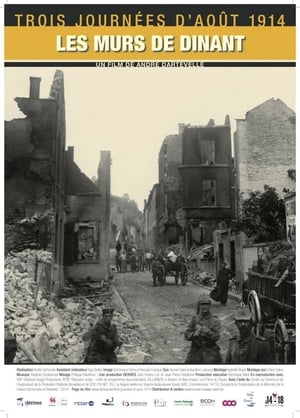
Documentary on the atrocities the germans committed at the start of WW I in Dinant.
Heritage
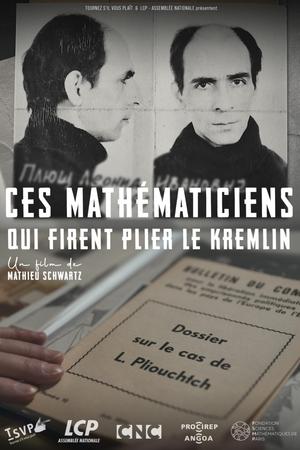
On January 15, 1972, Leonid Pliouchtch, a Ukrainian mathematician who was unknown at the time, was locked up in a Soviet psychiatric institution and accused of dissidence. His wife, Tatiana, fought for his defense and contacted a committee of French mathematicians to help him. Led by Laurent Schwartz, they launched a three-year campaign to secure his release and succeeded in getting the USSR to back down on the issue.
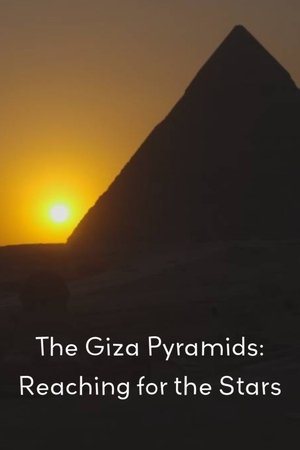
Explores the Pyramids of Giza as Egyptologists try to unravel the mysteries and decipher the clues behind these stone giants built over 4,500 years ago.
Cranes and Voices follows, on one side, people who hear voices and share their daily lives, and on the other, a collective of tenants who investigate their neighbourhood through its noises, its vibrations and its construction sites. The film moves through apartments, streets, meetings and moments of sound creation, where voices, urban noises and recorded materials are transformed into collective sound compositions and spaces for exchange. Sound appears here as an ambivalent force, at once invasive and generative, shaping the way we inhabit the city, other people and ourselves. Cranes and Voices invites us to pay attention to these singular listening experiences, to hear what they reveal about the housing crisis, about how mental health is viewed and about the ways we organise our shared spaces.
In the 1960s, the suburbs were meant to be modern havens for newcomers from rural France, Portugal, Spain, North Africa, and Africa, helping rebuild post-war France. Large housing complexes symbolized this ideal, offering comfort, heating, and electricity. But by the 1980s, disillusionment set in as economic crisis, unemployment, poverty, crime, racism, and police violence took hold. Mohamed Bouhafsi tells the story of a dream that didn’t last.
This feature-length docu-poem shines a well deserved light on the factory workers and their processes at Stone Island’s headquarters located in Ravarino, Italy.
Stanley Nelson's syncopated voyage through the history of funk music, from early roots to 1970s urban funk and beyond.
In 1944 Rudolf Breslauer documented the everyday life in the Westerbork transit camp on film, commissioned by the German camp commander Albert Gemmeker. The Westerbork Film was never completed, but much of the raw footage is preserved.
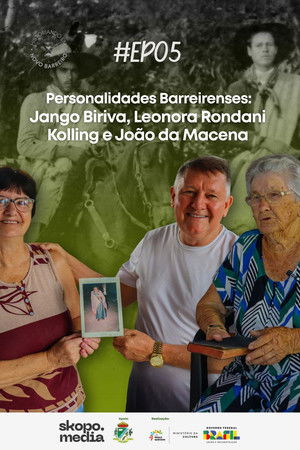
Personalidades Barreirenses: Jango Biriva, Leonora Kolling e João da Macena - Historiando em Novo Barreiro
Documentary about Queen Elizabeth Square, Sir Basil Spence's block of Brutalist style flats built to replace the Gorbal's tenements in Glasgow during the 1960s. His vision was based on architect Le Corbusier's ideas and inspired him to transform the Gorbals into a Modernist Utopia. The film is about the life and times of one building told by some of the people involved in its history. The block was dynamited in 1993 amidst controversy and the death of a spectator. It is mentioned in Pevsner's Notable Buildings of Britain. This film was shown on BBC Scotland's Ex-S strand in 1993. Produced by May Miller and directed by Conrad Blakemore. This film is posted for educational and research purposes only and is copyright of BBC Scotland. Archive material courtesy of the Scottish Film Archive and the film's contributors.
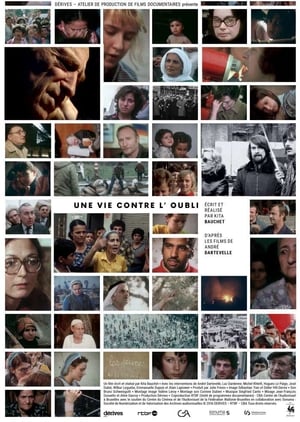
Portrait of Belgian historian, reporter and documentarian André Dartevelle.
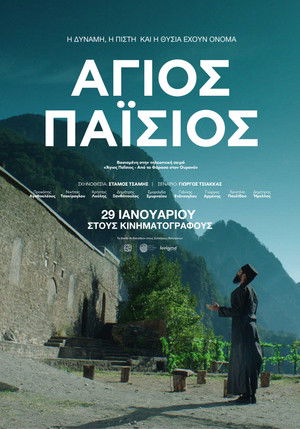
The story of Saint Paisios, or else known as Arsenios Eznepidis. After being uprooted from Farasa of Cappadocia as refugees, the family of young Arsenios settles in Konitsa, Epirus where he grows up with his mother and grandmother, who inherit to him their deep faith in Christ as well as their love for all people. Fast forward to many years later, his time in Mounth Athos and his move to Filotheos monastery play a catalytic role in his religious journey. Eventually, he sends a photograph of himself to his mother, bidding her farewell and telling her that from then on the Virgin Mary will be his mother. He no longer signs using the name Arsenios, but Paisios.
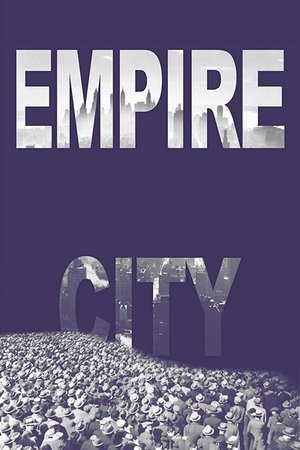
A film essay contrasting the modern metropolis with its "golden age" from 1830-1930, with the participation of some of New York's leading political and cultural figures. Made at a time when the city was experiencing unprecedented real estate development on the one hand and unforeseen displacement of population and deterioration on the other. Empire City is the story of two New Yorks. The film explores the precarious coexistence of the service-based midtown Manhattan corporate headquarters with the peripheral New York of undereducated minorities living in increasing alienation.
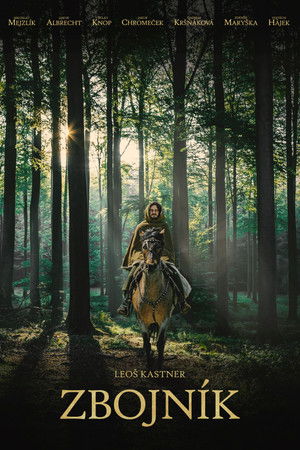
Zbojník
A war. Two friends. Chaos will reign.
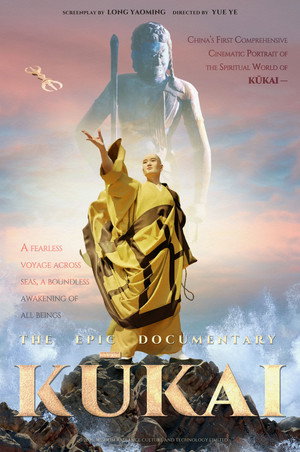
In 804 AD, Kūkai traveled to Tang China with the Japanese diplomatic mission to study under Master Huiguo, the seventh patriarch of Tang Esoteric Buddhism. After returning to Japan, his knowledge and practices went on to influence religion, literature, calligraphy, architecture, and education, shaping religious practice, artistic tradition, and intellectual life across East Asia for more than 1,250 years. Rooted in rigorous historical research, location-based storytelling, documentary techniques, cinematic reconstruction, and CG technology, the film recreates Kūkai’s world and revisits the Tang-era cultural exchange that transmitted ideas, philosophy, and spiritual traditions across East Asia. Through Kūkai’s journey, the documentary explores enduring themes of faith, learning, compassion, and cultural exchange, inviting timely conversations on ethical leadership, education, mental well-being, and intercultural dialogue in today’s increasingly interconnected world.
The film showcases the voices of past and present Hougang residents, alongside commentary by historians, public intellectuals, politicians, and volunteers. Charting Hougang’s history from the mid-eighteenth century, the film features personal recollections of growing up in Hougang, residents’ sentiments towards state-led redevelopment and relocation, and the political journey of the community in the context of the Workers’ Party having won the Hougang Parliamentary seat a little over 30 years ago.
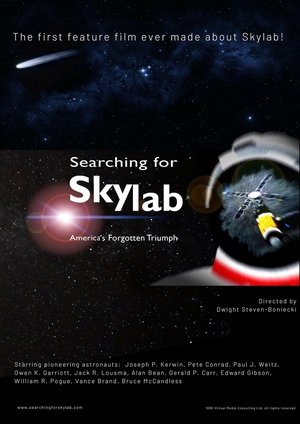
The first American space station Skylab is found in pieces scattered in Western Australia. Putting these pieces back together and re-tracing the Skylab program back to its very conception reveals the cornerstone of human space exploration.