Poignant postwar appeal for Britain’s Jewry to support orphaned Jewish children rescued from Europe.
Through personal stories, the documentary approaches the issues of gender identity and legal gender recognition in Greece. The three main characters explain how society has treated them, by narrating their experiences from the past and the present.
On the border of Surinam and French Guyana, indigenous Wayana territory is overrun by intruders. Illegal gold miners poison the river, missionaries repress indigenous identity, and even doctors with the best intentions leave marks that are often silently violent. The Wayana call these intruders Parasisi.
Hijos de África
Through testimonies and images, the crude reality of human rights in Argentina in democracy is portrayed and the role of the hegemonic means of communication to make causes and protests invisible ...
Through first person narration, Tari reveals personal stories related to her decision to work in Taiwan, her strained family relationships, the risks involved in working abroad and the traps she has fallen into.
A prominent Czech journalist Saša Uhlová leaves her family and joins “cheap labour force” in Western Europe. Undercover, she works at an asparagus farm in Germany, tries her hand as a maid at a hotel in Ireland and takes care of the elderly in France. She experiences first-hand the struggles of Eastern European low-wage workers whose sacrifice and hard work allow for the Western society’s comfort. What is the real price that Europe pays for exploiting its own citizens? How do the lives of economic migrants, who have been forced to leave their children and elderly parents, look like? And why are privileged Europeans looking the other way?
Journalist Dermi Azevedo has never stopped fighting for human rights and now, three decades after the end of the military dictatorship in Brazil, he's witnessing the return of those same practices.
An urgent and powerful documentary, shot in a detention centre where asylum seekers trying to reach Australian shores are indefinitely detained. Secretly shot on a mobile phone by Iranian journalist Behrouz Boochani while detained on Manus, in Papua New Guinea, the film is a collaboration with Dutch-Iranian filmmaker Arash Kamali Sarvestani. Boochani recounts, via the testimonies of fellow inmates, the abuse and violence inflicted and the precarious state of limbo they find themselves in. Chauka, the name of the dreaded solitary confinement unit within the detention centre, was originally the name of a beautiful bird and symbol of the Manus Island. By interweaving dialogue with two Manusian men and shots of daily life on the island, the film gives a much-needed voice to Manus inhabitants, understandably distressed by the current situation. With marked restraint, the film exposes lives broken by shocking immigration policies.
Süchtig nach Jihad
Parole de citoyens - Immersion en Israël
Ekhlas Alhlwani was forced to flee Syria with her three children and now lives in Zaatari, a refugee camp in the Jordanian desert. Rizzi spent seven weeks observing her and other women's daily life, which is devoid of any prospects. He shows how Alhlwani makes every effort to establish some kind of normality for her family despite the difficult camp conditions. The film vividlyconveys the cruelty of war, and especially the state o funcertainty and rootlessness to which refugees are exposed. The film is the first part of a trilogy that focuses on the emergence of a new civil consciousness in Malaysia, Tunisia, Egypt, Bahrain and Syria, as well as the social implications of the end of post-colonialism in these countries.
With the most tech startups and venture capital per capita in the world, Israel has long been hailed as The Startup Nation. WIRED’s feature-length documentary looks beyond Tel Aviv’s vibrant, liberal tech epicenter to the wider Holy Land region – the Palestinian territories, where a parallel Startup Nation story is emerging in East Jerusalem, Nazareth, Ramallah and other parts of the West Bank, as well as in the Israeli cybersecurity hub of Be’er Sheva. And we will learn how the fertile innovation ecosystem of Silicon Wadi has evolved as a result of its unique political, geographical and cultural situation and explore the future challenges – and solutions – these nations are facing.
September 1st, 1939. Nazi Germany invades Poland. The campaign is fast, cruel and ruthless. In these circumstances, how is it that ordinary German soldiers suddenly became vicious killers, terrorizing the local population? Did everyone turn into something worse than wild animals? The true story of the first World War II offensive that marks in the history of infamy the beginning of a carnage and a historical tragedy.
The World Parade: Palestine
"Kartli" refers both to Georgia’s medieval kingdom and a Tbilisi sanatorium sheltering refugees from the 1990s war in Abkhazia, meant as temporary but lasting 30 years. The crumbling building became a recreated “country”, with a farm, gardens, terraces and rooms where old VHS tapes revive memories of a lost paradise. Through Tamuna, Irma, and others, the film explores exile, trauma, and shared resilience, showing that nothing stays the same inside Kartli.
This poetic film follows director Marialuisa's journey with Anita and Leticia, Central American women traveling with the Caravan of Mothers of Missing Migrants.
Seven militant women (fedaiyat) of the revolutionary generation tell the story of the Palestinian resistance through accounts of their own lives. Cut from 35 hours of interviews with leaders of the armed struggle, the film presents an image of confident, unapologetic and proud feminine identity. Together, the memories of these women narrate the dream of a generation, yet unrealized.
The Tank and The Olive Tree recalls a certain number of forgotten fundamentals and sheds new light on the history of Palestine. By combining geopolitical analysis, interviews with international personalities who are experts on the subject and testimonies from Palestinian and French citizens, this documentary offers the keys to understanding what the media call the Israeli-Palestinian conflict. Enough to rid people's minds of clichés and prejudices! If The Chariot and the Olivier is intended to be educational, it speaks above all of a magnificent territory, and of a people who constantly affirm that “to live is already to resist”...
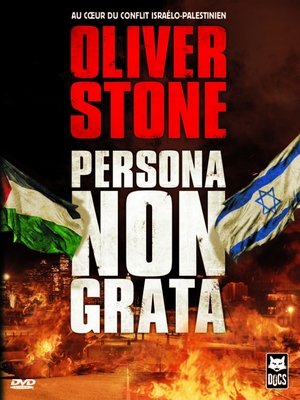
2003 documentary film produced by Oliver Stone for the HBO series America Undercover about the conflict in occupied Palestine. He speaks with Ehud Barak and Benjamin Netanyahu, former prime ministers of Israel, Yasser Arafat, late president of the Palestinian National Authority, and various Palestinian activists resisting the oppression of the zionist regime.