A documentary about the career of legendary production designer Joe Alves and his four decades in Hollywood.
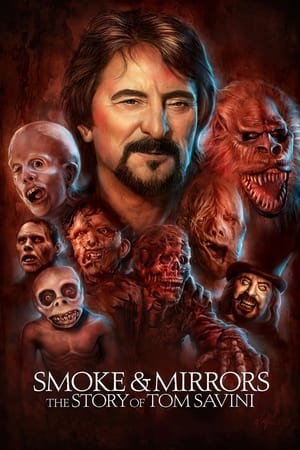
Tom Savini is one of the greatest special effects legends in the history of cinema, but little is known about his personal life until now. For the first time ever a feature length film has covered not only Tom's amazing career spanning over four decades, but his personal life as well.
Negev Desert, Israel, 1987. Bashir Abu Rabi'a works as a pyrotechnics and special effects assistant on the film Rambo III, starring Sylvester Stallone, a shoot that will have far-reaching consequences for the local Bedouin population.
A first-time director convinces his best friend to sell his house in order to fund their debut feature film. Everything goes really well. A documentary following the making of "The Last Stop in Yuma County."
This short focuses on the job of the costume designer in the production of motion pictures. The costume designer must design clothing that is correct for the film historically and geographically, and must be appropriate for the mood of the individual scene. We see famed costume designer Edith Head at work on a production. The Costume Designer was part of The Industry Film Project, a twelve-part series produced by the film studios and the Academy. Each series episode was produced to inform the public on a specific facet of the motion picture industry. Preserved by the Academy Film Archive in 2012.
The Death of 'Superman Lives': What Happened? feature film documents the process of development of the ill fated "Superman Lives" movie, that was to be directed by Tim Burton and star Nicolas Cage as the man of steel himself, Superman. The project went through years of development before the plug was pulled, and this documentary interviews the major filmmakers: Kevin Smith, Tim Burton, Jon Peters, Dan Gilroy, Colleen Atwood, Lorenzo di Bonaventura and many many more.
Les Bronzés, le Père Noël, Papy et les autres....Discover or rediscover the emblematic scenes of these cult films that have crossed generations without getting old. Go behind the scenes of these unusual films through completely unpublished anecdotes and funny stories told by the authors themselves.
Diving Deep: The Life and Times of Mike deGruy, tells the story of Mike deGruy, an irrepressibly curious and enthusiastic underwater filmmaker who died suddenly in 2012. DeGruy filmed the oceans for more than three decades becoming as famous for his on camera storytelling as for his glorious, intimate visions of the sea and the creatures who live in it. Inspired to share his legacy as a filmmaker and storyteller, and to spread his mission for protecting the ocean, his wife and filmmaking partner Mimi deGruy returned to the edit room to produce Diving Deep: The Life and Times of Mike deGruy.
George Lucas, Irvin Kershner, Lawrence Kasdan and John Williams look back at The Empire Strikes Back 30 years later.
A filmmaker's lifelong dream quickly becomes his worst nightmare when he attempts to make a low budget horror film about an aborted fetus that seeks revenge on its family.
To Hell and Back: The Kane Hodder Story is the harrowing story of a stuntman overcoming a dehumanizing childhood filled with torment and bullying in Sparks, Nevada. After surviving a near-death burn accident, he worked his way up through Hollywood, leading to his ultimate rise as Jason Voorhees in the Friday the 13th series and making countless moviegoers forever terrified of hockey masks and summer camp. Featuring interviews with cinema legends, including Bruce Campbell (Ash vs. Evil Dead), Robert Englund (Freddy Krueger), and Cassandra Peterson (Elvira: Mistress of the Dark), To Hell and Back peels off the mask of Kane Hodder, cinema's most prolific killer, in a gut-wrenching, but inspiring, documentary. After decades of watching Kane Hodder on screen, get ready to meet the man behind the mask in To Hell and Back - an uniquely human story about one of cinema's most vicious monsters.
The greatness, fall and renaissance of Hammer, the flagship company of British popular cinema, mainly from 1955 to 1968. Tortured women and sadistic monsters populated oppressive scenarios in provocative productions that shocked censorship and disgusted critics but fascinated the public. Movies in which horror was shown in offensive colors: dreadful stories, told without prejudices, that offered fear, blood, sex and stunning performances.
The Big Picture uncovers the untold story of a state-of-the-art cinema quietly forgotten in the center of Bristol, a vibrant UK city known for its countercultural spirit. Once a cutting-edge IMAX theatre, the building was abandoned for over a decade—until a collective of cinephiles reclaimed it. Blending DIY ingenuity with punk ethos, they’ve transformed a forgotten relic into the beating heart of a grassroots cinema movement—reviving not just a building, but a shared vision of what cinema can be.
Offbeat documentarian Chris Smith provides a behind-the-scenes look at how Jim Carrey adopted the persona of idiosyncratic comedian Andy Kaufman on the set of Man on the Moon.
On the 35th anniversary of the release of the landmark film "The Godfather," (March 15, 1972) we look back at the time and place of the film's conception and shooting.
A documentary about the rise and fall of the Cannon Film Group, the legendary independent film company helmed by Israeli cousins Menahem Golan and Yoram Globus.
More than just a baseball movie, Academy Award®-nominated "Field of Dreams" is an enduring story of family, resilience and hope. This documentary looks at how the film was made and explores the themes that continue to resonate with audiences 32 years later. Features interviews with actors Timothy Busfield, Frank Whaley, and Dwier Brown, producer Larry Gordon, and FOX Sports' lead MLB play-by-play announcer Joe Buck.
This visual essay by John Bengtson, author of Silent Echoes: Discovering Early Hollywood Through the Films of Buster Keaton, reveals the locations where Keaton's 1927 comedy feature College was filmed in Hollywood, Los Angeles, and Orange County. A compilation of short films produced between 1917-1922. Coney Island (1917), Back Stage (1919), Convict 13 (1920) and Daydreams (1922).
In 1967, experimental filmmaker Jorgen Leth created a striking short film, The Perfect Human, starring a man and women sitting in a box while a narrator poses questions about their relationship and humanity. Years later, Danish director Lars von Trier made a deal with Leth to remake his film five times, each under a different set of circumstances and with von Trier's strictly prescribed rules. As Leth completes each challenge, von Trier creates increasingly further elaborate stipulations.
L'amour ouf : histoire d'un succès fou