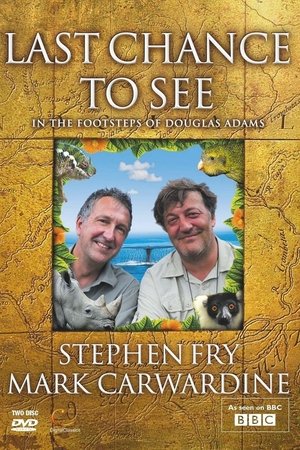
A follow-up to the 1990 Radio 4 series in which the late Douglas Adams and Mark Carwardine travelled around the world in search of endangered species. 20 years later Stephen Fry and Mark Carwardine go back to see what has become of the animals in two decades, and to discover what has affected their fortunes.
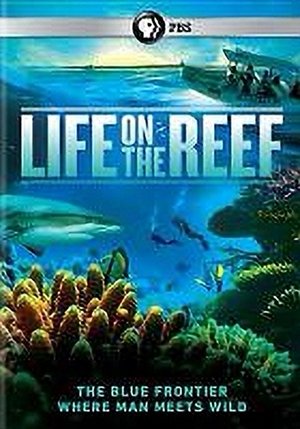
Filmed over the course of a year, this three-part documentary follows those who live in one of the most extraordinary places on the planet, Australia's Great Barrier Reef.
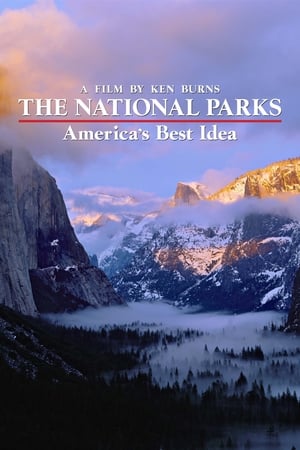
Filmed over the course of more than six years at some of nature's most spectacular locales – from Acadia to Yosemite, Yellowstone to the Grand Canyon, the Everglades of Florida to the Gates of the Arctic in Alaska - “The National Parks: America's Best Idea” is nonetheless a story of people: people from every conceivable background – rich and poor; famous and unknown; soldiers and scientists; natives and newcomers; idealists, artists and entrepreneurs; people who were willing to devote themselves to saving some precious portion of the land they loved, and in doing so reminded their fellow citizens of the full meaning of democracy.
Australian host Steve Irwin and his wife Terri run a wildlife refuge. Their shared passion is educating the world about wildlife, including the much feared crocodile and numerous venomous snakes. Steve's specialty is the capture and relocation of crocodiles. No animal appears too threatening to Steve, his true respect for animals is the foundation for everything he does.
See It Now is an American newsmagazine and documentary series broadcast by CBS from 1951 to 1958. It was created by Edward R. Murrow and Fred W. Friendly, Murrow being the host of the show. From 1952 to 1957, See It Now won four Emmy Awards and was nominated three other times. It also won a 1952 Peabody Award, which cited its
Between storms and towering waves, in sunshine or in the dead of night: Sea rescuers from the German Maritime Search and Rescue Service (DGzRS) risk their lives for people in distress on the high seas! The documentary series "The Sea Rescuers" accompanies these heroes of the seas up close during their spectacular missions on the North and Baltic Seas.
When one thinks of dominant animals that roam the earth, large predators - lions, grizzlies and titanic anacondas come to mind. But, pound for pound, the most powerful and awe-inspiring creatures are the elusive micro-monsters that exist just beneath our feet. Wildlife author & expert Bradley Trevor Greive and biodesigner Billy Almon venture to some of the most remote and inhospitable habitats in the world to track down these tiny beasts. Using state of the art equipment, they will measure the abilities of these creatures and present them in a way never seen before.
Following on from the hugely popular Out of Town, Old Country saw Jack Hargreaves continue his exploration of rural life in Thomas Hardy country – reflecting on its character, traditions, history and folklore, and the skills that had passed from generation to generation.
Evolutionary story of flight from the very first insects to the incredible array of creatures which rule the skies today.
Exploring some of the world's most isolated and iconic tropical islands.
Africa is a land sculpted by time where animals have evolved complex weapons to arm them in the battle to live another day. An elephant's tusks can defend, or attack. An octopus uses camouflage to find food, or hide from an enemy. A Cape Fur Seal's speed and agility are valuable tools to catch a penguin, but ineffectual against a Great White Shark. A single hippopotamus holds a pride of twelve lions at bay with his sheer bulk, but backs down when faced with the piercing teeth of another hippo. With lethal weapons wielded by fearsome predators and prey, animals walk a precarious path, here among Africa's Deadliest.
Chris Packham travels the world to uncover the secrets of the animal mind.
The Mekong basin is one of the richest areas of biodiversity in the world, yet one of the most undiscovered. 20,000 plant species, 430 mammals, 1,200 birds, 800 reptiles and amphibians, and an estimated 850 freshwater fish species, are found in this very remote Asian region. A not-to-be-missed wildlife series that will truly be a feast for the eyes.
This documentary series about plants is the first immersive portrayal of an unseen, inter-connected world, full of remarkable new behaviour, emotional stories and surprising heroes in the plant world. Planet Earth from the perspective of plants.
Terre, le compte à rebours a commencé
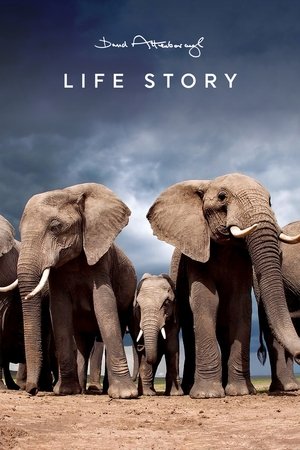
The remarkable and often perilous story of the journey through life. It is a story that unites each of us with every animal on the planet, because we all set out on this journey from the moment we are born. For animals there is just one goal in life – to continue their bloodline in the form of offspring. This series follows that journey through its six crucial stages: first steps, growing up, finding a home, gaining power, winning a mate and succeeding as a parent.
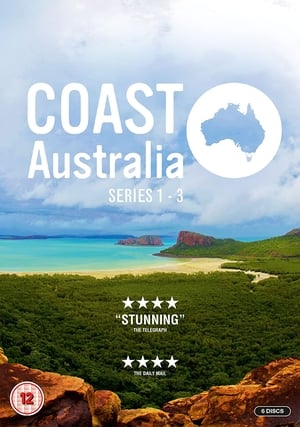
Coast Australia follows renowned Scottish archaeologist and historian Neil Oliver on his very first trip to Australia, as he and a diverse group of co-hosts gather stories about our spectacular coastline: the history, the people, the archaeology, the geography and the marine life, investigating interesting and little known facts along the way. Oliver’s co-hosts, all experts in their field, are journalist and Australian arts and culture specialist Miriam Corowa, environmentalist Professor Tim Flannery, marine scientist Dr Emma Johnston, anthropologist Dr Xanthe Mallett and television presenter and landscape architect Brendan Moar.
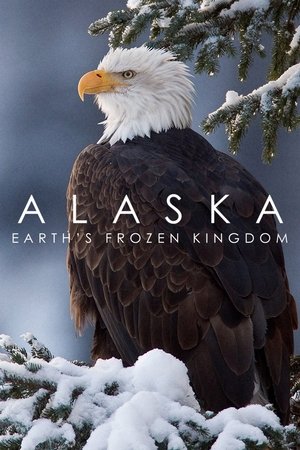
Three-part series that looks at a year in Alaska, revealing the stories of pioneering Alaskans, both animal and human, as they battle the elements and reap the benefits of nature's seasonal gold rush.
David Attenborough reveals the surprising truth about the cold-blooded lives of reptiles and amphibians. These animals are as dramatic, as colourful and as tender as any other animals.
Charlotte Uhlenbroek is your guide for a three-part series journeying deep into the tropical rainforest.