Electofrenia (1978), Neri's third political film, requires a critical distance in order to consider the reasons why Venezuelans choose their presidential candidate in the 1978 election. Electofrenia, signifying the chaos of the elections, proposes that many Venezuelans select the candidate who benefits them personally rather than the one who is good for the country at large. Not without irony, the film brings up Venezuela's two decades of peaceful democratic government. If people choose what is good for them, can we call it a democracy?
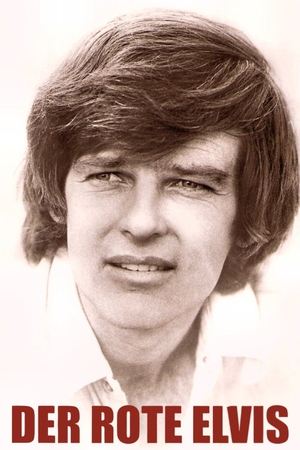
A documentary on the late American entertainer Dean Reed, who became a huge star in East Germany after settling there in 1973.
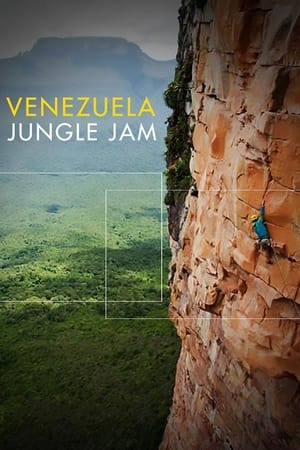
The latest film from the Belgian climbing team, following Asgard Jamming and Vertical Sailing Greenland, Venezuela Jungle Jam features Sean Villanueva O'Driscoll, Nico Favresse, Stephane Hanssens and Jean-Louis Wertz as they attempt a new free climb on the overhanging 500m wall of Amuri Tepul in the Venezuelan Jungle.
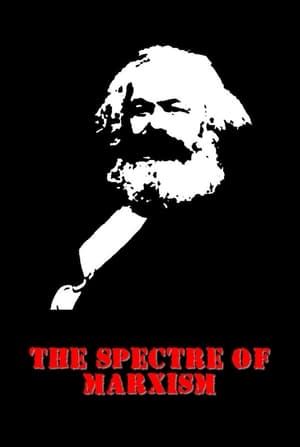
The impact of Marx on the 20th century has been all-pervasive and world-wide. This program looks at the man, at the roots of his philosophy, at the causes and explanations of his philosophical development, and at its most direct outcome: the failed Soviet Union.
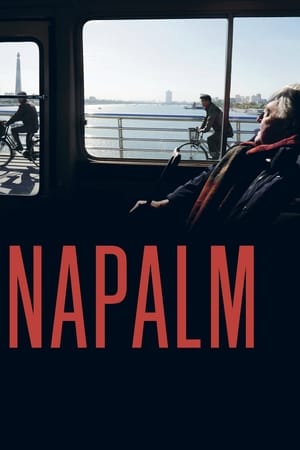
Napalm is the story of the breathtaking and brief encounter, in 1958, between a French member of the first Western European delegation officially invited to North Korea after the devastating Korean war and a nurse working for the Korean Red Cross hospital, in Pyongyang, capital of the Democratic People’s Republic of Korea.
Así Pasó
A sound system plays Commander Ernesto Guevara's speech, delivered on October 20, 1962, during the Second Anniversary of the Young Communist League, along with a series of archival images of the revolutionary leader visiting factories and meeting with workers.
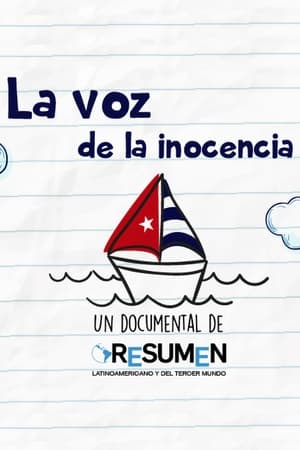
"The Voice of Innocence" is a documentary that shows how, starting in 1959, the Cuban Revolution put into practice a comprehensive and universal policy of safeguarding the rights of the child, even under the multiple difficulties resulting from the economic, commercial and financial blockade imposed by the United States more than six decades ago. Cuba is one of the main signatories of the Convention on the Rights of the Child, signed on 20 November 1989, when the country had already made extraordinary progress in protecting the rights of the child, in comparison to developed countries, such as the United States, which as of today hasn't yet ratified the Convention.
The film gives the history of Venezuela from 1989 to 2004 and then explores some of the projects sponsored by the Bolivarian government, including the financing of cooperatives as a way of building the Socialism of the 21st century.
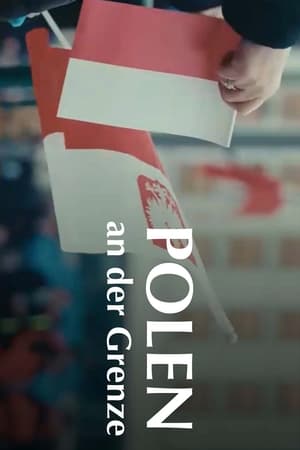
In the run-up to parliamentary elections in mid-October, Polish filmmaker Marcin Wierzchowski travelled across his country to gauge the atmosphere in a society that is more divided than ever.
Une ambition politique
Jean-Luc Godard brings his firebrand political cinema to the UK, exploring the revolutionary signals in late '60s British society. Constructed as a montage of various disconnected political acts (in line with Godard's then appropriation of Soviet director Dziga Vertov's agitprop techniques), it combines a diverse range of footage, from students discussing The Beatles to the production line at the MG factory in Oxfordshire, burnished with onscreen political sloganeering.
Jhonny Quintero, the only survivor of the catastrophe in Mérida, Venezuela, in 2000, relives his tragic accident in which a group of high mountain hikers were buried by a block of ice and snow. This event led to a rescue operation that lasted 16 days, known as Operation Humboldt. During this time, an arduous search was conducted to locate the missing and rescue the survivors under extreme conditions.
Empatia por Ulises
Hugo Chavez was a colourful, unpredictable folk hero who was beloved by his nation’s working class. He was elected president of Venezuela in 1998, and proved to be a tough, quixotic opponent to the power structure that wanted to depose him. When he was forcibly removed from office on 11 April 2002, two independent filmmakers were inside the presidential palace.
A cartoon film about the whole heterogeneous mixture of Canada and Canadians, and the way the invisible adhesive called federalism makes it all cling together. That the dissenting voices are many is made amply evident, in English and French. But this animated message also shows that Canadians can laugh at themselves and work out their problems objectively.
An independent rockumentary that comprises first-hand testimonials about the history of Sentimiento Muerto, the most influential band in Venezuela, as well as the projects that came after its dissolution: Dermis Tatú and PAN.
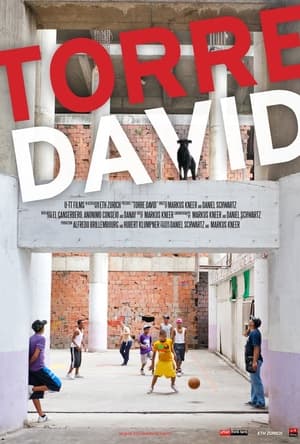
Torre David, a 45-story office tower in Caracas, was almost complete when it was abandoned following the death of its developer and collapse of the Venezuelan economy. Today, it is the improvised home of more than 750 families, living in an extra-legal occupation that some call a vertical slum.
A feature length, lively - montage style - documentary, capturing the essence of what life was like in socialist Hungary - dubbed the "The most cheerful barrack" back then - using contemporary music, interviews, adverts and news footages.
Liliana, a mother of 5 kids, living in terrible condition in a Caracas's "favela", is hoping to get a new flat from President Chavez in order to change her life. August 2007, Venezuelan's President Chavez convokes a referendum in order to change the constitution and get absolute power. Carlos, a local Party Activists tries to convince Liliana to vote for the new constitution. Liliana is promised that she'll get a flat if she votes for Chavez. Hugo Rey is a journey into the totalitarian mechanism employed by Chavez to perpetuate his power.