Massenet’s tale of passion, excess, and their consequences stars rising soprano Lisette Oropesa in the effervescent title role. Tenor Michael Fabiano is her ardent admirer, Chevalier des Grieux, with Maurizio Benini conducting Laurent Pelly’s enchanting production.
Julie Taymor’s kaleidoscopic production returns to select cinemas this holiday season in an encore presentation of the company’s first-ever Live in HD transmission that includes tenor Matthew Polenzani, baritone Nathan Gunn, and bass René Pape in this abridged, English-language version of Mozart’s classic fable.
This DVD of a live 2005 performance from the Zürich Opera under the musical direction of Franz Welser-Möst has many things to recommend it -- the young tenor Piotr Beczala as Alfredo, the marvelous Thomas Hampson as Giorgio Germont, the playing of the Zurich Opera orchestra, the simple but effective sets by by Erich Wonder, the uncluttered stage direction by Jürgen Flimm. It also has some flaws: strangely variable volume level of the recorded sound sometimes coming on so loud as to make one reach for the volume control, and the uneven performance of the Violetta, Eva Mei who, for all her merits, gives a dramatically effective performance marred by occasional difficulties with vocal production. Still, overall I felt this was a moving production, one that I would recommend, although perhaps not as an only DVD of one of Verdi's most popular operas.
As the imperious title empress, mezzo-soprano Joyce DiDonato leads the Met premiere of Handel’s tale of deception and deceit. Harry Bicket conducts Sir David McVicar’s wry new production, which gives this Baroque black comedy a politically charged, modern updating.
Performed at Madrid's historic Teatro Real in 2018, Ivor Bolton conducts Benjamin Britten's opera based on Lytton Strachey's 1928 Elizabeth and Essex: A Tragic History. In her repeated clashes with the Earl of Essex-a longtime favorite of the queen who was ultimately put to death for treason-Elizabeth I is depicted as flawed and vain, human and sympathetic.
It's an event that draws many thousands of music lovers to one of the most beautiful cities in the world every summer: the opera season at the ancient Arena di Verona. The 2,000-year-old roman amphiteatre with its gigantic stage dimensions is one of the largest and best preserved Roman construction of its kind, and with over 22,000 seats it is undoubtedly one of the most spectacular open-air venues of the world! The revered master of opera Franco Zeffirelli, who died shortly before the premiere of Il Trovatore, created a legendary scenery with groups of giant sized armoured knights, a fortress turning into a luminous cathedral, an enormous choir, horses, breathtaking fights: “his perhaps best arena production” (Opernglas). It brings Anna Netrebko to the Arena of Verona where she is giving her much-anticipated debut in one of Giuseppe Verdi’s most popular operas.
The film follows the staging of the opera Olimpiade while at the same time exploring the dramatic life of its composer Josef Mysliveček, a friend and teacher of W. A. Mozart.
Prince Abesalom runs into an orphaned Eteri while hunting, falls for her and brings the woman to his palace as his fiancé. The Prince’s aid Murman loses his self-control at Eteri’s beauty and gives her a spelled necklace as a wedding gift. Eteri contracts a mysterious disease that only Murman is capable to heal.
Beethoven’s only opera is a masterpiece, an uplifting story of risk and triumph. In this new production, conducted by Antonio Pappano, Jonas Kaufmann plays the political prisoner Florestan, and Lise Davidsen his wife Leonore (disguised as ‘Fidelio’) who daringly sets out to rescue him. Set in strong counterpoint are the ingredients of domestic intrigue, determined love and the cruelty of an oppressive regime. The music is transcendent throughout and includes the famous Act I Quartet, the Prisoners’ Chorus and Florestan’s impassioned Act II cry in the darkness and vision of hope. Tobias Kratzer’s new staging brings together the dark reality of the French Revolutionary ‘Terror’ and our own time to illuminate Fidelio’s inspiring message of shared humanity.
Royal Opera favourite Bryn Terfel heads the cast for this new production of Donizetti’s comedy of domestic drama across two generations. The witty story of a middle-aged man whose supposed young wife runs rings around him – with her own ulterior romantic purpose in mind – has long delighted and surprised audiences, not least as presented with the sparkle of its music and the virtuoso skill of its performers. Damiano Michieletto’s exhilarating production shows how contemporary the characters still are and how immediate and touching the story remains.
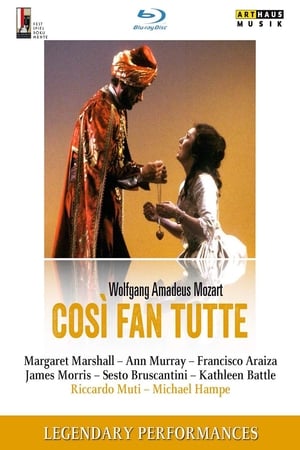
Who loves whom in Così fan tutte, Mozart’s and Da Ponte’s cruelly comic reflection on desire, fidelity and betrayal? Or have the confusions to which the main characters subject one another ensured that in spite of the heartfelt love duets and superficially fleetfooted comedy nothing will work any longer and that a sense of emotional erosion has replaced true feelings? Così fan tutte is a timeless work full of questions that affect us all. The Academy Award-winning director Michael Haneke once said that he was merely being precise and did not want to distort reality. In only his second opera production after Don Giovanni in 2006, he presents what ARTE described as a “disillusioned vision of love in an ice-cold, realistic interpretation”.
Mozart’s early masterpiece returned to the Met for the first time in more than a decade with Music Director Emeritus James Levine, who led the work’s company premiere in 1982, again on the podium. Tenor Matthew Polenzani brings both steely resolve and compassionate warmth to the title king of Crete, who is faced with an impossible decision. With her rich mezzo-soprano, Alice Coote sings the trouser role of Idomeneo’s son Idamante, who loves the Trojan princess Ilia, sung with delicate lyricism by Nadine Sierra. Elza van den Heever gives a thrillingly unhinged portrayal of the jealous Elettra. Jean Pierre-Ponnelle’s timeless production blends the grandeur of ancient myth with the elegance of Enlightenment ideals.
Tchaikovsky’s setting of Pushkin’s timeless verse novel is presented on the Met stage in Deborah Warner’s moving production, starring Anna Netrebko as Tatiana and Mariusz Kwiecien and Peter Mattei sharing the title role. Alexey Dolgov sings the role of Lenski, and Robin Ticciati conducts.
In his new production, Robert Carsen places the action at the end of the Habsburg Empire, underscoring the opera’s subtext of class and conflict against a rich backdrop of gilt and red damask
La traviata (Italian: [la traˈviaːta], "The Fallen Woman"[1][2]) is an opera in three acts by Giuseppe Verdi set to an Italian libretto by Francesco Maria Piave. It is based on La dame aux Camélias (1852), a play adapted from the novel by Alexandre Dumas, fils. The opera was originally entitled Violetta, after the main character. It was first performed on 6 March 1853 at the La Fenice opera house in Venice. Piave and Verdi wanted to follow Dumas in giving the opera a contemporary setting, but the authorities at La Fenice insisted that it be set in the past, "c. 1700". It was not until the 1880s that the composer and librettist's original wishes were carried out and "realistic" productions were staged.[3]
Wolfgang Amadeus Mozart's Magic Flute is undoubtedly one of the most multi-layered, profound, complicated, and therefore also most difficult to stage works in the entire opera repertoire. In terms of genre, it can only be understood if it is seen as a mixture of four things: a philosophically profound drama of ideas with countless encryptions, a naïve fairy tale, a bawdy comedy, and a crude Punch and Judy show. It is based on the intersection of the traditions of Baroque magic opera, Italian buffa, and Viennese Singspiel, where all manner of wonders are conceivable and permissible. Peter Ustinov's production appeals to all those who love a primarily fairy-tale-like interpretation; the atmosphere is traditional and conventional. An outstanding ensemble of singers has been assembled.
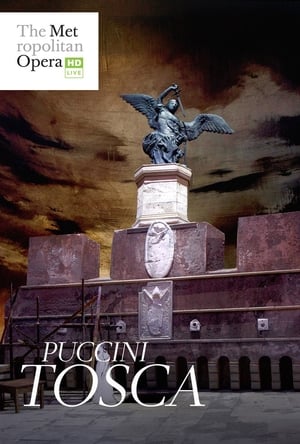
Non-musical account of Puccini's opera: Tosca and Cavaradossi are in love, but the tyrant Scarpia desires Tosca and oppresses Cavaradossi who is fighting for freedom.
Tosca returns to the Teatru tal-Opra Aurora in a completely new production, under the direction of the renowned Vivien Hewitt, following the recent successes of 2011 (Aurora's own production) and 2014 (a Gaulitanus chorus production). Attracting the greatest names in the opera world since its first performance in Rome in 1900, Tosca 2011 brought the Aurora its largest ever international cast, featuring soprano Michele Crider, tenor Neil Schicoff, and baritone Juan Pons. This time, the Aurora has made a point of enhancing the star-quality element in the cast beyond just the three leading roles. It is with pleasure, and a good dose of enthusiasm, that we announce our stellar cast, composed of Amarilli Nizza (Tosca), Stefano La Colla (Cavaradossi), Marco Vratogna (Scarpia), Frano Lufi (Angelotti), Matteo Peirone (Sacristan), Cliff Zammit Stevens (Spoletta), Joseph Lia (Sciarrone), and our own Mattia Grech (Shepherd Boy).
Franco Zeffirelli's magnificient staging of Puccini's final opera - a fairy tale set in a mythical China - is one of the most popular in the Met repertory. In this Live in HD production, Maria Guleghina takes on the title role and Marcello Giordani is Calaf, the unknown prince. Marina Poplavskaya and Samuel Ramey co-star, and Andris Nelsons conducts in his Met debut.
With more than 50 years of experience as film director, Peter Greenaway (Nightwatching, Eisenstein in Guanajuato) combines the worlds of film and opera at the Verdi Festival in Parma, demonstrating what magic those two can do together with an all new approach to Giuseppe Verdi's Giovanna d'Arco, staged and edited by himself and his wife, Saskia Boddeke. The opera's libretto is based on Friedrich Schiller's 'The Maid of Orleans'. It tells the story of the French national hero Jeanne d'Arc, who defends her country against the English troops during the Hundred Years' War. Constantly torn between her humble roots, her love for King Charles VII and her heavenly task to fight for France, she gains eternal glory by giving her life in the final, victorious battle against England.