Henri Cartier-Bresson: The Decisive Moment is an 18-minute film produced in 1973 by Scholastic Magazines, Inc. and the International Center of Photography. It features a selection of Cartier-Bresson’s iconic photographs, along with rare commentary by the photographer himself.
Master filmmaker Alexander Sokurov (Russian Ark) transforms a portrait of the world-renowned museum into a magisterial, centuries-spanning reflection on the relation between art, culture and power.
This film tells Jean-Michel's story through exclusive interviews with his two sisters Lisane and Jeanine, who have never before agreed to be interviewed for a TV documentary. With striking candour, Basquiat's art dealers - including Larry Gagosian, Mary Boone and Bruno Bischofberger - as well as his most intimate friends, lovers and fellow artists, expose the cash, the drugs and the pernicious racism which Basquiat confronted on a daily basis. As historical tableaux, visual diaries of defiance or surfaces covered with hidden meanings, Basquiat's art remains the beating heart of this story.
The Haywain by John Constable is such a comfortingly familiar image of rural Britain that it is difficult to believe it was ever regarded as a revolutionary painting, but in this film, made in conjunction with a landmark exhibition at the V&A, Alastair Sooke discovers that Constable was painting in a way that was completely new and groundbreaking at the time. Through experimentation and innovation, he managed to make a sublime art from humble things and, though he struggled in his own country during his lifetime, his genius was surprisingly widely admired in France.
In this revealing documentary, Ken McMullen creates an elegant portrait of artist and filmmaker Derek Jarman, based on an interview conducted by John Cartwright. The questions are unobtrusive, allowing Jarman to reflect on his major films. Despite the debilitating effects of serious illness, we see an artist with his inner vision unimpaired; still humorous, self effacing and disarmingly charming.
Presents Alex Ross demonstrating how he creates arresting patterns of vivid color and how he uses acrylic paint on a textured media board.
An extraordinary voyage of discovery to see the most impressive collection of works of art built up over two thousand years of history. VATICAN MUSEUMS 3D, a SKY production in collaboration with the Vatican Museums Directorate, for the very first time brings Ultra HD 4K/3D film cameras inside the Vatican Museums and the Sistine Chapel, to show the masterpieces in these collections as they have never been seen before.
We are in the midst of production on a one-hour film on seminal art historian John Richardson, and his work on the fourth and final volume of his biography on Picasso. Richardson shares his insights and observations on Picasso, whom he first met in the 1950s, with Shelley Wanger, his editor at Alfred A. Knopf (a division of Random House, Inc.).
An account of the life and work of the multidisciplinary Spanish artist Mariano Fortuny Madrazo (1871-1949), textile and fashion designer, set designer, photographer, painter and engraver, known as the Leonardo Da Vinci of the 20th century.
Vaciar el museo
About the artist Ian Hellström (1925-2012) with his own museum. A tour of Ian's house is an adventure in art, antiques, skulls and dolls, all in perfect balance. Ian created various jewelry sculptures, a kind of collage with glass beads, brooches, simple jewelry and various toys, which were sometimes pasted into boxes with small compartments. His colorful art and cross-border life is captivating but not always easy to understand.
A video for the Museum of Modern Art #ItemsMoMA screened at the Items Abecedarium. Mixture of original and archive footage.
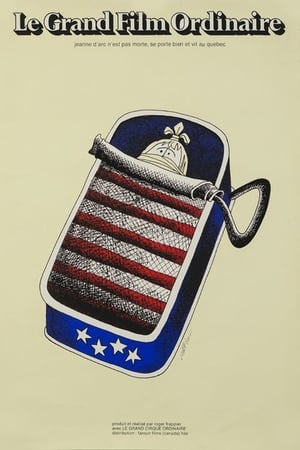
The Ordinary Grand Film is the result of love at first sight with The Ordinary Grand Circus. With film and equipment borrowed from left and right, with the free complicity of all those who appear in the credits, they went on weekends to film a few moments of their tour.
Commissioned by the journal Présence Africaine, this short documentary examines how African art is devalued and alienated through colonial and museum contexts. Beginning with the question of why African works are confined to ethnographic displays while Greek or Egyptian art is celebrated, the film became a landmark of anti-colonial cinema and was banned in France for eight years.
A documentary made for Konrad Mägi exhibition "The Light of the North" in Torino, Musei Reali (2019-2020), about Mägi's life and his legacy.
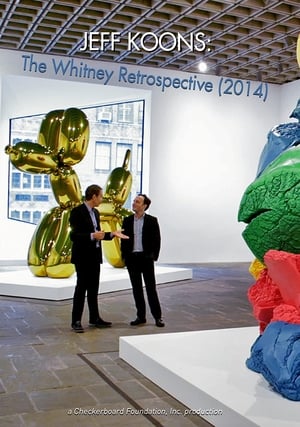
The Whitney Museum of American Art presented the landmark exhibition Jeff Koons: A Retrospective from June 27 to October 19, 2014. It was the largest, most comprehensive survey of Koons’s art ever assembled, spanning four decades of his career and displaying 145 works from every series, including 13 new pieces exhibited publicly for the first time. The film follows Koons and Whitney Chief Curator, Scott Rothkopf, who conceived and organized the show, through every gallery of the exhibition. In addition, insightful interviews with Adam Weinberg, the Whitney’s Director, Robert Storr, Dean Emeritus of the Yale School of Art, and Michelle Kuo, Editor of Artforum, help to deepen the investigation into Koon’s art and process.
A look at how form, color, smell, consistency, the sounds made during eating, manufacturing technique, history and stories influence food design.
A portrait of artist, actress, poet and occultist Marjorie Cameron, it shows images of her paintings and recitations of her poems. Preserved by the Academy Film Archive in 2006.
Documentary celebrating the LGBTQ contribution to the arts in Britain in the 50 years since decriminalisation. It features interviews with leading figures from right across the arts in Britain, including Stephen Fry, David Hockney, Sir Antony Sher, Alan Cumming, Sandi Toksvig, Jeanette Winterson, Will Young and Alan Hollinghurst, and it explores the distinctive perspectives and voices that LGBT artists have brought to British cultural life.
Lyonel Feininger's work is as individual and unmistakable as he is himself. As a classical modernist artist, he is difficult to categorize. He lived and worked in Germany for a long time. He began his career as a caricaturist, later became known as a painter and headed the printing workshops at the Bauhaus. His work cannot be classified as cubism or expressionism. The film visits places that inspired him, such as Paris, the villages around Weimar and, above all, the Baltic coast - many of which are reflected in Feininger's work and make the development of his oeuvre comprehensible.