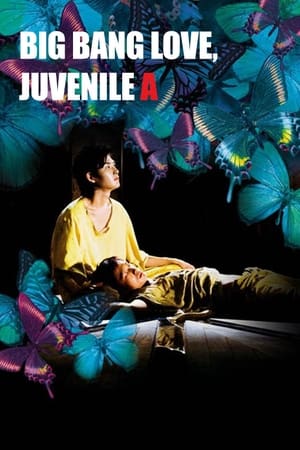
(Some of us) Still run down the same [mental&emotional] streets we revered/reproached/replaced as children.
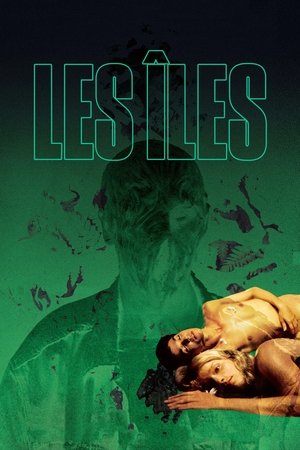
Heper's 7-minute short "Dawn" follows, in a single space between two windows, a triangular love relationship of three people.
An anthology of one-minute films created by 51 international filmmakers on the theme of the death of cinema. Intended as an ode to 35mm, the film was screened one time only on a purpose-built 20x12 meter public cinema screen in the Port of Tallinn, Estonia, on 22 December 2011. A special projector was constructed for the event which allowed the actual filmstrip to be burnt at the same time as the film was shown.
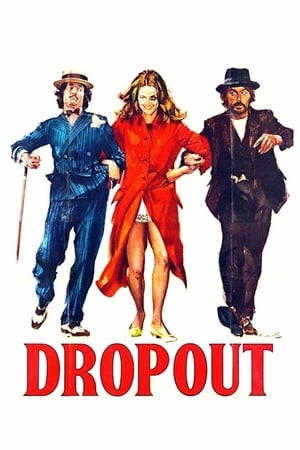
Italian immigrant kidnaps a wealthy British woman, and they fall in love.
An invitation to enter the soul of an artist - director Erick Ifergan - through a highly personal retelling of the Orpheus tale suffused with Ifergan's striking paintings, sculpture and conceptual photography.
August 2019. Frank recognizes his own story of twenty years ago in a recently published book. He remembers Marie, with whom he had a relationship before she moved to the United States and disappeared from his life. Frank sets out in search of her and finds himself in a USA petrified by a heat wave and lost in suspicion and political paranoia. He heads into the desert in pursuit of Marie.
An average working man who is alone in a world of deception finds himself in a marriage of convenience.
The personification of Death's love for a lonely man is challenged when he falls for a lively woman.
There is no escape… From one side of the globe to the other, there is no escaping the faces, the visions, the ever-watchful camera. There is no escaping the mask, there is no escaping the resonating echoes of images and sounds that cross each other over time. There is no escaping the cinema. There is no escaping the terrors of the mind. “A mysterious loner, perhaps a poet, journeys through a series of uncanny surrealistic landscapes with an unclear purpose. His adventure is divided into three sections. The main theme of this experiment is to compare the eerier qualities of different landscapes and interpose the characters within them, elaborating the project’s ongoing preoccupation with extracting sinister moods from ordinary settings. In a way, these can be seen as experimental horror films in which an atmosphere of dread is evoked and sustained without the expected narrative trappings.”
A successful mod photographer in London whose world is bounded by fashion, pop music, marijuana, and easy sex, feels his life is boring and despairing. But in the course of a single day he unknowingly captures a death on film.
A lonely hairdresser watches the title sequence of "That Cold Day in the Park" then visits a local park to invite a down-and-out skinhead to his apartment. He draws the silent man a bath and talks to him as he soaks. He locks his guest in a bedroom. Next day, the skinhead leaves through the window and visits his sister, who's making a film called "Sisters of the SLA." He helps with a screen-test. The hairdresser has dreams and fantasies involving the skinhead, the skinhead returns to visit him, and then the filmmaker pays a call on the two men, exposing her brother as faking his silence and pretending a lack of sexual interest. Fantasies can come true.
Marguerite loses her wallet, and it's found by Georges, a seemingly happy head of family. As he looks through the wallet and examines the photos of Marguerite, he finds he's fascinated with her and her life, and soon his curiosity about her becomes an obsession.
A short experimental cutup film by Jon Moritsugu.
A story of a group of humanoid rabbits and their depressive, daily life. The plot includes Suzie ironing, Jane sitting on a couch, Jack walking in and out of the apartment, and the occasional solo singing number by Suzie or Jane. At one point the rabbits also make contact with their “leader”.
Psyche 1947, made while a student at USC, shows Markopoulos’ developing style and his sensuous use of colour and composition. Shot in the Hollywood hills, the film was inspired by an unfinished novella by Pierre Louÿs. - Tate Modern
The veneer of the story is a tale of chance love: two French expatriates strike up a chance romance when they meet on a ship headed back to South America.
Each day after work, Carlos, a language school teacher, frequents the heady surroundings of his local cruising ground. One evening he encounters a teenage boy from his class named Toni, and the two engage in a brief sexual tryst. As the relationship between teacher and student begins to develop, some dark truths emerge about the young man and his mysterious group of friends.
Luz, a young cabdriver, drags herself into the brightly lit entrance of a run-down police station. A demonic entity follows her, determined to finally be close to the woman it loves.
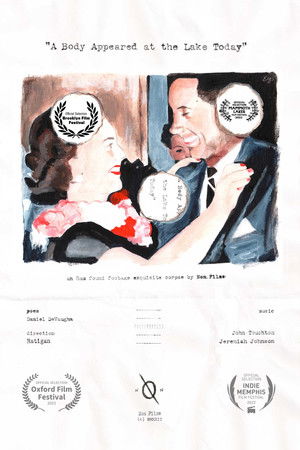
How would a found footage film look if the footage was never found? This conceptual art experiment questions the very nature of film and cinema while serving as an ironic tribute to the found footage horror pop culture. The found footage format provides the narrative justification for such a film to exist: the non-existence exists because the footage existed yet it was lost and never found.
Number Two’ is an audio visual work which materializes the definite possibilities of sight and the existence of light in space with the drama in between image and sound as a reaction . It treats the surface of the film itself as a digital artefact that forms an image with a human intervention .It can be seen as an enlargement of a moment in time where form and space breaks inside an indefinite reality .